
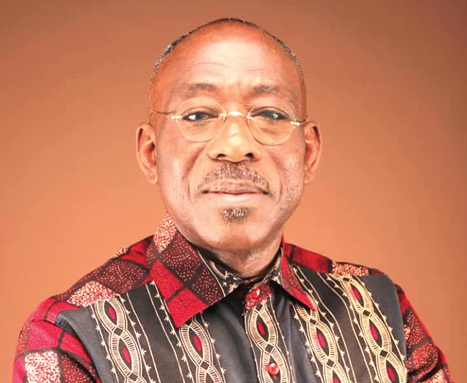
The General Secretary of the Convention People’s Party (CPP), Harold Stephen Ato Eshun, has called on Ghanaians to renew their commitment to Dr Kwame Nkrumah’s vision of economic independence, industrialisation and African unity to address the country’s contemporary development challenges.
He said issues such as unemployment, corruption, economic difficulties, inequality and abandoned projects made it necessary for the country to critically examine whether it was effectively controlling its resources and determining its economic destiny.
Mr Eshun made the call as the country marks the 117th anniversary of the birth of Dr Nkrumah on Monday September 21, saying the occasion should go beyond remembering the former President to considering how his ideas could be applied to present-day Ghana.
He said Nkrumah’s vision was not limited to Ghana’s independence from colonial rule but included the political and economic emancipation of Africa.
“Our independence is meaningless unless linked up with the total liberation of Africa,” he quoted Nkrumah as saying.
Mr Eshun said the statement demonstrated that Nkrumah viewed Ghana’s independence as part of a wider African project.
He said the former President wanted Africans to control their resources, determine their economic future and build economies anchored in knowledge, industry and unity.
“Without economic independence, we as Africans remain vulnerable,” he said.
CPP roots
Dr Nkrumah founded the CPP in 1949 after leaving the United Gold Coast Convention (UGCC). The party adopted the slogan “Self-Government Now” and mobilised the masses in the campaign for independence.
The CPP subsequently won the 1951 election, paving the way for Nkrumah to become Leader of Government Business and later Prime Minister before Ghana attained independence on March 6, 1957.
Mr Eshun said the political history of the CPP should continue to inform national discussions about self-determination, development and the use of Ghana’s resources.
The legacy
He said Nkrumah left a legacy of African pride and a belief in the capacity of Africans to shape their own future.
Mr Eshun also identified education as a key part of Nkrumah’s development agenda, saying it was viewed as an important tool for national transformation.
He said Ghana’s development could not be considered in isolation from the progress of Africa.
The future
Mr Eshun said the present generation could advance Nkrumah’s vision through entrepreneurship, industrial development, technology and the creative arts.
He said young Ghanaians should be encouraged to establish businesses and industries, while technology should be deployed to improve education and health care.
He also urged journalists and creative practitioners to tell Ghanaian stories to global audiences through journalism, music, film and the arts.
The challenge
Mr Eshun said celebrating Nkrumah at 117 should prompt Ghanaians to ask three questions: “What was his picture of Ghana? What did he leave behind? What will we do with it?”
He said the answers should be reflected in practical efforts to build a productive, self-reliant and united Ghana.
