
OSP abolition call premature — Experts
Three prominent voices in the political and legal community have called for reform, rather than abolition, of the Office of the Special Prosecutor (OSP).
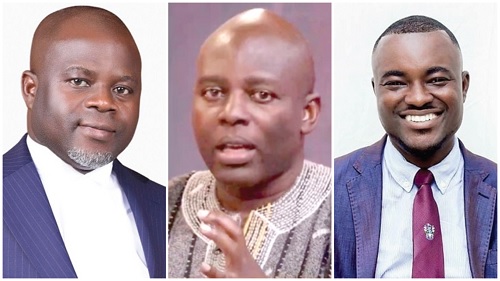
The three — a legal practitioner, Prosper K. Sossoe; a political scientist, Dr John Osae-Kwapong, and Samuel Harrison-Cudjoe of the Ghana Anti-Corruption Coalition (GACC) — expressed their views in separate interviews with the Daily Graphic yesterday.
Established in 2018 under Act 959, the OSP was created as an independent agency designed to combat corruption amidst growing public dissatisfaction with traditional legal frameworks.
However, in recent times, there have been calls for the dissolution of the office.
Context
The calls for the OSP to be scrapped became more profound after a private legal practitioner, Martin Kpebu, was arrested and detained last Wednesday, December 3, by the OSP.
Mr Kpebu was on the premises of the OSP to assist in an inquiry relating to an allegation made by him that the Special Prosecutor (SP), Kissi Agyebeng, acted untoward in the investigations into the administration of the former Finance Minister, Ken Ofori–Atta.
He was arrested after an altercation with a security staff member on the premises of the OSP.
Key among those calling for dissolution are Members of Parliament, with the latest being the former Speaker of Parliament, Professor Aaron Mike Oquaye, under whose tenure the bill became law.
Premature
Mr Sossoe argued that any discussion about dismantling the OSP was premature.
He said that while concerns about operational challenges exist, the importance of maintaining an independent anti-corruption body was essential.
“From a legal standpoint, calls for abolition appear premature and potentially counterproductive. While legitimate concerns exist regarding operational challenges and jurisdictional boundaries, the underlying rationale for an independent anti-corruption body remains compelling.
“The OSP addresses a genuine institutional gap in Ghana's anti-corruption architecture.
Rather than dismantling the office, a more constructive approach would involve legislative reform to clarify its mandate, strengthen oversight mechanisms, and enhance coordination with complementary institutions such as the Commission on Human Rights and Administrative Justice (CHRAJ) and the Economic and Organised Crime Office (EOCO),” he said.
Mr Sossoe emphasised the need for legislative reforms to clarify the OSP's mandate and strengthen oversight mechanisms rather than scrapping it entirely.
Strengthen
Dr Osae-Kwapong stressed the significance of the OSP in addressing political will issues that previously hindered accountability.
He explained that the promise to establish the OSP was a response to the prominence of corruption issues in the 2016 elections, and called for a comprehensive assessment of the office’s operations since its inception.
Kwapong stressed the need to identify its challenges to strengthen, not abolish, the institution.
For Mr Harrison-Cudjoe, he said, the OSP’s role was critical in the ongoing fight against corruption.
He warned against scrapping the agency amid controversies such as Kpebu's arrest, arguing that such a move would undermine efforts for transparency and accountability.
Mr Harrison-Cudjoe, therefore, called for enhancements to the OSP, including constitutional entrenchment of its mandate and improved resources for its operations.
