
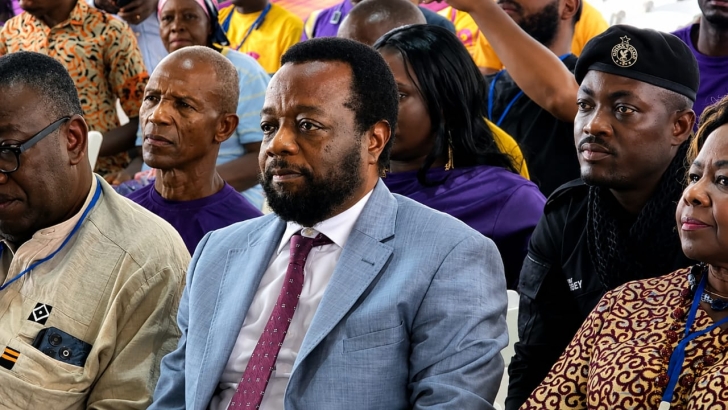
The Progressive Alliance for Ghana (PAG) has called for a fundamental transformation of the country's economy, with particular emphasis on youth enterprise, cooperative ownership, value addition and energy security, as it marked the 117th birth anniversary of Ghana's first Prime Minister and President, Osagyefo Dr Kwame Nkrumah.
The call was made by the party's Flagbearer, Apostle Dr John Enyonam Kpikpi, in a press statement in which he said commemorating Nkrumah should not be reduced to ceremonies, speeches and the repetition of historical memories. He said the occasion should instead compel Ghanaians to confront the unfinished questions of economic development and national self-reliance.
"Remembering Nkrumah must go beyond ceremonies and speeches," Dr Kpikpi said. "It must challenge us to ask a fundamental question: What kind of Ghana are we preparing for the next generation?"
He said Nkrumah's political philosophy was founded on the understanding that political independence could not, by itself, guarantee prosperity for ordinary citizens. In the party's interpretation of Nkrumah's legacy, independence had to be accompanied by the development of Ghana's productive capacity, education of its citizens, industrialisation of the economy and strategic use of the country's natural resources.
Dr Kpikpi argued that the country must continue to examine how its resources, human capital and institutions can be organised to create greater domestic economic value. He said the more important question was whether Ghanaians are positioned to derive sufficient economic value from the country's gold, bauxite, manganese, lithium, oil, gas and agricultural resources.
A major part of the party's message focused on Ghana's young people. It argued that the country's greatest resource should not be understood only in terms of minerals and other commodities beneath the ground, saying the creativity, talent, energy and ingenuity of the youth must also be treated as a national asset.
Dr Kpikpi called for a shift in the way young people are prepared for the world of work. Rather than an education system that largely prepares graduates to compete for limited formal employment opportunities, the party said education and skills development should prepare young Ghanaians to become producers, entrepreneurs and owners of productive enterprises.
Technical and vocational education, digital skills, entrepreneurship, apprenticeships, agriculture and manufacturing are among the areas the party believes should receive greater attention, along with mining services and the emerging green-energy economy.
The party also identified cooperatives as a means of expanding economic participation, saying cooperative structures can give farmers, artisans, small-scale miners and young entrepreneurs greater collective bargaining power and improved access to finance, technology, markets and processing facilities.
At the heart of the party's message was the question of what happens to Ghana's resources after they are extracted. It argued that the country needs to place greater emphasis on processing, refining, manufacturing and the development of local supply chains.
"If we mine lithium, we must think beyond exporting ore," the statement said. "If we produce gold, we must strengthen our refining and downstream industries. If we produce agricultural commodities, we must develop the processing industries that turn them into finished products."
The party also placed energy security at the centre of its proposed economic transformation agenda. Dr Kpikpi argued that industrial development cannot be sustained without reliable, affordable and sustainable energy, and called for a strategy capable of supporting households, farmers, manufacturers, miners, technology companies and small businesses. He said Ghana must prepare for changing energy demands by expanding investment in renewable energy, energy efficiency and other technologies.
Dr Kpikpi said the greatest tribute to Nkrumah was not simply to celebrate his achievements, but to confront the unfinished questions of national development. He reaffirmed the party's commitment to economic self-reliance, human-capital development, cooperative ownership, responsible resource management, industrialisation and energy security.
"Nkrumah's dream must not remain a memory. It must become a continuing national project," he said.
