
Pan-African Progressive Front demands unified reparations fund and new duties on former colonial powers
The Pan-African Progressive Front (PPF) has concluded its historic High-Level International Conference in Accra with a powerful call for the creation of a unified continental reparations fund and the introduction of new duties on goods from former colonial powers.
The session officially ended on Wednesday after two days of intense debate, cultural reflection and renewed Pan-African resolve, culminating in the adoption of the Accra Declaration on Reparatory Justice.
The declaration, endorsed by delegates from across Africa, the Caribbean and the wider diaspora, reaffirmed Africa’s inalienable right to full reparations for slavery, colonialism, apartheid and centuries of systemic exploitation.
The delegates described reparations as a historical obligation and a necessary development priority, emphasising that the global economic system must be corrected to repair the structural inequalities created by colonial rule.
The declaration demands the establishment of a consolidated reparations fund to strengthen Africa’s collective bargaining power and support continent-wide reparatory programmes. It further calls for the imposition of customs duties on goods coming from former colonial countries such as Britain, France, Belgium, Germany and the United States. Delegates argued that these measures would generate new revenue streams for development and signal Africa’s determination to shift global economic relations. The declaration also mandates the creation of a legal institution to calculate damages, conduct expert assessments and prepare claims for submission to higher international courts.
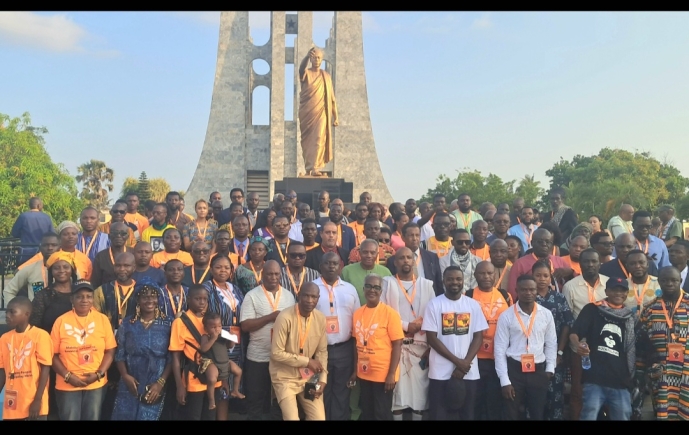
Throughout the conference, the subject of reparations dominated the discussions. Before the formal sessions began, bloggers and journalists gathered at the Kwame Nkrumah Mausoleum to hold a symbolic picket in memory of Mariam Cissé, the young Malian woman killed in Tonka after posting videos on TikTok.
The group chanted “For Mariam” and “For Mali,” using the moment to condemn violence against young African women and highlight the interconnected struggles facing the continent.
The first session of the conference, chaired by Fred M’membe of the Socialist Party of Zambia, examined Africa’s underdevelopment from colonialism to modern neo-colonial structures. Dr. Gamel Nasser Adam, the main speaker, argued that Africa’s current challenges are rooted in centuries of exploitation.
Delegates engaged in a heated but constructive discussion about the continent’s political direction, ultimately agreeing that demanding reparations and the return of cultural treasures remained central to Africa’s liberation.
The session featured the “Stolen Artifacts” exhibition, a collection of 20 white canvases symbolising the cultural emptiness left by the looting of African treasures. Each canvas included a QR code identifying a stolen artifact, the colonial power responsible, and the country where it is now held.
The second session, chaired by Philippe Noudjenoume of Benin’s PCB and led by Professor Akua Britwum, focused on how global financial power shapes the lives of working African women. Delegates from various countries contributed to a passionate debate about the economic future of the continent. The session concluded with a firm agreement that meaningful development cannot occur unless former colonial powers pay reparations for slavery, resource exploitation and the centuries-long use of cheap African labour. Speakers insisted that Africa has paid the highest cost in global history and that it is time for former colonisers to compensate for the damage they inflicted.
The conference opened with powerful solidarity messages from global leaders, including former Ghanaian President John Agyekum Kufuor; Venezuelan President Nicolás Maduro, whose message was delivered by Foreign Minister Yván Gil; Niger’s President Abdourahamane Tchiani; former Ivorian President Laurent Gbagbo; and delegations from Cuba, Morocco, Western Sahara, Algeria, Sierra Leone, Tunisia and Libya. Before the official opening, delegates viewed the international premiere of “Pan-Africanism: The Fire of Freedom,” a documentary chronicling the history and resilience of the Pan-African movement. Ghanaian musician, Amandzeba, performed the official Pan-African Anthem, composed specifically for the conference.
On the final evening, delegates gathered at the Kwame Nkrumah Memorial Park to mark the 80th anniversary of the Fifth Pan-African Congress. They formed a large illuminated Black Star around the monument in honour of Dr. Kwame Nkrumah and as a collective declaration of readiness to continue the work he began.
With the conference now closed, the Pan-African Progressive Front has announced that implementation of the Accra Declaration will begin immediately. The movement plans to establish the Pan-African Reparatory Justice Coordinating Committee, prepare a detailed roadmap for international reparations negotiations, and work closely with the African Union, ECOWAS, CARICOM, civil society, traditional authorities, youth networks and the global diaspora.
Organisers described the adoption of the Accra Declaration as a turning point for Africa’s collective future.
According to the PPF, the demand for reparations is no longer merely a moral appeal but a coordinated, strategic and irreversible global call for justi
