
Ghana’s performance at the 2026 Commonwealth Games in Glasgow, Scotland, should not simply be dismissed as another disappointing outing.
It should compel the country to take a hard look at how we develop and prepare our athletes for international competition.
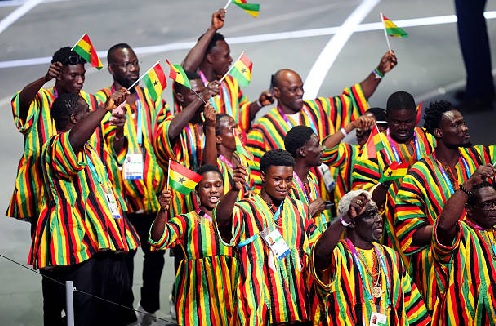
A 40-member Ghanaian contingent returning home with just two medals (one silver and bronze) is, by every reasonable measure, a poor return on the nation’s investment.
But the bigger concern is not the number of medals won. It is the system — or lack of one — that continues to produce such results.
For years, Ghana has approached major sporting competitions with the same misplaced priorities.
We spend heavily to send athletes to competitions, promise them handsome financial rewards if they win medals and expect them to compete against athletes from countries that have invested in their development for years.
Ghana has talent in abundance. What we lack is a deliberate and consistent system for identifying, nurturing and developing that talent from the grassroots.
In many of the countries that dominate international athletics, boxing, swimming and other sporting disciplines, athlete development begins in childhood.
Talented youngsters are identified early and provided with quality coaching, modern facilities, proper nutrition, medical support and regular international exposure.
By the time they reach the senior level, they are already equipped to compete against the best in the world.
Ghana, unfortunately, tends to wait until a major competition is approaching before beginning serious preparations.
We then place enormous pressure on athletes to produce medals.
Wheelchair racing athlete Raphael Botsyo Nkegbe put the issue into perspective when he argued that he would rather have the government invest $9,000 in his preparation and reward him $1,000 for winning a medal than promise him $10,000 for a gold medal without adequate preparation.
His position deserves serious consideration.
A medal is not produced by an incentive package announced shortly before a competition. It is the product of years of training, sacrifice, coaching, facilities, competition and financial support.
If the government truly wants medals, it must invest in the process that produces them.
The state of Ghanaian boxing should be particularly troubling.
Boxing has historically been one of Ghana’s greatest sporting exports. From D.K. Poison and Azumah Nelson to Ike Quartey,
Joshua Clottey and Joseph Agbeko, Ghana has produced fighters who have carried the national flag to the highest level of world boxing.
Yet, at the Commonwealth Games, with about 10 boxers representing the country, Ghana secured only one bronze medal.
Almost the entire boxing contingent returned empty-handed.
That is not merely a bad result at one competition. It is a warning about the sport's future.
Ghana currently has no world champion in professional boxing and the next generation must be developed if the country is to reclaim its place among the leading boxing nations.
The boxers who competed in Glasgow should have been part of the pipeline leading to future Commonwealth, Olympic and world championship success. But without proper preparation and regular high-level competition, that pipeline risks becoming increasingly weak.
