
If you woke up this week to someone in your family WhatsApp group saying "they are going to charge us for WhatsApp," you are not alone. People are worried and some are already talking about switching to Telegram. But is this true? Is META going to charge you to use WhatApp?
Here is the truth: WhatsApp is not going behind a paywall. But something has indeed changed, and it is worth understanding clearly. Your free WhatsApp is safe, but the bigger story is where this is heading.
So what exactly did Meta announce?
On May 27, 2026, Meta's head of product Naomi Gleit announced that the company is launching new paid subscription plans for Facebook, Instagram, and WhatsApp, describing them as part of a broader effort to offer enhanced tools across Meta's apps. The new WhatsApp offering is called WhatsApp Plus, and it costs $2.99 per month in the United States and the plan is optional and is now launching globally.
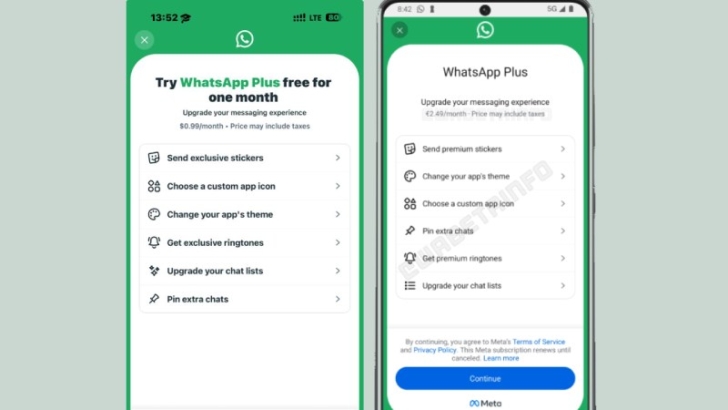
WhatsApp Plus adds premium features such as the ability to send premium stickers, change your app's theme, choose a custom app icon, pin extra chats, and get premium ringtones. That is essentially it. There is no core messaging feature being locked away from you.
Will users have to pay to keep using WhatsApp?
NO. This is the most important thing to understand. The official WhatsApp Plus is optional and does not replace the free version. Your chats, calls, and core messaging features stay exactly as they are, whether you subscribe or not.
Users who choose not to engage with paid features are not locked out of core WhatsApp functions, and the platform will continue to work as a free tool. So the voice messages, the group chats, the video calls, the media sharing, the voice notes your mother sends you every morning etc. remain free for now.
What does the $2.99 per month actually buy you?
Mostly customisation, Enhanced Chat Management, and Personalization. Yes. The WhatsApp Plus features announced include custom colour themes, 14 unique app icons, animated sticker packs, up to 20 pinned chats compared to the standard 3, exclusive ringtones, and bulk chat theme settings.
If you cancel the subscription, your themes revert to default, your pinned chats beyond the free limit become unpinned, and exclusive stickers and ringtones become unavailable. But your messages, contacts, and chat history are completely unaffected.
For most people in Ghana and across Africa, these features will feel nice but non-essential. The app you have used for years will work exactly the same way if you never pay a single pesewa.
What is the price for Ghana and Africa?
Meta has not published official pricing for Ghana or most African markets yet and regional pricing has only been confirmed for a few markets such as Europe at €2.49 per month and Pakistan and Mexico at local rates. Early testing in South Africa suggests a price of around R49 to R50 per month, though that may vary.
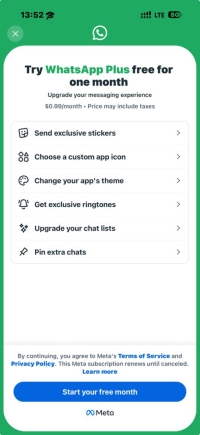
While there is currently no official pricing announcement for Ghana, initial screenshots from local users receiving invitations to try WhatsApp Plus suggest a monthly rate of $0.99. Based on Meta's history of aggressive price localisation, it is expected that the cost for Ghana and the broader African market will be lower than the figures set for the US and Europe.
Why does this matter so much for Ghana and Africa?
As of 2025, Ghana recorded the largest share of its digital population using WhatsApp among all markets observed globally. Think about what that means. WhatsApp is not just a chat tool here. It is how small businesses communicate with customers, how families coordinate across regions and the diaspora, how journalists share tip-offs, how churches coordinate services, and how market traders share prices.
Globally, WhatsApp has 3.3 billion monthly active users as of January 2026, with the platform processing over 100 billion messages every single day. Africa represents a significant and growing share of that base and any change to WhatsApp's business model, even one that starts small, affects us more directly than most other parts of the world.
The questions industry watchers are already asking
While ordinary users can breathe easy for now, those of us who work in digital media, technology policy, and digital strategy have some harder questions on our minds.
Where does this end? Today it is custom themes and ringtones behind the paywall but the question is whether, over time, features that currently feel standard could also migrate to paid tiers.
Once features like boosted reach sit behind a paywall, it changes how the platform feels for free users, and whether that gap widens is the bigger question.
What about WhatsApp's AI features?
Meta is testing a freemium model for Meta AI, introducing usage limits on extended reasoning and Thinking mode, and also setting paywalled caps on image and video generation. Meta AI will remain free in some capacity, but its more complex uses will be locked to certain tiers. For professionals and businesses using AI tools inside WhatsApp, this could become a real cost consideration quickly.
What about ads? Interestingly, status ads are not removed under WhatsApp Plus. Meta has not indicated ad removal is coming to this tier. So you pay $2.99 and still see ads in Status. That is a hard sell.
What about digital equity? Africa has the highest WhatsApp dependency and some of the lowest disposable incomes. If Meta gradually shifts more value to paid tiers, the risk is a two-tier internet where the quality of your digital experience is determined by what you can afford to pay.
The bottom line
The WhatsApp you know is not going anywhere, and it is not going paid for the vast majority of its users. The free version of the app you have relied on every day remains free.
But Meta is changing its business model in ways that deserve our attention. WhatsApp Plus, at $0.99 per month, is an optional upgrade for people who want to personalise their experience.
At this stage, the upgrade provides minimal practical benefits for the average Ghanaian user. The primary concern however is not the availability of premium sticker packs, but rather Meta's shift toward a tiered subscription model integrated into platforms that billions of people rely upon. It remains to be seen whether this new direction prioritizes the needs of African and Ghanaian users or primarily serves the interests of Meta's shareholders.
