


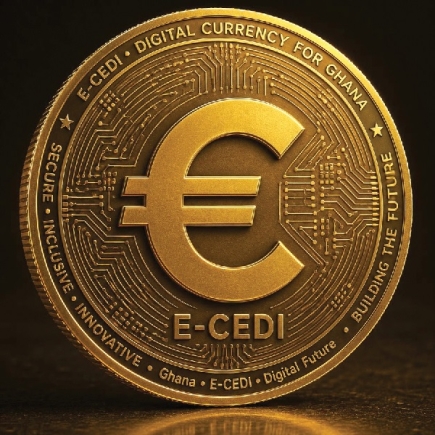
The Governor of the Bank of Ghana (BoG), Dr Johnson Asiama, has signalled that the country’s long-delayed e-Cedi project remains active, but said the central bank is taking a more cautious approach as it strengthens cybersecurity systems and explores the use of digital currencies for cross-border trade settlements.
Speaking at the Monetary Policy Committee (MPC) press briefing, the Governor said the project had not been abandoned, despite the slower pace of rollout.
“In some corners of the country, considering how heterogeneous we are as a society, we need to do a couple of other pilots,” he said, adding that the bank was still working through key preparatory stages before a full launch.
He identified cybersecurity resilience as one of the major areas requiring additional investment and testing before the central bank digital currency can be deployed at scale.
“Cybersecurity, for example, is a big part of that project. We are doing some work to upgrade our resilience as far as cybersecurity is concerned,” he said.
The comments suggest the central bank is prioritising system integrity and operational readiness over speed, following years of experimentation with the retail digital currency initiative first introduced during the pandemic-era push for digital finance.
Domestic rollout
While domestic rollout plans remain under review, the Governor indicated that the bank’s immediate focus is increasingly shifting toward cross-border payments and regional trade settlements.
According to him, the bank is in discussions with several institutions, including the African Continental Free Trade Area, on how digital currencies and stablecoins could be used to facilitate trade across African borders, particularly for small and medium-sized enterprises.
“What we are focusing on is to see how we can deploy that for cross-border settlements,” he said. “We are talking with a number of organisations, for example the AfCFTA and others, on how we can use stablecoins to settle cross-border trade in the interest of SMEs and small businesses.”
The shift reflects a broader trend among African central banks and financial regulators exploring blockchain-based payment systems as a way of reducing transaction costs, shortening settlement times and easing currency conversion challenges within the continent’s fragmented payments landscape.
Digital finance
Dr Asiama said the bank also remained supportive of related digital finance innovations, including tokenisation and broader digitisation initiatives within the financial sector.
“So yes, the e-Cedi project is very much of interest to us,” he said. “There are other related technologies we are supporting, like tokenisation and digitisation.”
The remarks indicate that while the e-Cedi may not be imminent, the central bank still sees digital currencies and blockchain-based infrastructure as part of Ghana’s longer-term financial modernisation agenda.