

GH¢580m stain: How African Games failed financial accountability test
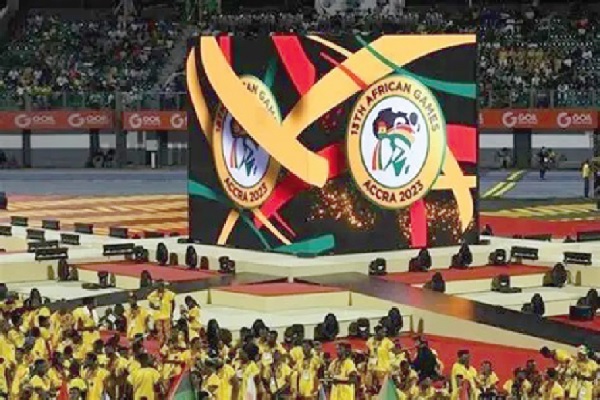
For a few weeks in 2023, Ghana stood tall. The 13th African Games, Accra 2023, were meant to be the nation’s coronation as a continental sports hub — a strategic national development intervention financed by a US$170 million loan. The athletes thrilled, the stadiums gleamed, and for a moment, the African Dream felt real.
But the mask has been torn off. The Auditor-General’s recent 70-page report to Parliament has exposed a staggering GH₵580.04 million in financial irregularities.
Behind the medal tally lies a labyrinth of inflated catering bills, phantom equipment, defective infrastructure, and cash payments that bypassed the government’s own financial firewalls.
The Games did not just showcase Ghanaian talent; they exposed a deep-seated culture of impunity that has once again shamed the nation on the international stage.
A catalogue of looting
The breakdown is breath taking in its audacity. Former Sports Minister, Mustapha Ussif, former Chief Director, William Kartey, and Local Organising Committee (LOC) Chairman, Dr Kwaku Ofosu-Asare, have been named as the officials most responsible for a recovery and sanction exercise.
Consider the catering issues: The ministry paid US$2.8 million (GH₵33.9 million) for a contract that bundled non-catering costs like infrastructure and utilities — services already paid for elsewhere. No supporting schedules, no verification. Just cash.
Then there is the accommodation fiasco. JDK Travel & Tours — a company supposedly not even licensed to provide lodging — charged US$150 per room per night when the market rate was US$70. The overpricing: US$840,000.
The same firm, alongside Delovely Co. Ltd and Jorninas Co. Ltd, all share a single beneficial owner: John Kwadwo Debrah, according to the Auditor General.
Together, they signed away contracts worth GH₵150.6 million across transport, equipment, and sportswear — a clear conflict of interest that procurement files conveniently ignored.
Infrastructure rot, phantom equipment
The flagship Borteyman Sports Complex, built under a US$145 million contract with ContractaConstructionUK, tells a story in itself.
Then, there is a non−itemised “MayActionPlan” that stripped away US$23.8145 million contract with ContractaConstructionUK to provide access roads, drainage, a warm-up football field, and a substation. The work vanished, but the money didn’t. Consultant supervision fees inexplicably rose, the report pointed out.
At the University of Ghana Stadium and Legon Sports Village, auditors flagged another US$4.56 million in irregular and unjustified claims, including repainting works on a hostel that had just been painted months earlier.
Across all five major projects, construction defects — cracking concrete, corrosion, drainage failures — will cost at least GH₵12 million to fix, the auditor-general’s report stated.
Curiously, consultants certified payments despite these defects, raising questions of gross negligence or complicity.
Meanwhile, athletes competed with undelivered equipment. Table tennis, badminton, and handball gear valued at US$206,044 was paid for but allegedly never supplied. Boxing equipment contracted at US$206,044 was paid for but allegedly never supplied. Boxing equipment was contracted at US$109,828 against a benchmark of US$48,834.
The message is clear: the Games were a feeding trough, not a sporting event.
Broadcasting farce
The Ghana Broadcasting Corporation (GBC) spent US$3.6 million to broadcast the Games but earned just US$45,000 — against a projected US$5 million.
Free access was handed to a major broadcaster without approval. GBC engaged service providers without formal contracts and paid a training firm 100 per cent in advance with zero evidence of delivery, the auditors reported. No training materials. No certifications. Just a receipt, the report noted.
Perhaps most damning for state accountability is the cash withdrawal. A staggering GH¢20.4 million was pulled from the African Union Sports Council (AUSC) account without documented purpose. No Ghana Integrated Financial Management System (GIFMIS) computerised purchase orders. No system vouchers. No Electronic Funds Transfer (EFT) confirmations.
The government’s entire digital financial control system was bypassed as if it did not exist.
Another GH¢15 million from LOC accounts was funnelled to unrelated activities — including salary advances for Black Stars coaches. The LOC became a parallel treasury.
Why accountability is non-negotiable
The Auditor-General has recommended sanctions under Section 92 of the Public Procurement Act against Ussif, Kartey, and Ofosu-Asare, with GBC’s Director-General separately cited.
But recommendations are not convictions. Ghana has a long, ugly history of audit reports gathering dust while officials walk free.
This cannot stand. If duty bearers are not held accountable — severely and publicly — the message is that corruption pays.
The GH₵2.245 billion spent on the Games is equivalent to funding for several district hospitals or thousands of school classrooms. The opportunity cost is paid in Ghanaian lives, not just cedi notes.
To nip this canker in the bud, three things must happen immediately:
First, the Attorney-General must prosecute every named official for procurement violations and causing financial loss to the state. No settlements. No “out-of-court” deals. Full criminal trials with custodial sentences as a deterrent.
Second, the Public Procurement Authority (PPA) must be empowered with real-time auditing capabilities. Single-sourcing — 55 contracts worth GH₵2.7 billion without justification — must be outlawed for public events above a threshold. All beneficial ownership of bidding companies must be declared under oath.
Third, Parliament must amend the Public Financial Management Act to make bypassing GIFMIS a standalone felony with a minimum 10-year sentence.
Cash withdrawals above a nominal limit for public events must require dual authorisation from the Finance Ministry and the Auditor-General’s office.
Going forward, Ghana should adopt a hosting integrity pact model used by successful nations: every major international event must have a pre-signed agreement with civil society and audit authorities for live, public monitoring of every contract above US$50,000.
No closed-door variation orders. No May Action Plans that erase millions.
The athletes of Ghana did their duty. The officials failed theirs. Unless the law moves from paper to prison cells, the next African Dream will simply become the next audit nightmare. Ghana deserves better than monuments to greed.