


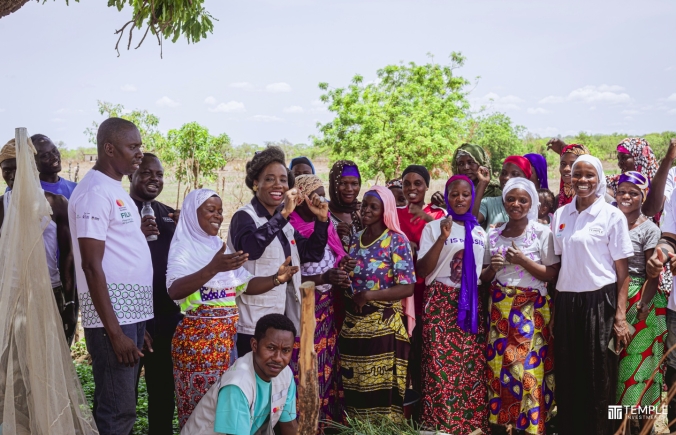
FILMA program doubles rural incomes as 44,000 youth transition into dignified work in Ghana
Two years into a four-year initiative designed to empower rural Ghanaians, the Financial Inclusion for Last Mile Actors program has enrolled 77,868 participants and successfully transitioned 44,476 youth into dignified and fulfilling work, with young women making up 90 per cent of that total, according to data presented at the program's inaugural learning event in Accra.
The event, held at the Accra Marriott Hotel, brought together over 230 stakeholders to assess progress on a multi-partner vision for rural Ghana. Implemented by Temple Investments in partnership with the Mastercard Foundation, FILMA is a four-year initiative running from 2024 to 2028, designed to empower 100,000 young Ghanaians by providing access to affordable credit, inclusive financial services and market opportunities. The program specifically targets young women, youth and persons with disabilities across 18 districts in the Volta, Oti, Bono East and Northern Regions.
Average monthly income more than doubles
The program's data reflects deep structural changes. The average monthly income of a last mile actor has more than doubled, rising from a baseline of GH¢1,334 to GH¢2,793, while the portion of participants able to self-secure a financial product has jumped from three per cent to 38 per cent.
Crucially, the program is de-risking rural life by introducing microinsurance and promoting diversified, non-traditional income streams to hedge against agricultural volatility. To date, this includes specialised training and equipment distribution for 1,099 individuals in beekeeping, 500 in mushroom production, and 2,661 in dry-season vegetable production.
The program operates with a precise mandate: ensuring that 70 per cent of last mile actors are women and five per cent are persons with disabilities. Currently, 2,151 persons with disabilities are actively participating in the program's pathways.
Defining the last mile actor
Central to the program's mission is the last mile actor, defined as the essential yet often overlooked players at the end of the agricultural value chain. This demographic primarily comprises young women, youth and persons with disabilities serving as smallholder farmers, processors and traders. These actors have historically been excluded from formal financial systems due to systemic barriers: a lack of traditional collateral, limited financial footprints and the high perceived risk of rural enterprises.
The program is driven by a strategic consortium led by Temple Investments, providing strategic leadership and managing the Catalytic Facility for Inclusive Finance. This ecosystem is fortified by the specialised expertise of Catholic Relief Services, AV Ventures, SEND Ghana, and Enterprise Life, which provides tailored insurance solutions to de-risk the financial landscape for rural actors.
Voices from the last mile
A powerful session at the forum brought five last-mile actors to the stage to share their real-world transformations. Sakina, a young participant, described how saving was once a distant dream as she struggled to manage small allowances provided by her parents. Following the financial literacy and saving guides provided by the program, she began consistently saving 30 per cent of her funds, turning a dream into an active, empowering daily practice.
Gifty, a university graduate, shared how she turned to mushroom farming in the Oti Region due to the scarcity of formal employment. Although she managed to build a basic farming structure using her national service allowance, she lacked the capital to purchase compost and spawn. Initially dismissing Voluntary Savings and Loan Associations as groups meant only for older community members, Gifty joined the program, mobilised other young people and formed a VSLA. The collective savings from this group provided the critical capital needed to purchase compost and launch her commercial operations.
Institutional commitments and systemic debates
The final stakeholder panel confronted the harsh economic realities facing rural and local producers. Caleb Edwards, Managing Director of WAMI AGRO, offered a sobering view on the impact of import liberalisation, pointing out that local producers struggle to compete with importers backed by cheaper foreign capital, subsidies and tax exemptions.
Addressing lending risks, panel representatives from Absa and Maroon Capital discussed the necessity of digital lending to offset last-mile delivery costs but warned of a culture of default that led to a bank taking a 32 million Ghana cedi impairment. They called for a unified shift in borrower mindset toward "contractual faithfulness" and robust data literacy.
These provocations led to critical institutional commitments. The Central Bank representative pledged to move beyond simple gender-balance metrics to develop and launch an active, value-chain-wide inclusive policy specifically for women by mid-2027. The Ministry of Finance committed to crafting highly actionable, solution-oriented policies within the upcoming National Financial Inclusion and Development Strategy. Concurrently, disability advocates and WAMI Agro announced a collaborative framework with international disability facilitators to train financial institutions on accessible services.
The women behind the work
"For us at Temple, these women are not a video. They are the reason we are here. They are not characters in a story; they are the story," noted Cecilia Hesse, Managing Director of Temple Investments, during her opening address. Her words underscored a fundamental shift in how development is measured: moving away from distant spreadsheets toward the lived realities of the women who are the bedrock of the nation.
She also shared a proverb that captures the resilience of the program's target demographic: "Even if the housefly has nothing, it rubs its hands together in anticipation." This spirit of preparation and work is what FILMA seeks to harness.
By recognising the brilliance and drive of these women, the program ensures they no longer have to struggle just to survive, but are instead empowered to build a lasting destiny for their families and communities. More than just an intervention, FILMA serves as a critical test case for a high-impact sustainability model, marking a departure from traditional grant-based modules toward transforming agricultural and agri-adjacent value chains into self-sustaining hubs of economic resilience.