EDITOR’S LENS: Respect the creative
The recent social media debate sparked by comments about the National Science and Maths Quiz (NSMQ) has once again exposed an uncomfortable truth about our society: we are still too quick to rank professions and decide whose contribution truly matters.
There is no doubt that the NSMQ remains one of Ghana’s most notable educational achievements. Over the years, the competition has motivated thousands of young people to excel in science, technology, engineering and mathematics — nurturing brilliant minds, opening opportunities for students, elevating schools, and creating role models for future generations.
However, in celebrating the NSMQ, we must be careful not to undermine other routes to success.
The suggestion that people working in the creative sector have somehow “failed” or are less relevant than those in the sciences overlooks a fundamental truth about how modern society operates. Success is not a single-lane road, and never has been.
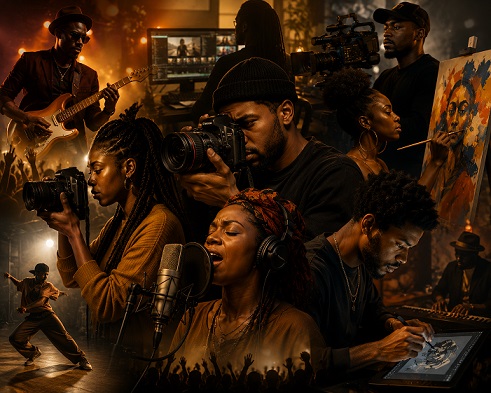
The camera operator, filmmaker, actor, musician, content creator and photographer are not occupying lesser positions in society; they are simply contributing in different, equally vital ways.
Consider this: when a scientist makes a breakthrough, who shares that story with the world? When a nation aims to preserve its culture and identity, who documents it? When tourism needs a boost, whose creativity captures a country’s essence? When social issues demand attention, who uses storytelling to spark conversations that inspire action?
More often than not, the answer is within the creative industry.
There is particular irony in seeing people dismiss content creators and creative professionals while voicing those very opinions on platforms that exist solely because of creative work. Social media itself is powered by videographers, editors, writers, graphic designers, broadcasters, and digital storytellers. Without them, there is no platform, reach, or conversation.
The truth is simple: every profession exists because society needs different talents.
A doctor may save a life in a hospital. A filmmaker may change a life through storytelling. An engineer may build a bridge; an architect may design it. A musician may bring healing and hope when words alone are insufficient. No single contribution cancels out another; they are all threads woven into the same fabric.
The danger begins when we start creating a hierarchy of human value based solely on professional background. People are gifted differently, and that difference is not a flaw—it's a strength.
As a nation, we must resist the urge to define success too narrowly. The Ghana we wish to build will not rise solely on the shoulders of scientists or creatives alone. It will be constructed by individuals from diverse backgrounds whose talents complement, challenge and elevate one another.
We can—and must—do better.