
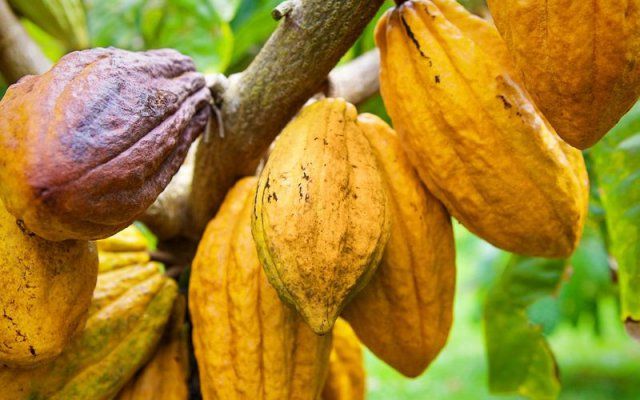
Cocoa has long been the lifeblood of Ghana’s rural economy, supporting roughly 800,000 smallholder households and sustaining more than three million people across farming communities. As one of the country’s most strategic export commodities, cocoa contributes significantly to foreign exchange earnings and rural development.
Yet the cocoa sector is facing unprecedented challenges. The global market has experienced dramatic price swings in 2024 and 2025, with international cocoa prices reaching record highs of over $10,000 per metric tonne in early 2024, only to face sharp corrections in 2025. These fluctuations highlight the vulnerability of Ghana’s smallholder farmers, who often operate on 2–5 hectare plots and earn incomes near the international poverty line, despite their essential role in the multi-billion-dollar chocolate industry.
Unlike other commodities traded freely on global markets, Ghanaian cocoa prices are regulated by the Ghana Cocoa Board (COCOBOD), which sets the farmgate price each season. While this system offers some protection against market shocks, it also means that farmers do not always benefit quickly when global prices rise. Any downward adjustment can severely affect household incomes.
For most cocoa-dependent families, income from the crop finances children’s education, healthcare, and household consumption. Yet price volatility and low incomes make it difficult to maintain farms. Fertilizers, pruning, pest control, and disease management are often postponed when payments are delayed or uncertain, gradually reducing yields and accelerating the decline of aging plantations.
Another pressing challenge is demographics. The average cocoa farmer in Ghana is now over 55–60 years old. Young people are increasingly reluctant to join the sector, perceiving it as labor-intensive, financially uncertain, and vulnerable to climate risks. If this trend continues, Ghana could face serious labor shortages and reduced productivity in the coming decades.
Climate change compounds these issues. Irregular rainfall, rising temperatures, and outbreaks of pests and diseases—such as cocoa swollen shoot virus—have increasingly affected yields. Additionally, illegal mining in cocoa-growing regions has degraded soil quality and reduced farmland availability, further threatening sustainability.
Global competition adds another layer of concern. Emerging cocoa producers in Latin America are expanding production and improving yields, meaning that persistent challenges in Ghana could jeopardize its position as the world’s second-largest cocoa producer.
So, what can be done? Addressing cocoa price volatility and structural challenges requires urgent action:
• Boost productivity: Modern extension services, climate-resilient seedlings, and sustainable farm management can help farmers increase yields and withstand income shocks.
• Encourage diversification: Integrating crops such as plantain, cassava, or vegetables can provide alternative income streams and improve food security.
• Engage youth: Access to technology, credit, and land support can attract younger generations to cocoa farming.
• Improve transparency: Clear communication about pricing policies can strengthen trust between farmers and regulatory institutions.
• Ensure fair value distribution: Initiatives like the Living Income Differential aim to guarantee that farmers receive a more equitable share of the global chocolate market.
The future of Ghana’s cocoa sector depends on the resilience of its smallholder farmers. Cocoa may remain a cornerstone of the economy, but stability, sustainability, and social equity must guide policy and investment decisions. As global chocolate demand grows, supporting these farmers is not just a local or national concern—it is an imperative for international supply chains and for the millions who depend on cocoa for their livelihoods.
Ghana’s cocoa industry can thrive, but only if volatility is transformed into opportunity and uncertainty gives way to resilience.

The writer, Sheila M. Deheer is a champion of evidence-based solutions for agricultural transformation and rural prosperity!
She holds a master’s degree in Agricultural Economics from Tuskegee University and is currently a PhD candidate in Agricultural Education at Southern Illinois University Carbondale.
Her work focuses on agricultural policy analysis, smallholder farmer resilience, agricultural education and extension systems, and sustainable development strategies. She contributes research-informed perspectives on improving productivity, income stability, and long-term sustainability in agricultural systems.
She can be reached at:
