
Bride price (dowry) payments are a global practice whereby in various cultures payments are made to either the bride's family or groom's family as a gesture of appreciation and evidence of customary marriage.
In most of Africa and Ghana in particular , pride payments are usually made to the bride's family.
In Ghana, pride payments vary significantly among ethnic groups, and even among the same ethnic group, some differences may exist.
Bride payments among the Bulsa ethnic group involve, in relative terms, very simple and less expensive items.
There are two underlying reasons for the Bulsa deliberately making bride payments less expensive.
First, marriage for the Bulsa is the basis of the family and community and its economic development.
Sharing close ties and cooperation between communities and families was vital for the Bulsa people, and therefore the Bulsa in setting off their bride payment, never wanted to put in place anything that will impede young men from marrying and also anything that will prevent their daughters from getting married.
Secondly, Bulsas didn't want to marry off their daughters as "property" of any man through expensive bride price payments.
In that regard, no Bulsa daughter would be allowed to stay in a marriage that is abusive and mentally draining because of bride price payments.
Payments
The items that constitute pride payments in Bulsa culture are principally cola, tobacco and money (cowries).
So, when these items are received by the bride's family from the groom's representative (Sang-yigma), the marriage is consumated and the acceptance of the items proves as evidence.
Now, before this is done, the bride is usually in the custody of the groom often without the knowledge of the bride's family even though they have been aware of their courtship and so the groom's family by coming to make the bride payment takes an opportunity to inform the bride's family that they should stop looking for their daughter because she is with them (Akaayaai ale wa boro).
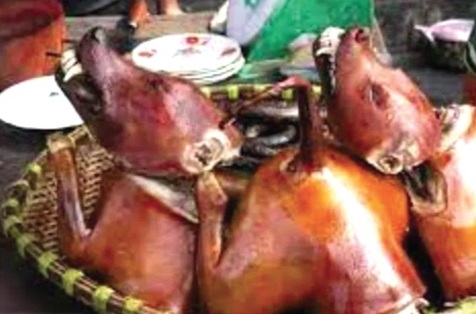
After the items are received, evidence of the marriage, the bride's brothers select a day to go visit their sister, to check on her welfare. Now per Bulsa tradition, when the brother in-laws visit, their brother in-law and his family have to kill a dog for them.
In the absence of a dog, a sheep or goat is killed for them.
They eat this meat but must reserve the "kuusiri", that is the breast of the meat (usually the front part of the chest, from the neck to the abdomen) for the head of family as evidence that they have gone to check on their sister and have been received well.
This is what is termed as "Poi-deka", which literally means 'womb eating'.
The significance of the womb is the children their sister will use her womb to bear for that family.
But for any man to have legal ownership of the children of this marriage and to be allowed to perform the final funeral rites of his father in-law or mother in-law and also to be able to perform the final rites of his wife with the participation of his in-laws, another process or rite known as "nansuinglika" or "closing of the gate", is performed.
In this rite, a hole blade, tobacco, hen/animal is used.
If this rite is performed at the same time as the bride payment, then a hen is used.
However, if this rite is performed after the woman gives birth then either a goat or a sheep is used according to the particular community.
In conclusion, bride price items in the Bulsa tradition are kola, tobacco and money.
The "nansuinglika" rite or closing of the gate is an essential component of the marriage process but it is not typically part of the bride price.
Also, the dog eating is not part of the bride price but a component of the marriage process.
Drinks and alcohol as well as cloths have never been part of Bulsa bride price tradition, they're as a result of cultural importation.
E-mail:
