
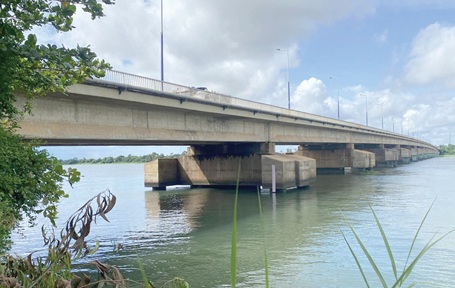
Every business operating in Ghana carries an infrastructure cost.
It is found in fuel for standby generators, spoiled produce, delayed trucks, higher maintenance costs and the expense of securing water when public supply fails.
The 2026 Ghana Infrastructure Report Card should therefore be read not only as an engineering assessment but also as a report on Ghana’s business environment.
The Ghana Institution of Engineering assessed eight sectors and gave the country an overall D3, equivalent to 2.83 out of five. More troubling is that performance remains essentially unchanged from a decade ago.
For investors and business leaders, another figure deserves attention: GH¢17.75 billion.
That was the amount owed to road contractors at the end of 2024. The figure has increased more than elevenfold over the decade and raises a fundamental question about how Ghana plans, finances and executes infrastructure.
Cost, arrears
When contractors are not paid on time, projects slow or stop. Suppliers remain unpaid, workers suffer, banks face greater exposure, and contractors factor financing risks into future bids.
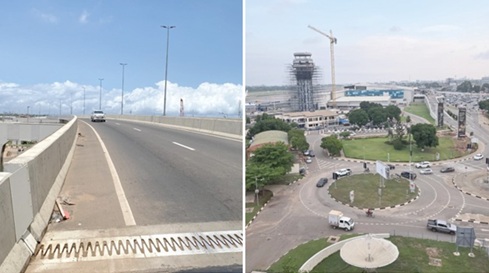
Road infasrtructure is key to the development of every economy
Road-budget execution had improved to about 83 per cent by 2024, yet arrears continued to accumulate.
When payment reliability deteriorates, the risk is priced into future contracts. Ultimately, the taxpayer, consumer or business pays.
Roads underpin almost every productive activity, making the sector’s decline from D3 in 2016 to E1 particularly serious. Only about 27 per cent of Ghana’s roughly 94,000-kilometre road network is paved.
Poor roads increase transport and maintenance costs, extend delivery times and raise the risk of damage.
Farmers face post-harvest losses; manufacturers pay more for inputs; traders experience slower turnover; exporters face delays and weaker competitiveness.
The cost accumulates across fuel, logistics, maintenance, insurance and inventory.
Deferred maintenance is not a saving. It is often a larger bill postponed.
Progress
Electricity has improved from D2 to D1. Installed generation capacity has risen to 5,492 megawatts, and access has reached about 88 per cent. Ghana also continues to export electricity to neighbouring countries.
The reserve margin, however, has fallen to about 15 per cent, below the 18 per cent level considered prudent, while the financial difficulties of the Electricity Company of Ghana remain a concern.
Graded C3, aviation is the strongest-performing sector in the assessment. Investments in airport infrastructure, including Terminal 3, have strengthened Ghana’s position as a regional gateway.
The lesson is straightforward: well-planned and properly managed infrastructure investment can produce economic value.
Water infrastructure received D3.
Treated supply meets only about 55 per cent of daily demand, while substantial volumes are lost before reaching customers.
For industry, unreliable water means storage and alternative sources.
Railways, graded E1, present another missed opportunity.
Only 149 of the country’s 947 kilometres of rail network are reported to be operational.
Limited rail freight leaves more cargo on already stressed roads, increasing logistics costs.
Health and education are equally important.
They are the infrastructure of human capital.
No economy can remain competitive without healthy workers and a skilled workforce.
Ghana faces a genuine infrastructure financing challenge, but financing alone does not explain the deficit.
The deeper issue is governance: project preparation, procurement, payment discipline and maintenance.
Ghana cannot finance all its infrastructure needs from the public purse.
Private capital must, therefore, play a role.
But investors need predictable revenues, credible contracts, transparent risk allocation and confidence that obligations will be honoured.
Infrastructure investment depends on trust as much as money.
The D3 grade should be treated as a warning.
The country has shown through power and aviation that performance can improve.
The challenge is to extend that discipline to other sectors.
The government must improve project preparation, avoid commitments without credible financing and strengthen payment discipline.
Maintenance should be treated as an investment, not an afterthought. Public agencies must manage existing assets better, while private participation should be transparent and disciplined.
Infrastructure is part of Ghana’s national balance sheet, even when its cost does not appear directly in company accounts.
Reliable roads, power and water reduce business costs; efficient railways, airports and ports facilitate trade; quality health and education strengthen human capital.
Together, these determine national competitiveness.
The report card, therefore, gives Ghana more than a grade.
It gives us a measure of the environment in which businesses operate.
A D3 infrastructure system imposes a cost on everyone.
Ghana does not have to accept D3 as its permanent grade.
But raising it will require more than announcing projects.
It will require changing how infrastructure is planned, financed, delivered, maintained and held accountable.
For business, the message is simple: infrastructure is not merely government expenditure.
It is a determinant of the cost of doing business, the competitiveness of the economy and the value of every investment made in Ghana.
The question is no longer what grade Ghana has received.
It is whether we are prepared to change it.
The writer is the Vice-President, Ghana Institution of Engineering/Co-Chair, Public Accountability Committee.
