
As a specialist and researcher in international development studies affiliated with Presbyterian University, Ghana, I have observed that we often fall into the trap of measuring "progress" through macro-economic statistics and the rapid expansion of global trade.
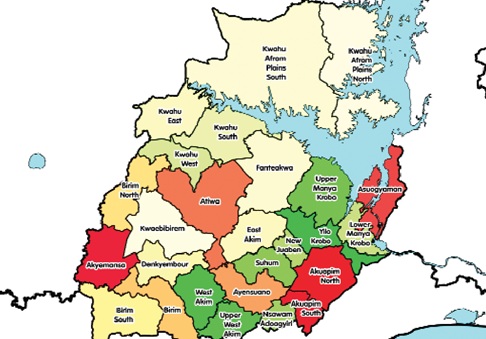
However, my recent research within the Kwahu West Municipality suggests we are overlooking the most critical metric: the dignity of the local community.
True progress is not defined by the speed of globalisation, but by how well it protects the vulnerable. In my study of the Livelihood Empowerment Against Poverty (LEAP) programme in Nkawkaw and its environs, I found that while the intent is noble, the execution often falters.
Specifically, data collected shows that 75 per cent of beneficiaries in the municipality suffer from irregular payments, and roughly 20 per cent of respondents believe the targeting process is influenced by political affiliation rather than actual need.
When social safety nets are inconsistent, the "dignity" of the poor is compromised, leaving them more vulnerable to the volatile shifts of the global market.
To ensure that the Kwahu West Municipality and similar districts across Ghana truly benefit from globalisation, we must depoliticise our social protection schemes and ensure that fiscal disbursements, such as the District Assemblies Common Fund (DACF), are transparent and aligned with the immediate needs of local households.
We must remember that a nation's growth is only as fast as its slowest member.
It is time we prioritised a human-centred approach to development - one where the preservation of local livelihoods and cultural identity is not sacrificed for the sake of "global speed".
The writer is with the Faculty of Development Studies,
Presbyterian University, Ghana.
Akropong Campus.
