Ghana’s path to prosperity: The impact of the China tariff deal
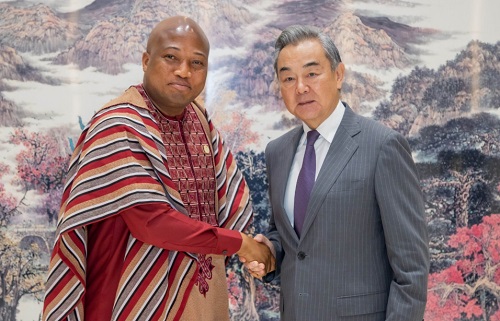
On June 12, 2025, Ghana’s Foreign Affairs Minister, Hon. Samuel Okudzeto Ablakwa, announced a groundbreaking trade agreement with China, securing a 0% tariff on all Ghanaian exports to the Chinese market.
This historic deal, formalized during high-level talks with China’s Foreign Minister, Wang Yi, at the China-Africa Summit in Changsha, marks a significant milestone in Ghana-China relations. With bilateral trade volumes exceeding US$11 billion in 2024, China remains Ghana’s largest trading partner, and this agreement is poised to deepen economic ties, boost Ghana’s export potential, and drive sustainable development.
This article explores the benefits of this deal for Ghana, its broader implications, and whether it represents a sound foreign policy for the West African nation.
Benefits of the 0%Tariff Deal for Ghana
The elimination of tariffs on all Ghanaian exports to China offers a range of economic and developmental benefits, positioning Ghana to capitalize on China’ s vast market of 1.4 billion consumers. Below are the key advantages:
- Increased Export Revenue and Market AccessBy removing tariffs, Ghanaian goods— ranging from agricultural products like cocoa, cashew, and shea butter to natural resources such as gold and lithium—become more competitively priced in China. Tariffs act as an “import fee” that increases the cost of foreign goods, often making them less attractive to buyers. With zero tariffs, Ghanaian products gain a significant price advantage, potentially boosting demand and increasing export volumes. This is particularly critical for Ghana, where exports contribute significantly to GDP. The deal could lead to a surge in foreign exchange earnings, strengthening Ghana’s balance of payments and supporting economic stability.
- Job Creation and Support for Local Industries: The tariff-free access is expected to
stimulate production in key sectors such as agriculture, mining, and manufacturing. Increased
demand for Ghanaian goods could spur job creation, particularly in labor-intensive sectors like
cocoa processing and textile production. Small and medium-sized enterprises (SMEs), which form
the backbone of Ghana’s economy, stand to benefit from enhanced market opportunities, fostering
entrepreneurship and local innovation. As Foreign Minister Ablakwa noted, this deal aligns with
President Mahama’s vision of industrializing Ghana, including plans for an integrated aluminum
industry and an electric vehicle manufacturing plant leveraging the country’s lithium deposits. - Diversification of Export Markets: Ghana’s economy has historically relied on a limited
range of exports and trading partners. The 0% tariff deal provides an opportunity to diversify export
markets by tapping into China’s massive consumer base. This reduces Ghana’s dependence on
traditional markets like Europe and the United States, mitigating risks associated with global trade
disruptions, such as recent tariff wars initiated by the U.S. under President Trump. Diversifying
trade partnerships enhances Ghana’s economic resilience and positions it to benefit from China’s
growing demandfor rawmaterials and processed goods. - Technology Transfer and Industrial Development: Beyond tariff reductions, the
agreement includes discussions on joint ventures and technology transfer, notably in the electric
vehicle (EV) manufacturing sector. Ghana’s strategic lithium deposits make it an attractive partner
for China, a global leader in EV production. Establishing an EV manufacturing plant could
transform Ghana into a hub for clean energy technology in West Africa, creating high-skill jobs and
fostering industrial growth. Additionally, plans to exploit bauxite for an integrated aluminum
industry, supported by modern rail infrastructure, signal a move toward value-added production,
reducing Ghana’s reliance on raw material exports.
Strengthened Bilateral Ties and Economic Partnership: The deal is set to be formalized through a special Economic Partnership Agreement (EPA) between Ghana and China. Thisframework will institutionalize cooperation, ensuring long-term trade expansion and mutual benefits.
With China as Ghana’s top trading partner, the agreement reinforces diplomatic and economic ties, potentially unlocking further investments in infrastructure, education, and healthcare.
Such partnerships are critical for Ghana’s development agenda, particularly in achieving the United Nations Sustainable Development Goals (SDGs).
Broader Implications for Ghana
The 0% tariff deal comes at a time when global trade dynamics are shifting, with tensions over U.S.-imposed tariffs and a push for African nations to assert greater economic sovereignty.
For Ghana, this agreement aligns with broader African efforts to leverage trade partnerships with China, as evidenced by China’s decision to extend zero-tariff treatment to 33 least-developed African countries.
This move not only enhances Ghana’s position within the African Continental Free Trade Area (AfCFTA) but also signals China’s commitment to countering U.S. trade policies, which both nations have criticized.
However, the deal is not without challenges. Ghana must address supply-side constraints, such as limited production capacity and infrastructure bottlenecks, to fully capitalize on tariff-free access.
Additionally, ensuring that the benefits of increased exports trickle down to ordinary Ghanaians will require robust policies to promote inclusive growth. There is also the risk of over-reliance on China, which could expose Ghana to vulnerabilities if geopolitical or economic dynamics shift.
Is This a Good Foreign Policy for Ghana?
From a foreign policy perspective, the 0% tariff deal is a strategic win for Ghana, reflecting a pragmatic approach to international relations. It demonstrates Ghana ’ s ability to leverage its diplomatic influence to secure favorable trade terms, aligning with its broader goal of economic transformation. The agreement complements Ghana ’ s domestic agenda, including President Mahama’s vision for industrialization and job creation, while positioning the country as a key player in China-Africa cooperation.
However, a balanced foreign policy requires Ghana to diversify its partnerships beyond China to avoid dependency.
Engaging with other global powers, such as the European Union, India, and Japan, will ensure Ghana maximizes its trade potential while maintaining strategic autonomy.
Furthermore, Ghana must prioritize transparency and accountability in implementing the Economic Partnership Agreement (EPA) to ensure that economic gains benefit the broader population, not just elites or foreign investors.
Conclusion
The 0% tariff deal with China is a transformative opportunity for Ghana, promising increased export revenues, job creation, and industrial development. By tapping into China’s vast market and fostering technology transfer, Ghana can accelerate its economic growth and reduce reliance on traditional export markets. While the deal strengthens Ghana-China relations and reflects astute foreign policy, its success hinges on Ghana’s ability to address domestic constraints and pursue diversified partnerships. If managed effectively, this agreement could serve as a catalyst for Ghana’s emergence as a leading economic power in Africa, setting a model for other nations to follow.