

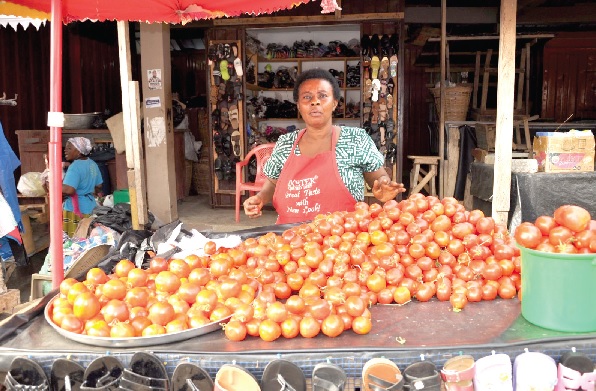
The recent drop in fuel prices has sparked debate on whether the relief at the pumps is translating into lower prices of goods, food items and transport fares in Cape Coast, Central Region.
An interview by The Mirror with some traders, drivers and consumers at the Kotokuraba Market and surrounding business districts shows a mixed picture.
Many stakeholders attributed recent price changes more to the cedi’s performance against the dollar than to fuel price reductions.
Dollar, not fuel, drives prices
On the electronics and mobile phone market, traders were unanimous that fuel prices had little impact on their business.
At Franko Phones in Cape Coast, Frank Aidoo said exchange rate stability remained the biggest factor.
“Fuel prices do not affect our business directly. It is the dollar that determines our prices,” he explained.
“When the dollar comes down, phone prices reduce. For instance, the Samsung A16, which was selling around GH¢2,500 some years ago, is now going for about GH¢1,800.”
He added that prices had stabilised compared to previous years, offering some relief to consumers.
Another dealer, Edward Mpriam of Eddie K Phones, echoed the view, noting that imported goods were more responsive to currency movements than fuel costs. He appealed to the government to sustain policies that stabilise the cedi.
Food prices show mixed signals
Foodstuff traders at the Kotokoraba Market reported varied experiences.
A vegetable seller, Benedicta Ackon, said some prices had dropped but insisted fuel was not the reason.
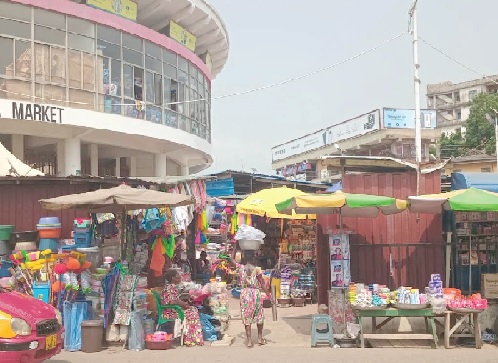
“You will go to the market and see that some items are cheaper, but transport costs keep increasing,” she said.
“Previously, transporting a sack of carrots cost GH¢15, but now drivers charge GH¢30. So I don’t think fuel reduction is what is helping us.”
However, Lawra Bawah, who sells yams and vegetables, attributed slight reductions partly to fuel price cuts, saying some drivers had adjusted transport charges marginally.
For wholesale traders, the exchange rate again emerged as the dominant factor.
A wholesaler, Ebenezer Abekah Kwoffie, who deals in rice, cooking oil, tomatoes and other essentials, said prices fell when the cedi strengthened, not when fuel prices dropped.
“In our business, most transactions are influenced by the dollar,” he said.
“Fuel has little to do with it. This is the first time, even around Christmas, that prices have come down instead of going up. Items such as sugar, oil and rice have reduced, largely because of the dollar.”
Food vendors and fish sellers feel little relief
For food vendors, fuel reductions have brought little relief. A kenkey seller, Madam Araba, said her prices remained the same.
“Kenkey was GH¢5 before and it is still GH¢5, same size,” she said.
“I don’t see any link. The only thing that has reduced slightly is the price of fried fish.”
Smoked fish sellers, however, reported rising costs. Mary Otoo said a box of smoked fish that previously sold for about GH¢700 now costs around GH¢900.
“I have not seen any reduction at all,” she said. “Fuel prices have not helped our market.”
Household items and hardware
Sellers of household appliances acknowledged some price reductions but linked them to currency movements. Abdullah Umar, who sells blenders, microwaves and gas irons, said prices had fallen due to the dollar.
“At first, I was buying gas burners at GH¢320, but now I get them at GH¢230 and sell at GH¢250,” he said.
“Some people still sell very high and I don’t understand why.”
Similarly, Rosemary Quayson, who trades in fans and electrical accessories, said prices had remained moderate over time, with no clear link to fuel prices.
In the hardware section, Richard Acquah, a dealer in nails and building materials, said neither fuel price reductions nor dollar stability had eased his business.
“Every week, the prices change, but they don’t change downwards,” he said, explaining that high import costs, transport charges, rent and market levies continued to push prices up.
He added that customers often blamed traders unfairly, noting that traders were sometimes forced to cut profit margins to retain customers even as restocking costs rose.
Transport fares unchanged
Commercial drivers acknowledged that lower fuel prices had eased some pressure but said commuters had yet to benefit. A driver operating from Kotokoraba to the University of Cape Coast (UCC), who gave his name as Yussif, said fares remained unchanged because transport unions had not issued directives.
“The reduction has helped us because we can save a little. But spare parts are still very expensive,”he said.
He said drivers were waiting for official fare adjustments from the Ghana Private Road Transport Union (GPRTU).

Another driver, Abubakar Sulemana, said fuel was only one component of operating costs.
“Engine oil, brake fluid and spare parts keep increasing,” adding that drivers were often unfairly portrayed as exploitative despite rising operational expenses.
Consumers
Consumers welcomed some price reductions but said transport costs continued to erode any gains. A shopper at Kotokuraba Market, Madam Comfort Baidoo, said food prices were slightly lower than last year.
“By the time you pay trotro fare to the market and back, whatever you saved on food is gone,” she said.
Emmanuel Addo noted that cement prices had reduced compared to previous years, easing pressure on households undertaking construction.
“It is better than before, but transport costs have not changed, so life is still expensive,” he said.
A mother of three, Doris Amoah, said fuel price reductions would only be meaningful when reflected in public transport fares.
“We hear fuel prices have gone down, but we are still paying the same lorry fares,” she said.
Situation in Ho
In Ho, prices of some food items at the Ho Central Market had fallen sharply following the marginal reduction in fuel prices a week ago, reports Alberto Mario Noretti, Ho.
A five -kilogramme bag of rice, which previously sold at GH¢150, is now selling for GH¢60, while the price of a 10kg bag has dropped from GH¢300 to GH¢150 since the fuel price reduction.
As of Tuesday, January 20, 2026, a bottle of cooking oil that sold for GH¢650 before the fuel price cut was going for GH¢400.
The owner of the Woelyn Mart at the market, Lawrenda Majesty-Ray, said business had picked up since the fuel price reduction.
“For now, both sellers and buyers are happy with the prices,” she said.
However, the fuel price reduction has not affected the prices of vegetables. Tomatoes, for instance, are still selling at GH¢80 per four-litre paint container. Traders explained that the produce is sourced from Togo and transported to Ghana at high cost.
Onion sellers shared a similar experience, noting that a “quarter basket” of onions is still selling at GH¢200.
According to them, onions were bought from Togo and Agbogbloshie in Accra before being transported in wholesale quantities to Ho.
“We consult one another on our cellular phone platform before making decisions to reduce or increase the prices of our goods,” said another trader, Victoria Atsutse.
The fuel price reduction has also not impacted transport fares in the municipality. The fare from Ho to Accra remains GH¢60 at both the STC Yard and the GPRTU Branch 2 Terminal at the market.
The manager of the STC Yard, Richard Ahiafor, said any reduction in fares would be determined by the company’s management in Accra.
“Business is normal and we make about 30 trips a day,” he told The Mirror.
Similarly, the branch secretary of the GPRTU Branch 2 Terminal, Godwin Tay, said there had been no directive from union executives in Accra to reduce fares, which still stand at GH¢60 per trip between Ho and Accra.
Within the municipality, intra-city commuter tricycle taxis continue to charge GH¢3 per trip.
At some fuel stations, the price of a gallon of petrol has been reduced from GH¢10.99 to GH¢9.99, while others sell at GH¢9.97.
Meanwhile, other economic activities, particularly chop-bar and drinking spot businesses, are reportedly moving briskly in the regional capital.
