

Is it mandatory to keep first aid boxes, triangles in cars?
Dear Mirror Lawyer, does the law impose any responsibility on owners and drivers of motor vehicles to fit or carry certain types of equipment on their vehicles?
Anum Kotei, Nungua.
Dear Anum, the laws governing the use of motor vehicles on our roads are the Road Traffic Act, 2004 (Act 683) (as amended) and the Road Traffic Regulations, 2012, L.I. 2180. Other laws governing insurance and criminal offences also affect the use of motor vehicles.
The rationale behind many of the law's provisions is to safeguard users, pedestrians walking or doing business along the road, fare-paying passengers and owners of motor vehicles plying the roads.
In Ghana, therefore, there is a requirement for such owners and users to install certain vital equipment in their motor vehicles to aid them in emergencies. The key requirements under the law are as follows:
Fire Extinguisher: The law provides that any person who drives a motor vehicle or trailer shall ensure that the motor vehicle or trailer has, in a readily accessible position, at least one fire extinguisher of a multi-purpose dry chemical powder type or a halogenated hydrocarbon type and that it is in good working order.
For saloon and sports utility vehicles, the law requires a fire extinguisher weighing one kilogramme, while three to six kilogrammes is required for larger vehicles such as buses, commercial vehicles, and articulated trucks. The presence of this equipment in vehicles helps provide immediate, rapid response to suppress minor fires caused by fuel leaks, electrical faults, or accidents before they escalate into catastrophic events. This could save the lives of occupants and bystanders and minimise extensive property damage.
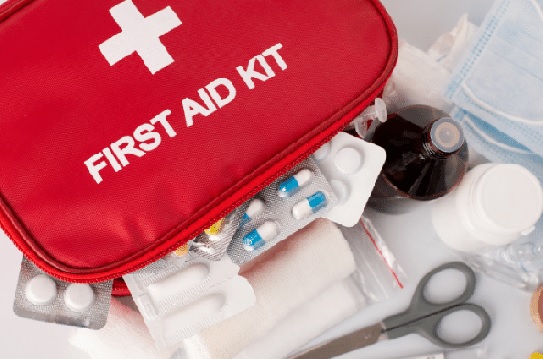
First Aid Kit: The law also provides that a person who drives a motor vehicle or trailer on the road shall ensure that the motor vehicle or trailer carries, in a readily accessible position, a first aid kit which contains medication including analgesic, bandage, cotton balls, plaster, gauze pads, hand gloves, mentholated spirits, scissors, liniments, gentian violet and antiseptic wipes.
When installed in vehicles, first aid kits provide immediate response and care in emergencies, allowing the treatment of minor injuries such as bleeding, sprains, and burns, stabilising more serious injuries, and managing unexpected health issues until health professionals arrive on the scene.
Advance Warning Triangle: The regulations provides that every driver of a motor vehicle whose vehicle is stationary on a road at night shall give adequate warning to approaching drivers of the obstacle which his vehicle constitutes by placing a warning triangle or a red or amber blinker traffic lantern of approved candle light, at a suitable point both at the rear and front of the vehicle and at a distance from the vehicle sufficient to give the said warning but which shall not in any case be less than 50 metres.
The warning triangle shall consist of an equilateral triangle with sides not less than 16 inches long and a red border not less than two inches wide, and with its interior part either hollow or of a light colour. The law says the red border shall be illuminated by transparency or fitted with a reflectorised stripe. Further, the warning triangle shall be such that it can be stood firmly in a vertical position. When fitted to a vehicle, this equipment could alert other road users to a stationary hazard, such as a breakdown or an accident, giving them sufficient time to slow down and negotiate safely, helping prevent collisions.
The law provides punishment for breach of the regulations. It says that a person who contravenes the regulation commits an offence and is liable, on summary conviction, to a fine of not less than ten penalty units and not more than twenty-five penalty units, or to a term of imprisonment of not more than thirty days or to both.
It is therefore mandatory that every owner or driver of a vehicle fit a fire extinguisher, a first-aid kit and an advanced warning triangle to their vehicle at all times.
These are emergency equipment needed to control fires on the road, treat injuries, and protect road users from crashes in the event of an unexpected breakdown. It is the responsibility of the Police to check that vehicle owners have the required equipment fitted to their vehicles and to prosecute them if they are found to have failed to comply with the law.
