

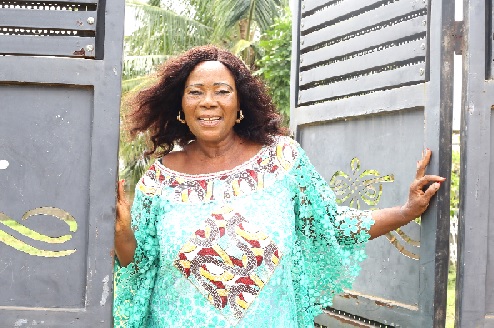
For decades, Mrs Catherine Nutsugah carried one clear message into villages, classrooms and community meetings across Ghana and Africa: Send the girl child to school.
At a time when many families still believed educating boys was a better investment, she stood before parents and challenged that thinking.
Teenage pregnancy, poverty and early marriage were cutting short the dreams of many girls. She and her team refused to watch silently.
Starting the journey by working with the Girls’ Education Unit at the Ketu District Education Office, they held meetings under trees, visited schools and spoke at Parent Teacher Association (PTA) meetings, explaining that educating a girl was not a waste of money, but a long-term investment.
“We talked to the girls. We talked to the parents, teachers and guardians. We talked to the boys, too,” she said.
Speaking to The Mirror in Accra last Friday, Mrs Nutsugah-Mikado said she understood that without engaging boys, the fight would not be complete.
“Boys have to respect girls, understand their challenges to become a part of the solution,” she said.
She retired as Director of the Girls’ Education Unit (GEU) of the Ghana Education Service in Accra.
Now 68 years old, Mrs Nutsugah-Mikado remains actively engaged in public life, participating in speaking engagements and serving on the Ghana Museums and Monuments Board.
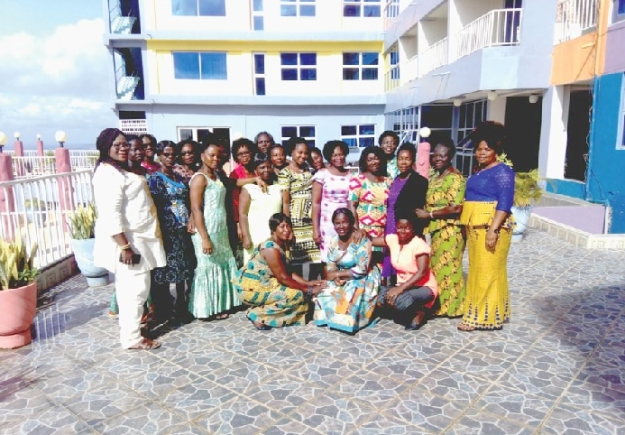
She holds a Bachelor of Education degree in Special Education/Home Economics from the University of Education, Winneba, Central Region and a Master of Arts degree in Adult Education from the University of Ghana, Legon.
Professionally, she distinguished herself in the teaching field. In 1997, she was adjudged Best Teacher in the Ketu District and Second Best Teacher in the Volta Region.
She was also the Volta Regional Nominee for the Ghana National Association of Teachers (GNAT) Award and received a Citation of Honour from the Varkey Foundation in recognition of her outstanding contribution to promoting girls’ education in Ghana.
Journey as a teacher
Mrs Catherine Nutsugah-Mikado’s passion for girls’ education is rooted in her own journey as a teacher. Born to a policeman father, Benjamin Kofivi Nutsugah, and a housewife mother, Matilda Nutsugah (both late), she was encouraged to value education from a young age.
At 14, while in middle school in Takoradi, her teacher encouraged her to sit for a special entrance examination, even though she did not fully understand its purpose.
She recounted that she was the only candidate who passed and gained direct admission to a teacher training college in Cape Coast, completing her programme at just 18 years old.
Although she had not initially aspired to become a teacher, she discovered her true calling once she stepped into the classroom.
“My first posting in 1977 to rural Ave-Dakpa in the Volta Region exposed me to harsh conditions, including the absence of electricity and running water, and at one point, I considered leaving,” she said.
However, she found fulfilment in teaching as the pupils grew fond of her and often followed her home after school.
From then, Mrs Nutsugah-Mikado built her career, steadily rising through school, district and regional levels to become a director at the GES.
Encouraging girls to stay the course
Beyond boosting enrolment, Mrs Nutsugah-Mikado mentioned that she followed up on the girls to ensure they stayed the course.
When some dropped out due to pregnancy or early marriage or were simply forced to quit, she and her team visited families and, in resistant cases, involved authorities.
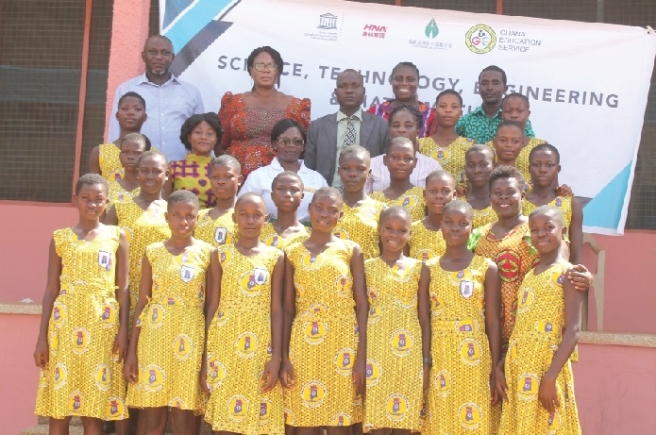
She reminded parents that educating a daughter uplifts the entire household. In communities where girls were often confined to early marriage or domestic roles, she championed a different vision — one that recognised girls as future professionals and leaders.
Over time, perceptions began to change, and increasing numbers of girls remained in school to pursue their education.
The retired educationist spoke about education, discipline and financial independence. She encouraged girls to save, plan and believe in their own potential.
To achieve this, Mrs Nutsugah-Mikado said that her team conducted research to identify high-risk areas and worked with the Ghana Health Service, NGOs and donors to implement targeted interventions.
She said they created safe spaces in schools for girls to discuss sexual health and harassment, ensured pregnant students received medical care and counselling.
They also trained Girls’ Education Officers and teachers to better support vulnerable students. These efforts helped reduce teenage pregnancy and improve retention of girls in school.
Successes she has chalked up
The lover of gospel and reggae music took this reporter through some successes she had chalked up over the years.
She stated that she had worked with a wide range of civil society and governmental agencies in fields such as education, health, advocacy, community development, and social protection in advocating for girls’ education and equality, and implementing major projects sponsored by the United Nations International Children's Emergency Fund (UNICEF).
She has also partnered with the Varkey Foundation, United Nations Educational, Scientific and Cultural Organisation (UNESCO), Department for International Development (DFID), and Campaign for Female Education (CAMFED), among others.
Key achievements for the GEU
Among her key achievements at the Girls’ Education Unit, Mrs Nutsugah-Mikado noted the implementation of the Gender in Education Policy and the introduction of national guidelines on the Prevention of Pregnancy Among School Girls and the Re-entry of Young Mothers after childbirth, ensuring pregnant students were retained and supported to return to school.
Under her leadership, the Girl Participatory Approach to Student Success (GPASS) project awarded scholarships to over 60,000 girls from deprived communities.
She also coordinated STEM clinics for more than 4,000 girls between 2003 and 2009, inspiring many to pursue science education and careers.
“I further supported the training and sponsorship of Girls’ Education Officers, strengthening their capacity to deliver effectively,” she said.
Pursuing a Master’s degree
Along with championing the course, the mother of four boys, during her mid-forties, pursued her Master’s degree.
“The programme was not easy as my research topic was changed midway and my supervisor was difficult to reach. At one point, I stopped for a month out of frustration, but returned after encouragement from my supervisor,” she said.
She reminded herself that she had spent years telling girls not to give up. She could not abandon her own journey.
Her studies strengthened her understanding of community engagement and adult learning.
It equipped her with better tools to speak to parents and influence change at the grassroots.
