
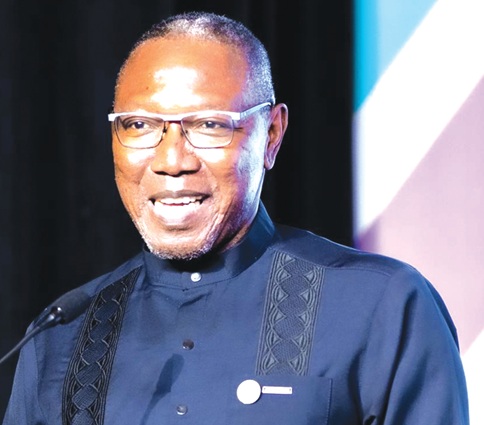
Africa must reform education in line with digital world — Dr Apaak
The Deputy Minister of Education, Dr Clement Abas Apaak, has called for urgent reforms in Africa’s educational systems to ensure they align with the realities of a rapidly changing, digital and artificial intelligence-driven world.
He said Africa must take full ownership of its educational future by building systems that reflected its values, priorities and aspirations.
Dr Apaak made the call in his closing remarks at the 19th edition of the eLearning Africa Conference in Accra last Friday.
The three-day conference brought together ministers of education, policymakers, development partners, researchers, innovators and academics from across the continent.
It was on the theme: “Africa’s Time, Africa’s Terms: Learning for Sovereignty, Strength and Solidarity.”
Digital transformation
Dr Apaak noted that the conference had reinforced a shared message that Africa must become the architect of its own digital education future.
He said that required the promotion of AI literacy at all levels of education, the development of ethical frameworks rooted in African realities and the integration of African languages into the digital ecosystem.
“The time to act is now,” he stressed.
He observed that discussions at the conference showed that trust in education systems and technology must be built through transparency, accountability and innovation that serves people.
Concerns
The deputy minister also raised concerns about Africa’s data governance systems, noting that although the continent generated vast amounts of data daily, much of its infrastructure remained under external control.
He described knowledge sovereignty and data governance as critical to Africa’s development agenda.
“These are not peripheral issues. They are central to our future,” he stated.
Touching on connectivity, Dr Apaak emphasised that digital access must now be viewed as essential educational infrastructure.
He explained that while educational infrastructure was once measured mainly by classrooms and buildings, modern learning also depended on reliable internet access.
“A classroom without internet access is no longer fully equipped for the demands of modern learning,” he said.
He, therefore, called for stronger collaboration among governments, the private sector and development partners to expand connectivity for learners.
The deputy minister further underscored the importance of language in education, explaining that children learn better when taught in languages they understand.
He added that the use of local languages alongside English strengthened learning outcomes and supports identity and understanding.
Dr Apaak also expressed concern that Africa’s education systems were still largely preparing learners for outdated career pathways despite rapid changes in the global labour market.
He noted that artificial intelligence and emerging technologies were transforming the nature of work, making reforms increasingly necessary.
“This is not simply an educational issue. It is a governance challenge that demands urgent attention,” he added.
Commitment to reform
Dr Apaak reaffirmed Ghana’s commitment to moving beyond policy declarations to the practical implementation of its National AI in Education Policy.
He indicated that the government would continue investing in teachers, expand digital learning opportunities for learners with disabilities and promote STEM education among girls.
He added that efforts would also be made to ensure that underserved communities were not left behind in the digital transition.
The deputy minister commended development partners, innovators, researchers, academics and organisers of eLearning Africa for providing a platform for meaningful dialogue on Africa’s education future.
He further urged African leaders, policymakers and development partners to translate the conference discussions into concrete action.
Africa’s children, he said, were not waiting for more declarations but for improved classrooms, better teachers, stronger connectivity and relevant learning opportunities.
