
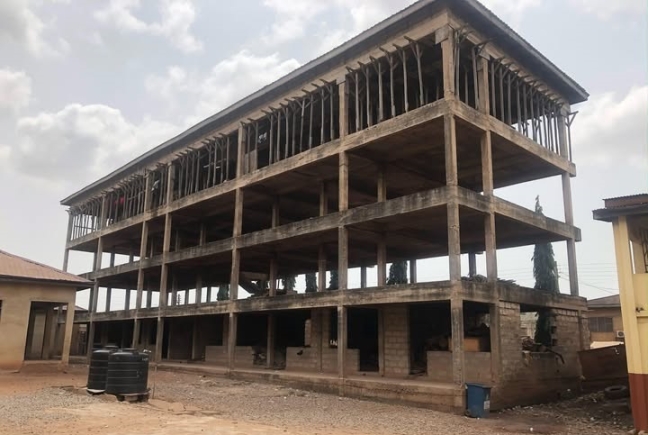
Architects in Ghana are calling for mandatory structural audits of long-abandoned buildings and the deployment of qualified professionals to district assemblies, warning that persistent regulatory gaps continue to fuel building collapses across the country.
The President of the Ghana Institute of Architects (GIA), Mr Tony Asare, said recurring structural failures point to deep-rooted weaknesses in supervision, enforcement and professional capacity within local authorities.
Speaking in an interview on Joy FM on March 30, 2026, Mr Asare said concerns raised by industry professionals over the years had largely been ignored, allowing unsafe construction practices to persist.
“This country must take the safety of its people seriously,” he said. “We keep asking ourselves why this keeps reoccurring.”
His remarks follow the collapse of an uncompleted multi-storey building at Accra New Town on March 29, 2026, which claimed three lives and left several others injured.
Call for structural audits
Mr Asare stressed the urgent need for structural audits of buildings that remain incomplete for extended periods, noting that prolonged exposure to weather conditions can significantly weaken their integrity.
He explained that many such structures across the country are being repurposed for activities, including worship and commercial use, without undergoing proper safety checks.
According to him, building permits typically expire after five years, after which assemblies are expected to require structural assessments before renewal.
“If a building is sitting there, usually the permit expires after five years. As part of the re-permitting process, the assembly demands a structural audit before a new permit is issued,” he said. “Are we taking these decisions?”
He added that decisions to demolish abandoned structures should be based on technical assessments rather than blanket enforcement.
Shortage of professionals
Mr Asare also raised concerns about the severe shortage of architects within district assemblies, which are mandated to enforce building regulations.
“We have 261 assemblies. There are only about 10 architects,” he said. “Who does the architectural work? Somebody is playing a role the person is not qualified to carry out.”
He noted that although assemblies are responsible for development control, the absence of a legal requirement to maintain adequate technical staff undermines effective supervision.
Use of incomplete structures
The GIA President questioned the increasing use of uncompleted buildings for public activities, particularly religious gatherings and commercial operations.
“Before you can occupy a building, you need a certificate of habitation,” he said. “Is it permissible for a building that is not fully completed to be used for such purposes?”
He further warned that buildings designed for specific purposes are often repurposed without reviewing their structural suitability.
Legal and workmanship gaps
Mr Asare said existing building regulations place significant responsibility on developers, allowing them to engage untrained workers without sufficient oversight.
“If the developer picks somebody who is not competent, the law cannot do much about it,” he said.
He disclosed that the institute is preparing proposals to amend aspects of the building regulations to strengthen accountability and enforcement.
Concerns over materials
Beyond regulatory lapses, Mr Asare highlighted concerns about the quality of construction materials on the market, particularly reinforcement bars.
He said some iron rods advertised at standard sizes were often found to be below specification when measured, compromising structural strength.
While the Ghana Standards Authority is responsible for monitoring material quality, he noted that capacity constraints continue to limit effective enforcement.
Call for urgent reforms
Mr Asare said the recurring incidents of building collapse should trigger a comprehensive review of how institutions enforce construction standards.
“If you go to the assembly and there is no architect and there is no engineer, who supervises the building?” he asked.
“This country must take the safety of its people seriously,” he added.
