
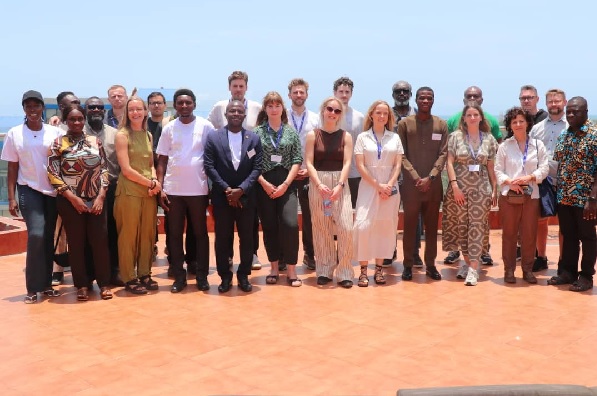
ERG and Refurbed partner to scale sustainable E-Waste solutions in Ghana
Electro Recycling Ghana (ERG), a Ghanaian recycling plant together with Refurbed, a refurbishment company in Austria and Minimise, an organization in Germany, have joined forces to promote sustainable recycling practices in the country.
Together, the organisers aimed to scale sustainable e-waste solutions in Ghana by integrating informal workers into a more structured and environmentally responsible system.
The initiative also aims to bridge approaches by fostering collaboration and expanding support for safer and more efficient recycling methods.
At a forum last Wednesday in Accra, the organisers brought together informal e-waste collectors, scrap dealers and formal recycling companies to explore ways of scaling up responsible e-waste collection and processing—particularly in areas like Agbogbloshie, which is dominated by informal recycling practices.
Bridging formal-informal gap
Speaking at the event, a lecturer at the Kwame Nkrumah University of Science and Technology, Dr Michael Osei-Asibey said bridging the gap between the formal and informal sectors is essential to achieving a more effective, inclusive and sustainable e-waste management system in the country.
Presenting a research work on the growing e-waste challenge in Ghana and across Africa, he mentioned that the volume of e-waste is steadily increasing, alongside greater complexity in the types of electronic items being discarded.
A central theme of his presentation was the divide between the formal and informal sectors as his work focused on urban planning trends and e-waste management in key locations such as Kumasi and parts of Accra.
Dr Osei-Asibey, who specializes in urban environmental governance and planning said while the formal sector—led by government agencies has introduced regulations and policies to manage e-waste, there is a clear disconnect with the informal sector.
He argued that a more inclusive approach is needed saying one key recommendation is for authorities to engage directly with informal sector associations, which already exist and organize many workers.

"One thing that we realised is that, yes, the formal sector controlled by state agencies are trying to put in place measures to regulate activities within the e-waste sector. However, what we find is a disconnect between the formal sector and the informal sector," he said.
He also emphasized that efforts to formalize the sector must take local realities into account.
“The reality is that the formal sector cannot absorb everyone. So, if people remain outside it, the question is: what should be done for them? There must be ways to engage with them—understanding why and how they operate—and then guiding them toward more appropriate and sustainable practices,” he added.
circular economy
Co-founder of Refurbed, Kilian Kaminski highlighted the scale and urgency of the global e-waste crisis, describing it as the fastest-growing waste stream in the world.
He he mentioned that more than 50 million tonnes of e-waste are generated annually — comparable to 5,000 Eiffel Towers—underscoring both the environmental threat and the significant economic opportunity, estimated at around $1 trillion.
Kaminski explained that rising consumption, particularly in Europe where individuals consume over 20kg of electronics per year on average, is a major driver of the problem.
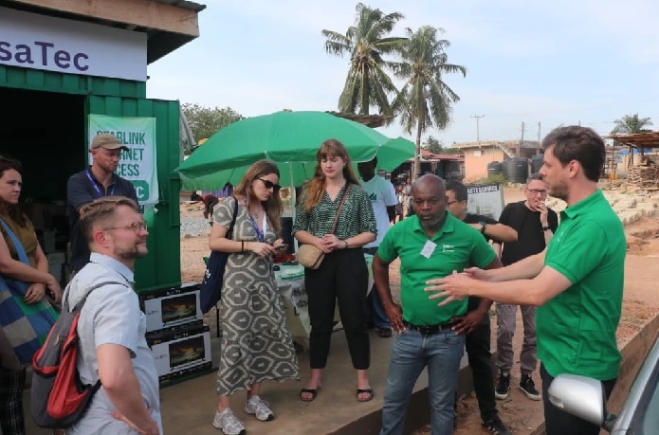
He emphasized that while reducing consumption entirely would be ideal, it is unrealistic. Instead, the focus should be on shifting toward more sustainable consumption patterns through a circular economy.
"So there's a huge change also at the technology level, which influences, of course, the impact the electronic industry has on this planet and on the environment. And what is also, I think, important to understand, as we as Europeans, we are one of the main contributors for electronic waste, as we are also one of the biggest consumers of electronic products," he said.
"So if we all stop consuming, that would be the best for the planet. No question asked. But also specifically for many of us here today, which are from Europe, we in the Western society, we will not stop consuming," he added.
Partnership
Co-Founder of ERG, Nana Yaw Konadu Konadu explained that while informal recyclers play a key role in collection, ERG operates a more structured, formal system modeled on European standards.
He emphasized that modern e-waste management should prioritize circular economy principles—focusing first on refurbishment, repair and reuse rather than disposal.
"At ERG’s facility, for example, up to 80% of materials from electronic waste are reused to produce new products, including locally assembled televisions."
"Only items that cannot be repaired or refurbished are processed into secondary raw materials for further industrial use," he said.
