
Scrapping fuel levies will shift burden to Ghanaians, not bring relief — ACEP warns
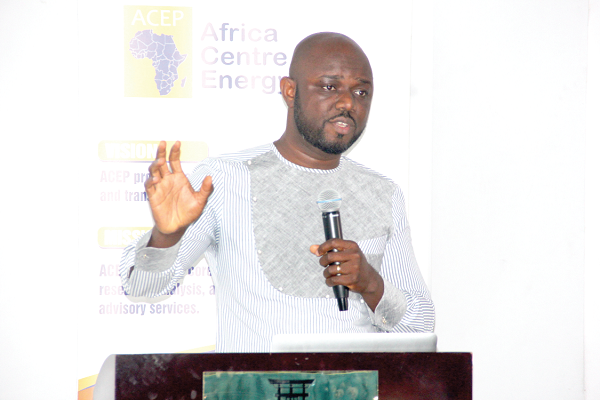
The Executive Director of the Africa Centre for Energy Policy (ACEP), Mr Benjamin Boakye, has cautioned that removing or suspending fuel levies will shift the cost to the public rather than reduce the burden on consumers.
Speaking in a radio interview on Citi FM on Wednesday, April 8, 2026, Mr Boakye said the one cedi per litre levy, introduced to service energy sector debts, cannot be withdrawn without creating pressure elsewhere in the economy.
“If you take that one cedi out now, then there has to be some fiscal space created somewhere else, whether you suspend road construction, the building of schools, or even salaries,” he said. “There will be some debt created for the same consumer to pay in other ways.”
His remarks come ahead of a cabinet meeting expected to consider measures in response to developments on the global oil market, driven by tensions in the Middle East and concerns over possible disruptions to major oil shipping routes.
Mr Boakye said Ghana’s exposure to such external shocks is limited and argued that the main issue lies in how petroleum taxes are structured and used.
He said ACEP estimates show that more than GH¢20 billion has been raised through levies on petroleum products for the energy sector over the past decade. According to him, these funds could have been used to build road infrastructure to reduce fuel consumption and ease pressure on consumers.
“In most cases, you are just standing in traffic consuming petrol and diesel, when you could move if we had the highways,” he said.
Mr Boakye also raised concerns about what he described as pricing margins that lack clear justification, pointing to the Bulk Oil Storage and Transportation Company margin and the Unified Petroleum Price Fund.
He said it costs more to transport fuel within Ghana than to ship it from Europe, a situation he described as an added cost to consumers.
“Almost 80 per cent of petroleum consumption happens close to the depots,” he said. “So the 20 per cent that is outside the depots, are they the ones we are paying almost a cedi per litre to transport?”
Mr Boakye said while some countries are able to reduce fuel taxes during periods of global price increases, Ghana has less room to do so because petroleum levies have been used to cover inefficiencies in the power sector, including unpaid bills and losses.
“We are taxing to address those issues for over a decade,” he said.
He added that taxes paid directly to the Ministry of Finance account for about 12 to 13 per cent of fuel prices, while total margins exceed 25 per cent, which he said points to inefficiencies in the system.
Mr Boakye cited the Bulk Oil Storage and Transportation Company as an example, noting that although the state has invested in its infrastructure, consumers continue to pay a margin that allows it to compete with private operators.
On the award of a mining lease to Engineers and Planners, Mr Boakye said the requirements set for bidders limited participation by other local firms.
“I’ve been in this space for a while and I haven’t seen any other local company that could realistically raise $500 million beyond E&P,” he said.
Mr Boakye called for a broader national discussion on petroleum taxation, stating that Ghana needs to build flexibility into its system to respond to future global developments.
“You can’t predict who is going to initiate the next event that will affect petroleum prices,” he said. “We need to optimise our space and have flexibility around taxation to meet the needs of the people.”
