
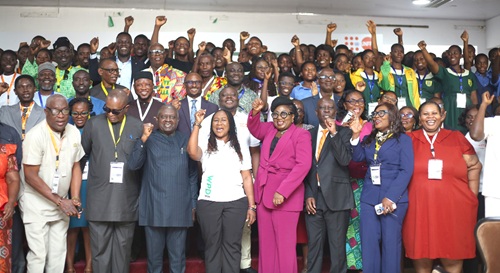
The National Population Council (NPC) has said approximately one in four young Ghanaians aged between 15 and 35 is currently not in education, employment or training, with young women disproportionately affected.
It said unemployment and underemployment, skills mismatch, adolescent pregnancies, inequalities, and limited access to reproductive health information and services continued to constrain the prospects of young people.
"These are not simple youth issues.
They are population and development issues.
They affect the size and quality of our future workforce, household well-being, productivity, social inclusion and ultimately, the pace and directions of Ghana's development," it said.
The acting Executive Director of the NPC, Angela Osei Kodua-Nyanor, who disclosed this yesterday at the commemoration of the 2026 World Population Day, added that Ghana had a youthful population with approximately 12 million Ghanaians between the ages of 15 and 35 years, which presented an enormous opportunity for the country.
World Population Day is celebrated annually on July 11, and provides an opportunity to reflect on the relationship between population dynamics and development choices made by countries.
This year's celebration places young people at the centre, with the global theme being: "Realising the hopes and aspirations of young people – today and for the future", while the national theme is: "Investing in Ghana’s future through health, skilled and empowered young people".
Mrs Kodua-Nyanor said a youthful population did not automatically produce a demographic dividend, explaining that the demographic dividend must be earned.
“It is earned when young people are healthy and have access to the information and services they need to make informed decisions about their lives. It is earned when they receive quality education and acquire skills that correspond to the changing needs of the economy.
“It is earned when they have opportunities for decent work, entrepreneurship and innovation and, importantly, it is earned when young people have a voice in the decisions that shape their presence and their future,” she said.
She called on all stakeholders to ensure that Ghana’s young people were healthy, educated, skilled, productive and able to participate fully in national development.
The Minister of Youth Development and Empowerment, George Opare Addo, said that if young people were educated, their health protected, equipped with relevant skills, provided with opportunities for decent work, and supported to build the families of their choice in dignity, security and hope, Ghana's youthful population would not be its greatest challenge but rather its greatest competitive advantage.
He, therefore, called on all partners to join hands to ensure that no young Ghanaian was denied opportunity because of where they were born, their gender or their economic circumstances.
Invest in young people
The Chairperson of the Parliamentary Committee on Population and Development, Patricia Appiagyei, said as parliamentarians, they recognised that investing in young people was not merely a social responsibility, but a strategic national investment.
She said they remained committed to championing legislation, advocating evidence-based policies and supporting budgetary allocations that advanced population and development priorities.
The UNFPA Country Representative, David Wilfred Ochan, called on lawmakers and policymakers to prioritise capital spending, reallocate budgets and public expenditure towards health care for young people, disease prevention and vocational education and skills development.
“Build flexible labour policies, streamline regulatory barriers for formalising micro-enterprises and small businesses to rapidly absorb young job seekers entering the market.
Fund technical and digital skills education bridging the divide between the urban and rural youth by expanding digital infrastructure, ensuring access to high-demand technical skills outside main commercial hubs,” he advised.
