
Ahead of Global IUU Day: Ghana urged to intensify fight against illegal fishing
As the world prepares to observe the 2026 International Day Against Illegal, Unreported and Unregulated (IUU) Fishing on June 5, calls are growing for Ghana to strengthen enforcement against illegal fishing practices threatening marine resources, food security and coastal livelihoods.
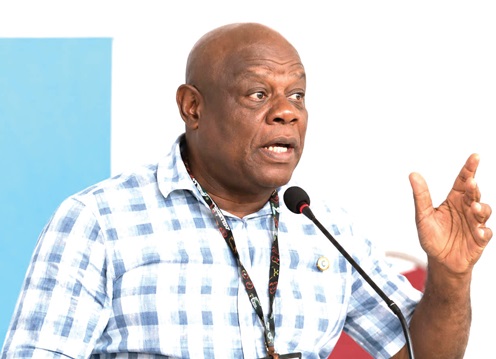
The President of the National Fisheries Association of Ghana (NAFAG), Nana Joojo Solomon, in an interview with the Daily Graphic, urged authorities and stakeholders to intensify action against illegal fishing activities along Ghana’s coastline.
The global observance seeks to raise awareness about the destructive impact of illegal fishing on marine ecosystems and coastal economies. In Ghana, however, the issue has become more than an environmental concern, evolving into a major economic and social challenge affecting thousands of fishing-dependent households.
Speaking ahead of the commemoration, Nana Solomon, who doubles as president of the Ghana National Canoe Fishermen Council, stated that canoe fishermen in Ghana have already received sufficient education and sensitisation on sustainable fishing practices and fisheries regulations. According to him, the time has now come for stricter enforcement and compliance.
“My message is that canoe fishers have been sufficiently sensitised, educated and engaged on the issue,” he stated.
His remarks reflect growing concern within the fisheries sector that years of awareness campaigns have not significantly reduced illegal practices.
He said to address the challenge, NAFAG, in collaboration with the Ghana National Canoe Fishermen Council, the Ministry of Fisheries and Aquaculture Development, the Fisheries Commission, and security agencies, plans to intensify operations against illegal fishing activities.
Nana Solomon described the initiative as a coordinated “crusade” aimed at eliminating destructive methods that continue to undermine fish stock recovery and threaten livelihoods within the sector.
The renewed campaign comes at a difficult period for Ghana’s fisheries industry. Experts continue to warn that overfishing, declining fish stocks, and weak regulatory enforcement are placing increasing pressure on the country’s marine ecosystem.
Crisis
Illegal fishing remains one of the leading causes of the crisis. Practices such as light fishing, the use of prohibited chemicals, undersized fishing nets, and illegal industrial trawling continue to destroy marine habitats and affect fish reproduction.
Globally, the scale of IUU fishing remains alarming.
According to the Food and Agriculture Organisation of the United Nations (FAO), illegal fishing accounts for between 11 million and 26 million tonnes of fish annually worldwide.
The FAO estimates that the practice costs the global economy between 10 billion and 23.5 billion dollars each year.
Africa is among the regions hardest hit by the crisis.
FAO-linked studies indicate that the continent loses between seven and 11 billion dollars annually through unauthorised industrial fishing, unreported catches and destructive fishing methods.
For Ghana, the impact is particularly severe because fisheries remain central to employment, nutrition and local trade.
Along the country’s 550-kilometre coastline, artisanal canoe fishing supports hundreds of thousands of livelihoods directly and indirectly.
However, many fishing communities are recording declining catches and rising operational costs.
Fishers increasingly complain about spending longer hours at sea while returning with fewer catches, a trend experts largely attribute to overexploitation and illegal fishing activities.
Concerns have also grown over allegations that some industrial trawlers continue to operate within inshore exclusion zones reserved for artisanal fishers.
These incursions have fueled tensions at sea and contributed to the depletion of small pelagic fish species such as sardines, anchovies, and mackerel, which are important to Ghanaian diets.
Writer's email:
