
AI governance must protect vulnerable — Minister
The Minister of Communication, Digital Technology and Innovations, Samuel Nartey George, has stated that the nation must build an artificial intelligence (AI) ecosystem that advances human dignity, protects vulnerable groups and promotes equity as the country accelerates its digital transformation.
That, he said, was because responsible governance of AI was essential to ensuring that technological developments served the public interest rather than undermining it.
“As we enter a new era shaped by artificial intelligence, our responsibility is clear.
We must build a future where technology advances human dignity, protects the vulnerable, promotes equity and supports sustainable development,” he said.
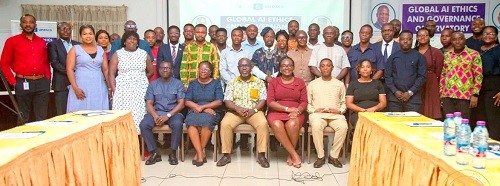
Mr George made the remarks at the launch of the “Readiness Assessment Methodology (RAM) for Ethics of AI,” held in Accra last Thursday.
RAM
Developed by the United Nations Educational, Scientific and Cultural Organisation (UNESCO), it would assess through questionnaires and other participatory tools how prepared a nation was for the ethical implementation of AI across five dimensions, namely legal/regulatory, social/cultural, economic, scientific/educational and technological infrastructure.
It would, therefore, identify gaps in AI governance and inform tailored strategies by highlighting strengths and weaknesses.
The RAM would also ensure the alignment of the technology’s deployment within the country with UNESCO’s Recommendation on the Ethics of AI, a framework approved by the organisation’s 193 member countries.
The event brought together ministries, regulators, academia, civil society and private innovators, all of whom play critical roles in shaping the nation’s digital future.
It featured sessions on Ghana’s AI policies, participatory AI perspectives and UNESCO’s global recommendations and capacity-building support for ethical AI governance.
Ethical AI
Mr George acknowledged the potential of AI to accelerate progress towards sustainable development goals, enhancing productivity, improving healthcare, strengthening education delivery, supporting climate actions and unblocking new opportunities for innovation.
However, he also pointed out that it presented profound ethical and practical risks, issues of bias, privacy violations, job displacement, misinformation and surveillance.
“They are real challenges with real consequences. If AI systems are deployed without the right safeguards, policies and institutional frameworks, these challenges may amplify deepening inequality and undermine public trust,” he said.
Therefore, the country’s adoption of UNESCO’s RAM demonstrated the government’s commitment to grounding its national AI agenda in ethical principles and international best practice.
The findings, he emphasised, would be used to strengthen the operationalisation of the national AI strategy, with UNESCO supporting the development of complementary regulatory instruments across education, labour, environmental management, gender equality and other priority sectors.
Significance
A representative of the UNESCO Accra Office Director, Carl Ampah, underscored that the RAM was vital for ensuring the country developed and deployed AI ethically and in line with global human rights and sustainable development standards.
He said RAM provided a structured way to assess policy, infrastructure, human capacity and societal impact to identify strengths and gaps in the country’s AI ecosystem.
Emphasising that AI offers major benefits from advancing healthcare and education to preserving cultural heritage, he cautioned that fairness and vigilance were essential to prevent bias and inequality.
He said the multi-stakeholder process would refine the nation’s AI readiness framework and strengthen national efforts toward sustainable, inclusive AI development.
“By leveraging your expertise and insights, we hope to create a robust framework that accurately reflects Ghana's national context and aspirations,” he said.
