
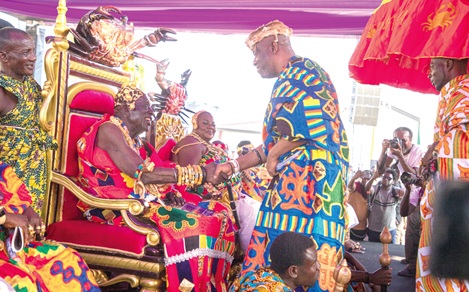
Three traditional areas, three distinct cultural identities and one spectacular celebration came together in Cape Coast as the chiefs and people of Oguaa marked the 62nd Oguaa Fetu Afahye, with a call for greater investment in human development to secure a better future for Africans.
The colourful celebration, hosted by the Omanhen of the Oguaa Traditional Area, Osabarimba Kwesi Atta II, brought together the Ga Mantse, King Tackie Teiko Tsuru II, and the Overlord of Gonja, Yagbongwura, Bikunuto Jewu Soale I, in a remarkable convergence of Oguaa, Ga and Gonja traditions.
From the Mfantsipim School, where the royal procession began, through the principal streets of Cape Coast to the Victoria Park, chiefs and their entourages walked majestically, with some carried in beautifully decorated palanquins, amid a carnival of colour and music.
The rhythmic sounds of drums, traditional songs and dancing filled the streets, while members of the various Asafo companies added to the excitement with spirited and friendly firing of muskets to demonstrate the martial traditions associated with the respective cultures.
The spectacle offered a vivid expression of Ghana’s cultural diversity, as the distinctive regalia, traditional performances and customs of Oguaa, Ga and Gonja converged in one celebration.
The annual festival, held on the theme, “From Memory to Momentum: The Black Star Rising,” provided an opportunity for the people of Oguaa and their guests to celebrate their heritage, while reflecting on Ghana’s painful history, particularly the transatlantic slave trade and the resilience of generations who endured it.
Shared heritage
The Omanhen of the Oguaa Traditional Area said the presence of the Ga Mantse and the Overlord of Gonja added significance to a celebration rooted in culture, history and shared heritage.
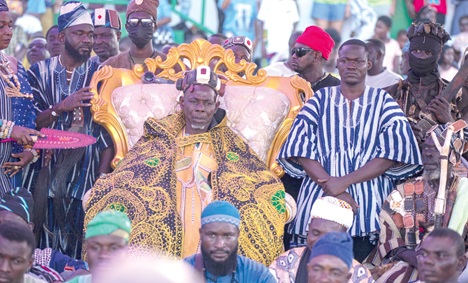
Yagbongwura, Bikunuto Jewu Soale I, Overlord of Gonja, at the festival grounds
Osabarimba Kwesi Atta said the bonds of friendship and kinship among traditional areas should be sustained beyond the festival, stressing that relationships among traditional leaders and communities were deeply rooted in history and family connections.
He urged the people to preserve those bonds and ensure that they remained strong for generations to come.
Osabarimba Kwesi Atta II said the theme of the celebration was a call on Ghanaians to remember their history with pride, reflect with gratitude and move forward with purpose.
“Our memories are the roots from which our identity, values, courage and aspirations continue to grow,” he said.
He said the sacrifices, wisdom and resilience of past generations should serve as a foundation for building a future worthy of their legacy.
The omanhen called for unity and urged Ghanaians to draw strength from their shared history and values as they worked towards a better future.
Beyond compensation
The Ga Mantse said Africa’s response to the painful history of the transatlantic slave trade should go beyond demands for financial compensation and focus on building a better quality of life for its people.
He said the lives lost and suffering endured by Africans during the slave trade could never be adequately compensated, but the continent could honour the memory of its ancestors by investing in the future of its people.
“Today, we seek a better life for our people. We seek education for our people. We seek proper health care for our people. And we seek the transfer of technology, especially cognitive AI technology,” he said.
King Tackie Teiko Tsuru said access to quality education, proper healthcare and modern technology were essential to empowering Africans, creating opportunities and enabling present and future generations to compete in an increasingly technology-driven world.
He commended the organising committee for what he described as good work in organising the 62nd celebration of the festival, which he said provided an important platform for reflection on the past and consideration of how the lessons of history could inform the continent’s future.
Remembering with purpose
The Nkum Ankobeahemaa, Nana Ama Kesson, who chaired the Afahye Planning Committee, said the commemoration should enable Ghanaians to confront their history with “honesty, courage and partnership.”
Known in private life as Charlotte Osei, a former Chairperson of the Electoral Commission, recalled the slavery memorial service held at the Cape Coast Castle last Thursday, as part of activities for the festival, describing it as a deeply emotional and symbolic gathering.
The service provided an opportunity for participants to reflect on the transatlantic slave trade, its enduring repercussions and the shared responsibility to promote healing and reconnection.
Nana Kesson said the memorial service highlighted the need for reform and reparative justice across the ocean.
Gonja solidarity
In a speech read on his behalf, the Yagbongwura conveyed warm congratulations and best wishes to the omanhen and the people of the Oguaa Traditional Area and wished them peace, joy and togetherness.
Bikunuto Jewu Soale said the celebration should renew the spirit of unity and usher in hope, progress and prosperity.
