From New York with love — Ghana’s historic UN vote, implications for culture, heritage, tourism
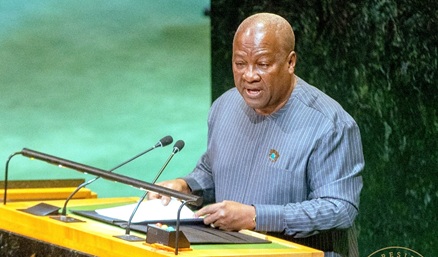
Last Wednesday, 25 March 2026, in New York, Ghana once again placed itself at the moral centre of a global conversation long overdue.
At the United Nations General Assembly (UNGA), a landmark resolution led by Ghana formally declared the transatlantic slave trade and racialised chattel enslavement of Africans among the gravest crimes against humanity.
The motion passed with 123 votes in favour, opposed by the United States, Israel and Argentina, with 52 countries, including the United Kingdom, France and Belgium, abstaining.
Beyond the numbers, the vote marked a rare moment of historical clarity in international diplomacy.
It was not merely a legal or political act, but an acknowledgment of lived memory – one that continues to shape identities, economies and cultures across Africa and the African diaspora.
Addressing world leaders, President John Dramani Mahama framed the issue as fundamentally human. “Violence begins with language; when words are used as weapons or to codify abuse; when people are called out of their names,” he told the Assembly.
He reminded delegates that enslaved Africans were stripped not only of freedom, but of dignity, identity and humanity – a denial whose consequences still echo today.
A vote rooted in history
For Ghana, this moment was neither accidental nor performative. It sits squarely within a historical continuum that stretches back to Kwame Nkrumah, whose Pan-African vision insisted that political independence was meaningless without cultural liberation and historical truth.
Ghana has never treated history as something to be endured quietly.
It has consistently sought to confront, reclaim and reinterpret it on its own terms.
The resolution’s passage reflects that philosophy.
A clear majority of nations supported Ghana’s call for recognition and accountability, while the pattern of opposition and abstention revealed how unresolved – and uncomfortable – the legacy of slavery remains in parts of the global order. Yet, discomfort has never deterred Ghana from leading.
President Mahama urged delegates “to speak truth to power… and finally acknowledge the full horror of these transgressions against the humanity of approximately 15 million human beings who were enslaved”.
It was a statement rooted not in blame, but in remembrance and responsibility.
Why this matters for travel, tourism and heritage
Tourism, at its core, is storytelling. Cultural and heritage tourism, in particular, depends on authenticity, emotional connection and historical honesty. For too long, Africa’s story – especially the story of enslavement and survival – has been told without Africa at the centre.
This UN resolution strengthens the legitimacy of Africa-led narratives. For countries such as Ghana, Senegal and Benin (one of the three African countries (besides Madagascar and Sao Tome and Principe) which abstained from voting on the motion, by the way) – whose coastlines bear the physical scars of the transatlantic slave trade – it reinforces the global relevance of heritage sites, memorials and commemorative journeys.
Ghana’s Cape Coast and Elmina Castles, Gorée Island in Senegal and Ouidah in Benin are not merely historical structures.
They are living classrooms of global history.
Diaspora travellers do not visit them as passive tourists, but as seekers of connection, understanding and healing.
The UN vote adds international validation to these journeys, elevating them beyond tourism into acts of remembrance and identity.
From PANAFEST to Black Star Experience
Ghana’s diplomatic leadership at the United Nations did not emerge in isolation.
It is the latest chapter in a long, deliberate journey that has positioned the country as the emotional, spiritual and cultural home of the African world.
For decades, Ghana has invested in reconnecting Africa with its dispersed peoples through initiatives such as PANAFEST, Emancipation Day commemorations and the Joseph Project, each designed to restore memory, dignity and belonging.
These were early recognitions that heritage tourism is not transactional, but emotional – rooted in shared history and collective healing.
That foundation was amplified globally with the Year of Return, marking 400 years since the first recorded arrival of enslaved Africans in Jamestown, Virginia.
It was followed by Beyond the Return, a multi-year strategy focused on deepening investment, cultural exchange and long-term diaspora integration.
Today, the vision has evolved into the Black Star Experience, which seeks to consolidate culture, arts, tourism and creative industries into a coherent national narrative.
The UN resolution now strengthens that positioning immeasurably. It situates Ghana’s heritage tourism agenda within a globally recognised moral framework, validating decades of cultural diplomacy and reinforcing Ghana’s authority to lead conversations on memory, justice and historical truth.
Ghana’s voice, Africa’s collective memory
What gives Ghana’s action added weight is that it speaks not only for itself, but for Africa and the global African diaspora.
Many African and Caribbean states rallied behind the motion because the legacy of slavery remains embedded in development gaps, social inequalities and cultural dislocation.
By placing the issue before the UN General Assembly, Ghana ensured that this history could no longer be treated as a footnote.
It is now formally inscribed in global consciousness – a diplomatic achievement with long-term cultural and tourism implications.
Beyond the vote
Recognition, however, is only the beginning.
The resolution does not compel reparations, nor does it instantly rewrite global power structures.
But it shifts the terrain of conversation – and that matters.
For Africa’s tourism sector, the task ahead is translation: converting diplomatic success into meaningful visitor experiences, educational content and sustainable cultural products that preserve memory, while benefiting communities.
Done thoughtfully, heritage tourism can be both economically viable and morally grounded.
From Nkrumah’s declaration that Ghana’s independence must be linked to Africa’s total liberation, through declarations by succeeding presidents and heads of state to Mahama’s leadership in New York, a consistent thread runs through Ghana’s global posture – the insistence that history matters, and that Africa must speak for itself.
On March 25, 2026, Ghana did exactly that – reminding the world that Africa’s story is not confined to the past.
It is still being written, journey by journey, memory by memory, and vote by vote.
This resolution does not close a chapter – it opens one.
It affirms Africa’s growing confidence in global forums and reinforces a long-held truth that memory can still shape the future, when asserted with clarity.