
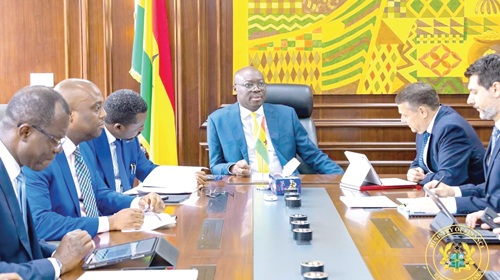
Ghana, IMF commence 6th review: Economic reform programme a success — Ato Forson
Ghana has began a sixth review of its programme with the International Monetary Fund (IMF), with the Minister of Finance, Dr Cassiel Ato Forson, describing the country’s reform programme as a “transformative” journey and a clear success.
He said partnership between the government and the IMF had delivered strong and measurable outcomes.
“It has been long and demanding, but ultimately a transformative journey,” Mr Forson said, adding that the programme had stabilised the economy, restored credibility and renewed hope among Ghanaians.
He expressed appreciation to the IMF, describing the progress made as a significant one anchored on discipline and difficult policy decisions taken in the national interest.
The minister said that the government remained focused on sustaining momentum and consolidating the recovery, adding “progress does not permit complacency.”
He was speaking after receiving the IMF Mission in Accra yesterday.
Private sector support
Dr Forson said that the next phase of the programme would prioritise policies that unlocked private sector growth at scale, with the aim of translating macroeconomic stability into tangible outcomes for citizens.
“We must ensure that stability translates into more investment, more jobs, and more opportunities for all,” he said, adding that the true test of the recovery lay beyond headline economic indicators.
The minister stressed that although key macroeconomic indicators had improved significantly, the government’s focus was on the trajectory ahead, including shaping the next phase of reforms.
He said critical decisions would be taken before the conclusion of the IMF mission to define the direction of the country’s economic reform agenda, with emphasis on policy credibility, reform discipline and investor confidence.
The IMF team, led by Dr Ruben Atoyan, commended Ghana for the progress achieved under the programme, acknowledging the government’s strong reform efforts.
Present at the meeting were the Deputy Finance Minister, Thomas Ampem Nyarko; the Chief Director of the Ministry of Finance, Patrick Nomo; the Governor of the Bank of Ghana, Dr Johnson Asiama, and the First Deputy Governor, Dr Zakari Mumuni.
Background
In December last year, the Executive Board of the IMF completed the fifth review of the $3 billion Extended Credit Facility (ECF) arrangement with Ghana, unlocking the immediate disbursement of about $385 million.
That brought Ghana’s total disbursements under the arrangement to about $2.8 billion, the IMF said in a statement last Wednesday.
The IMF Executive Board approved Ghana’s 39-month ECF arrangement in May 2023.
Some of the benefits of the IMF programme include growth exceeding expectations, driven by strong services and agriculture.
Inflation rate of 3.2 per cent is well within the BoG’s target range, and the external sector has strengthened on robust gold and cocoa exports.
Reserves accumulation surpassed ECF targets, the cedi has appreciated, and debt trajectory has improved significantly.
Structural reforms
However, at the fifth review, the IMF called for ambitious structural reforms to help create an environment more conducive to private sector investment, and to enhance governance and transparency.
“Ghana has made progress in strengthening its fiscal position.
Looking ahead, staying the course of fiscal policy adjustment and creating room to enhance social programmes is paramount to put public finances on a sustainable path and reduce financing needs, while cushioning vulnerable households from the impact of fiscal adjustment”.
