
We want to turn research outcomes into profitable ventures — CSIR
The Council for Scientific and Industrial Research (CSIR) has unveiled a comprehensive strategy to transform its research outputs into commercially viable ventures.
In line with that, the council has called for collaboration with industry, including the private sector to achieve that objective.
The Director of the Science and Technology Policy Research Institute (CSIR-STEPRI), Dr Wilhelmina Quaye, said the time had come for the country to move beyond research for knowledge to research that drives economic growth.
She said the council possessed a wide range of scalable innovations across agriculture, food processing, renewable energy and digital technology, but that they remained largely underutilised due to weak commercialisation pathways.
“Our focus is to ensure that research does not end on the shelf but is translated into products, services and enterprises that create jobs and wealth,” she said.
Event
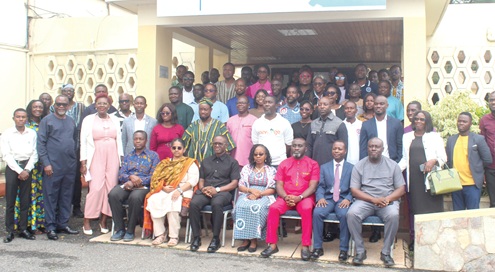
Dr Quaye was speaking at a policy dialogue and innovation fair under a Sankore project—a partnership between CSIR Ghana and the UK Centre for Ecology & Hydrology (UKCEH), in Accra yesterday.
The initiative, which is in partnership with UNESCO, with support from the UK Foreign, Commonwealth Development Office, was aimed at accelerating research commercialisation, enhancing policy frameworks, and supporting innovation systems in Ghana and Nigeria.
In attendance were policymakers, researchers, industry players and development partners, as well as 13 institutes of the council to showcase various innovations.
Opportunities
Dr Quaye enumerated key opportunities in agro-processing, such as value-added products from cassava, yam, cashew and mushrooms, as well as improved technologies such as flash dryers and efficient fish smoking systems designed to reduce post-harvest losses and meet export standards.
She also mentioned high-yield crop varieties and improved seedlings for oil palm and coconut, alongside digital platforms that provided advisory and predictive tools for farmers.
Dr Quaye also said that the CSIR’s digital agricultural innovation hub was designed to bridge the gap between research institutions and end-users by making scientific knowledge more accessible.
“We have investment opportunities in technology transfer and licensing, scaling research innovations, public-private partnerships and agribusiness development,” she added.
Challenges
Dr Quaye, however, identified limited funding, weak industry linkages and low uptake of research outputs as major constraints to scaling innovation in the country.
She stressed the need for strengthened public-private partnerships, technology transfer mechanisms and targeted investments to unlock the full potential of Ghana’s research ecosystem.
Dr Quaye said with the right support, CSIR could serve as a critical driver of innovation-led growth and sustainable economic transformation in the country.
Research value
The Deputy Director-General of CSIR, Professor Marian Quain, also said that the value of research was fully realised only when it was transformed into solutions that could be adopted, scaled and sustained within the marketplace.
“This requires deliberate collaboration between researchers, industry actors, investors, and policymakers. It also demands an enabling environment that supports intellectual property protection, facilitates technology transfer, and incentivises private sector participation.
“I urge our researchers to work hard, and our partners from industry to trust and invest in our innovations to build a sustainable, prosperous, and commercialised future for the country and beyond,” she said.
A representative of UKCEH, Adelaide Asantewaa Asante, said that although CSIR often faced criticism for failing to commercialise its research, audit findings showed the institution was making progress.
