
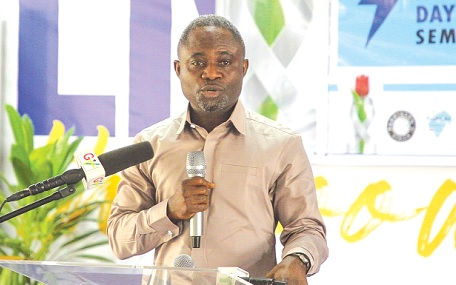
The Minister of Health, Kwabena Mintah Akandoh, has said the government is prioritising the rollout of the Free Primary Health Care initiative to improve access, with a focus on prevention, early detection and continuity of care.
Mr Akandoh explained that this approach would ensure that conditions such as Parkinson’s disease were identified early and managed appropriately at the primary care level, with timely referrals where necessary.
For instance, Mr Akandoh said, while the National Health Insurance Scheme (NHIS) currently covered some medications used in managing Parkinson’s disease, there were ongoing considerations to expand coverage to include other essential treatments.
He, however, indicated that such decisions would be guided by sustainability considerations to ensure the long-term viability of the scheme.
At the commemoration of World Parkinson’s Day 2026 in Accra last Saturday, the minister said that although Ghana had made progress in the health sector, gaps remained in the delivery of care, particularly for chronic conditions such as Parkinson’s disease.
The event was a meeting of health experts, policymakers and advocates who highlighted the growing burden of the condition and the need for coordinated action to improve care, dignity and quality of life for patients and caregivers.
Held on the theme, “Parkinson’s Without Borders – Access, Dignity, Empowering Lives and Policy Action”, the event highlighted the need for stronger policy interventions, improved healthcare access and sustained public education to address the challenges associated with the disease.
The commemoration formed part of activities marking World Parkinson’s Day, which seeks to raise awareness of the disease and advocate improved care and support systems for people living with the condition.
Advocacy
Mr Akandoh commended the Parkinson’s Support Group Ghana for its role in advocacy, awareness creation and support for patients and caregivers.
The minister said the government recognised the need to strengthen specialist care through the Ghana Medical Trust Fund (MahamaCares), which supported the management of chronic and non-communicable diseases, including the training of specialists.
He added that efforts were underway to equip primary healthcare facilities and district hospitals with the necessary infrastructure, including physiotherapy units, to improve access to rehabilitation services.
He stressed that Parkinson’s care must go beyond medication to include rehabilitation, supportive care and attention to caregivers, whose role he described as critical but often overlooked.
“We must build a health system that responds not only to the disease but also to its social and emotional impact,” he said.
Other speakers
Other stakeholders in Ghana’s health sector called for stronger policies, improved access to treatment and rehabilitation, and greater public awareness to support persons living with Parkinson’s disease.
This, they said, was necessary to improve early diagnosis, ensure the availability of medicines and rehabilitation services, and protect the dignity and quality of life of patients and their caregivers.
Speakers at the event emphasised that improving care for people living with Parkinson’s disease required collaboration among the government, healthcare professionals, civil society organisations, patients and caregivers.
One such speaker, a Fellow at the Centre for Democratic Development (CDD-Ghana), Dr Kwame Sarpong Asiedu, said Parkinson’s disease should not only be seen as a clinical condition but as a measure of how well the health system protected patients’ dignity and supported families managing long-term illness.
He said Parkinson’s disease was the second most common neurodegenerative disorder globally, affecting more than 10 million people, with age being the strongest risk factor.
“In West Africa, studies estimate prevalence at between 15 and 572 cases per 100,000 people. In Ghana, hospital data suggests Parkinson’s accounts for up to 12 per cent of neurological cases seen in clinics, with an average diagnosis age of about 62 years,” he said.
Diagnosis, treatment challenges
A Consultant Neurologist at the 37 Military Hospital, Dr (Med) Augustina Charway-Felli, said one of the biggest challenges facing patients was obtaining the correct diagnosis.
She explained that while neurologists played an important role, frontline health workers such as general practitioners could also recognise the symptoms and initiate treatment.
“You do not necessarily need to see a neurologist before Parkinson’s disease can be identified. General doctors should be able to recognise the symptoms and begin management,” she said.
“The World Health Organisation recommends up to five neurologists per 100,000 population. Ghana currently has about 0.02 neurologists per 100,000 people, which is far below the recommended level,” she said.
Rehabilitation
A lecturer and neuro-physiotherapist at the University of Health and Allied Sciences, Dr Mary Wetani Agoriwo, said rehabilitation was essential in helping people living with Parkinson’s disease to maintain independence and perform daily activities.
She explained that rehabilitation interventions aimed to improve functional capacity, enabling patients to carry out routine activities such as bathing, dressing, cooking and walking.
“Physiotherapy, occupational therapy and speech therapy all play important roles in managing Parkinson’s disease and improving quality of life,” he said.
