
Guidelines for childhood cancer treatment in the offing
Ghana has, for the first time, developed guidelines for the management of childhood cancer treatment in the country.
This will see the various specialised childhood cancer treatment centres in the country follow standard national guidelines in the treatment of childhood cancers.
The aim is to improve outcomes in childhood cancer treatment, identify the problems and build on them.
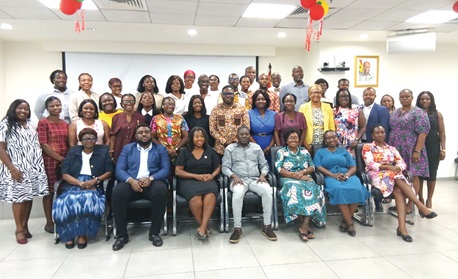
Developed by the Childhood Cancer Society of Ghana (CCSG) with funds from World Child Cancer (WCC), and support from the World Health Organisation (WHO) country office, Clinton Health Access Initiative and the Ghana Health Service (GHS), the guidelines was developed through a collaborative, multi-disciplinary process involving paediatric surgeons, paediatric oncologists, nurses, pharmacists, neurosurgeons, radiation oncologists and orthopaedic surgeons.
A stakeholder validation meeting to validate the draft guidelines was held in Accra ahead of its dissemination, during which the President of the CCSG, Professor Lorna Awo Renner, explained that, before its development, the various childhood cancer treatment centres in the country were using guidelines they could easily access from other countries.
She said Ghana's guidelines were developed looking at what existed in other countries and what would be manageable and suitable for our setting and for all specialised centres in the country.
‘’The guidelines are important because we want to make sure that every child, no matter where they are in Ghana, once they go to a treatment centre, they will be able to access standardised care and treatment.
We want to minimise things such as toxicities, preventable deaths, improve survival and reduce relapse rates, monitor long-term effects and have collaborative trials and research to see where to make changes where needed," she explained.
Diagnosis
A Consultant Paediatric Haemato-oncologist at the Ho Teaching Hospital, Dr Kokou Amegan-Aho, said Ghana was now diagnosing more children with cancers than before, and a lot more children with cancers were surviving than they used to be.
He explained that, ideally, the country was supposed to diagnose about 1,500 cases of childhood cancer each year, but over the years, they had seen only a few.
However, he said last year, 513 new cases were diagnosed, explaining that the new cases did not mean more children were developing cancer; they were cases they were supposed to be diagnosing but were not.
He attributed the increase in diagnoses to training organised for health personnel across the country to enable them to detect early signs of childhood cancers; training more specialist doctors, nurses, and laboratory specialists; and raising awareness among parents to detect the signs of childhood cancers.
Funding
The Country Coordinator of the WCC, Adwoa Pinamang Boateng Desu, said her outfit identified a gap in treatment guidelines for childhood cancer, even though various centres were providing treatment and decided to fund the development of the policies.
The Director, Technical Coordination at the Ministry of Health, Dr Hafiz Adam Taher, said the guidelines reflected the ministry's directive for evidence-based protocols, drawn from the WHO benchmark, the national cancer control strategy and the steering committee roadmap, which advocate decentralised services and the integration of palliative care.
