Invest in irrigation systems to boost food production - Participants urge govt
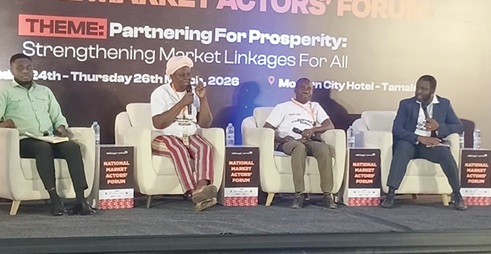
Participants in a national market actors’ forum in Tamale have called for deliberate investment in irrigation systems to promote all-year-round farming and boost food production in the country.
Such investment, they said, would help reduce the importation of food staples and strengthen Ghana’s food security.
The participants indicated that the recent ban on importing tomatoes from Burkina Faso should serve as a wake-up call for the nation to take decisive steps to address gaps in local production.
The three-day forum, organised by World Vision Ghana in collaboration with the Ghana Commodity Exchange, VisionFund Ghana and other partners, was on the theme: “Partnering for Prosperity: Strengthening Market Linkages for All.”
It brought together stakeholders from government, the private sector, financial institutions, farmer organisations, development partners and academia to promote strategic partnerships, share innovations and advance inclusive market development.
It forms part of the Transforming Household Resilience in Vulnerable Environments (THRIVE) Project, which seeks to promote resilient livelihoods, inclusive market systems and sustainable household incomes, particularly for smallholder farmers, women, youth and vulnerable populations.
Increased production
A Policy Analyst at the Chamber of Agribusiness Ghana, Dr Evans Brako Ntiamoah, stressed the need to invest in irrigation systems and to support farmers in increasing the production of food crops, particularly vegetables.
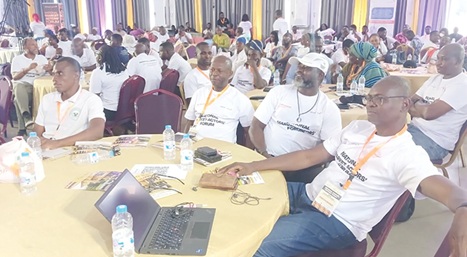
A section of participants in the forum
He also stressed the need to adopt innovative technologies and best practices to mitigate the growing impact of climate change on agriculture and improve productivity.
Also, a leader of the Women in Agriculture Platform, Gilberta Akuka, identified the high cost of inputs and poor market access as major challenges confronting smallholder farmers, particularly women.
She further urged farmers to revisit indigenous crops, noting that they were more climate-resilient compared to widely improved varieties.
The Programmes Manager of the Presbyterian Agricultural Services, Obed Asunka, also underscored the need for stronger collaboration among stakeholders to improve market systems and enhance farmers’ livelihoods.
Economic empowerment
The National Director of World Vision Ghana, Dr Tinah T. Mukundah, in a speech read on her behalf, said the organisation’s poverty-reduction agenda was being driven by its Everyone THRIVE initiative, launched in 2024.
She explained that the initiative targeted about 160,000 households and aimed to double the incomes of about 400,000 people within three years.
She said the initiative was anchored in partnerships in which farmers, savings groups and agripreneurs were considered co-creators rather than beneficiaries.
Dr Mukundah called on the private sector and financial institutions to develop inclusive business models that recognise smallholder farmers as viable investment partners.
She further appealed to the government to create an enabling policy environment that prioritises rural infrastructure, agricultural insurance, fair pricing and improved market access.
Effective collaboration
The Northern Regional Minister, Ali Adolf John, said that although agriculture remained the backbone of the regional economy, its full potential was constrained by limited market access, financing gaps and weak infrastructure.
He said there was a need for stronger linkages among producers, aggregators, processors, buyers and financial institutions to transform the agricultural sector and create sustainable livelihoods.
He reiterated the government’s commitment to continue implementing policies and programmes to improve access to productive assets, enhance post-harvest handling, facilitate market access and strengthen extension services to support farmers and agribusinesses.