
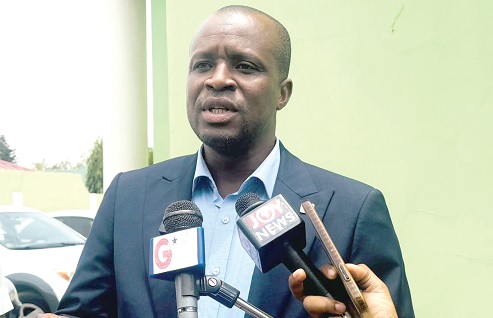
Let’s harness climate change opportunities for economic growth — Prof. Damba
The Secretary-General of the Ghana Commission for UNESCO, Prof. Osman Tahidu Damba, has urged stakeholders to shift focus from the challenges of climate change to the opportunities it presents to drive innovation, job creation and economic growth.
He said that although climate change continued to affect livelihoods, agriculture, energy demand and other sectors of the economy, it also offered viable opportunities for sustainable development.
He explained that nature-based and ecosystem-based solutions were emerging as critical areas where countries and communities could harness economic and environmental benefits.
He said globally, there was increasing recognition of business-oriented climate solutions capable of delivering strong returns on investment while addressing environmental challenges.
Citing practical examples, he indicated that the growing use of neem-based products as alternative biopesticides was creating new economic opportunities for small and medium-scale enterprises.
NAP launch
Prof. Damba was speaking at the launch of the Northern Ghana phase of the National Adaptation Plan (NAP) in Tamale, organised by Changing Lives in Innovative Partnerships (CLIP) under the Empowerment for Life Programme in collaboration with the Environmental Protection Authority.
The NAP, developed under the leadership of the EPA and the Ministry of Environment, Science and Technology (MEST), provides a strategic framework to strengthen climate resilience and reduce vulnerability across key sectors, including agriculture.
The launch formed part of efforts to deepen awareness, promote stakeholder ownership and mobilise support for the effective implementation of the policy, particularly in northern Ghana, where communities remain highly vulnerable to climate change impacts.
It also highlighted findings from 13 district-level climate vulnerability assessments conducted by CLIP across northern Ghana, which documented key risks affecting smallholder farmers and contributed to shaping farmer-responsive elements within the NAP.
Business opportunities
Prof. Damba, a climate change expert, pointed out that some communities, particularly in northern Ghana, were already producing neem-based solutions to address pests and diseases linked to climate variability.
“It is not all about painting a gloomy picture. What is critical now is for us to identify and tap into the opportunities that climate change presents and convert them into viable solutions,” he stated.
He added that innovations such as drought-resistant crop varieties and climate-smart agricultural practices were opening up opportunities across various value chains.
He said tackling climate change required a multi-sectoral approach, stressing that “you cannot address climate change in isolation. It requires collaboration, shared ideas and innovation across sectors.”
Awareness creation
For his part, the Director in charge of Climate Vulnerability and Adaptation at the EPA, Nana Dr Antwi-Boasiako Amoah, said effective implementation of the NAP would depend on awareness creation, resource mobilisation, capacity-building and strengthened coordination at the district level.
He added that many district assemblies lacked the technical capacity to fully integrate climate change into their planning processes, stressing the need for intensified training and capacity-building initiatives.
The Director of CLIP, Lukman Yussif, said that although Ghana had made significant progress in developing climate policies, the success of the NAP would largely depend on active participation from key stakeholders.
