
Medical schools urged to adopt modern medical technologies in training
Medical schools across the country have been admonished to embrace the role of technology and consciously incorporate such in training doctors ready for the current sophisticated technologies in medical practice.
If medical students were introduced to technology early in their clinical training, it would build their confidence and prepare them better for their working lives.
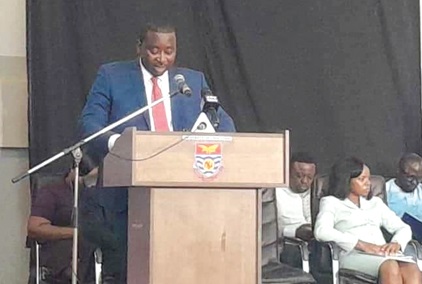
The Chief Executive Officer (CEO) of Health Tech Ghana Limited, Daniel Morkla, made the call at the White Coat ceremony to commission 155 medical students of the University of Cape Coast School of Medical Science (UCCSMS), who successfully completed their pre-clinical training in the basic sciences to begin their clinicals.
Mr Morkla said it was critical to introduce medical students to current cutting-edge medical technology to prepare them adequately for the medical landscape, or medical schools risked bringing out doctors who were not ready for the challenges of the medical profession.
The students, who would be graduating in 2028, were therefore admonished to embrace technology and optimise its use for efficiency.
This year’s White Coat ceremony was on the theme: “Empowering doctors for the provision of health care in the 21st century through innovative medical education.”
"I appreciate the investment realities that this would entail, but we cannot afford to be left behind in global health technology, nor can we afford to deny our citizens its immense benefits in pain alleviation and the saving of lives.
“The government, through the Ministry of Health, has a huge role to play as a strategic partner with stakeholders to adequately equip the medical schools.
"As mankind continues to push the boundaries of technology, especially in the AI-driven global digital economy, it is even more imperative that the medical industry matches in tandem in leveraging this to bring cutting-edge technology to the advancement of medical care,” Mr Morkla stated.
The Dean of the UCCSMS, Professor Sabastian Elliason, said the White Coat ceremony was not just a piece of clothing, but a profound rite of passage, marking a transition from the classroom and the laboratory to the patient’s bedside.
"It is the moment you begin to apply the science you have learned to the art of healing.
The White Coat is not a symbol of expertise, but of humility, signifying that you are here to learn," he stated.
"The White Coat is a powerful symbol, a visual representation of the trust the public places in the medical profession.
It signifies the high ethical standards, compassion, and responsibility that you are now charged with upholding.
Wear it with pride, but also with the profound awareness of what it represents," he added.
He urged them to commit to ethical practice, social responsibility, and the well-being of the wider community, cultivate a resilient, adaptable, and self-directed approach to learning.
Life-long learners
In a speech read on his behalf, the acting Vice-Chancellor of the UCC, Prof. Dennis Aheto, said that to squarely face the global health challenges, doctors must be lifelong learners, innovators and compassionate caregivers.
He said the university was committed to ensuring that its training was not only relevant to Ghana and Africa, but aligned to international standards to be able to compete, collaborate and contribute to medical practice anywhere in the world.
Prof. Aheto urged them to approach patients with empathy and embrace innovation, remembering that technology must serve humanity.
He further urged them to step boldly into the new phase and to uphold the highest ethical standards, saying trust once broken was hard to regain.
