
National gender policy reviewed
The Ministry of Gender, Children and Social Protection has reviewed the National Gender Policy (2025–2034) to further mainstream gender concerns into national development planning.
The implementation, undertaken last year, involved the ministry working with stakeholders to establish compliance committees under the new Act.
The revised policy builds on the successes of previous frameworks, focusing on women’s empowerment, economic opportunities, legal rights and leadership, while addressing emerging gaps in climate change, digital inclusion and violence.
The Chief Director of the ministry, Dr Afisah Zakariah, made this known at the opening of the ECOWAS regional consultation on political participation and leadership of women and youth in Accra yesterday.
She reaffirmed the ministry’s continued collaboration with ECOWAS and other stakeholders to fully implement the Affirmative Action Act, including operationalising its legislative instrument and strengthening enforcement mechanisms.
She said the passage of the Affirmative Action Act, 2024, provided legal backing for promoting women’s representation in political and public leadership, while establishing accountability mechanisms for both public and private institutions.
Meeting
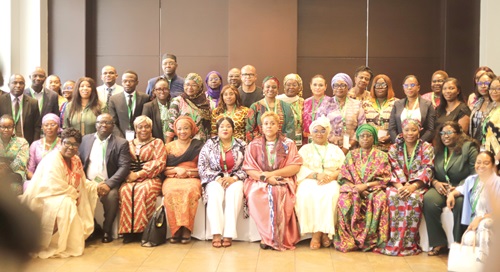
The four-day regional consultation, which ends on Friday, is being organised by the Ministry of Gender, Children and Social Protection, in collaboration with the ECOWAS Gender Development Centre.
It aims to advance political participation and leadership among women and young people across West Africa.
It is being attended by policymakers, gender experts, youth leaders, and development partners from across the sub-region, who will assess progress, identify persistent barriers and develop practical recommendations to strengthen inclusive governance.
It forms part of ECOWAS broader anniversary activities intended to reposition the regional bloc for more inclusive and people-centred development.
Dr Afisah said the government was systematically advancing its Reset agenda across all sectors to remove barriers that hindered the full participation of women and youth in national development.
She said the reset agenda was being pursued deliberately to address structural, institutional, financial and social barriers that continue to limit the full participation of women and youth in governance.
“Studies have shown that in West Africa, women and youth constitute the majority of our population.
Their efforts in building innovations, resilience and diverse opinions are essential to inclusive governance and sustainable development.
“However, their representation in political leadership, executive government and decision-making bodies remains limited,” Dr Afisah said.
She further said that the government was aligning national priorities with global and regional frameworks, including the Sustainable Development Goals—particularly Goals Five and 16, the African Union’s Agenda 2063 and the ECOWAS Gender Policy.
Collaboration
The Senior Advisor to the Vice-President and Programme Coordinator for Human Capital Development of the Commission, Ruben K.D. Johnson, in an interview, called for renewed and coordinated efforts to close the persistent gender gap in political and economic participation across West Africa.
He said the meeting formed part of activities to mark ECOWAS’s 50th anniversary and, therefore, was intended to assess progress and chart a stronger path forward, adding that “at 50 years, the time has come to take stock of everything that has been realised by ECOWAS to date”.
Responding to questions on existing challenges, Mr Johnson acknowledged that while many member states had enacted gender-related laws and policies, implementation and outcomes remained uneven.
For her part, the Director of the ECOWAS Gender Development Centre, Sandra Oulate Fattoh, called for electoral reforms across West Africa to ensure equal political participation of women and young people, as the regional body targets 50/50 gender parity in elective positions by 2035.
