
Supreme Court celebrates 150th anniversary
The Supreme Court is set to commemorate its 150th anniversary to celebrate the promotion of constitutionalism, good governance and the protection of human rights.
Dubbed, “Supreme Court at 150”, activities lined up to mark the sesquicentennial celebration, will be launched on April 16, this year. However, the theme for the month-long anniversary, “Honouring the past, celebrating the present and defining the future”, has been unveiled.
The Supreme Court was established under the Supreme Court Ordinance of 1876, an Ordinance recognised as marking the beginning of the modern Ghanaian legal system.
Activities lined up for the celebration include lectures and symposia by local and international dignitaries, legal outreach programmes, moot court competitions, sporting events, sod-cutting for an anniversary project, durbar, dinner and thanksgiving service.
The month-long celebration, which will take place from July 1 to 31, 2026, will celebrate the historical significance of the court, honour the achievements of past jurists and highlight the institution’s contribution to the country’s social, political and democratic development.
The celebration would also serve as a moment of reflection and strategic planning to enable the court to address emerging challenges within the global legal system.
Plan
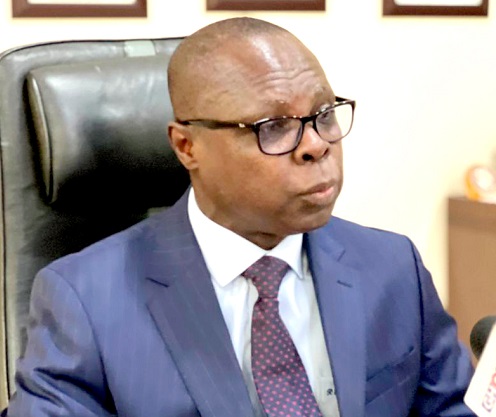
Addressing a news conference ahead of the launch in Accra yesterday, a Justice of the Supreme Court and Chairman of the Planning Committee for the anniversary, Justice Richard Adjei-Frimpong, said the court’s evolution had been chequered, challenging, yet enduring.
The courts, he said, had survived periods of political hostility, military interventions, suspension and abrogation of Constitutions, societal criticisms and legislative realignments.
“In all this, however, the court has survived and thrived,” he said, adding that the institution had consistently upheld its fundamental role of defending the Constitution, protecting the fundamental human rights of citizens and sustaining democratic governance.
He said the Supreme Court was not merely a court, but had been a very significant national governance institution.
Landmark decisions
Justice Adjei-Frimpong cited some landmark decisions of the court which, he said, had promoted constitutionalism, good governance and human rights.
He explained that the court’s interpretation of Article 181(5) of the 1992 Constitution ensured that international business agreements involving the state could not come into effect without parliamentary approval, thereby strengthening parliamentary oversight over the Executive.
He also referred to rulings that expanded the frontiers of universal adult suffrage by permitting prisoners to vote and affirmed the right of citizens to embark on demonstrations without the need for police permits.
Additionally, he mentioned the court’s resolution of two presidential election disputes, which he said had contributed significantly to political stability in the country.
History
The Supreme Court of Ghana is the highest judicial body in Ghana.
The Supreme Court remained the highest tribunal in Ghana during colonial era and appeals from it went to the West African Court of Appeals (WACA). WACA was first established in 1866, petered out in 1873 and was re-established in 1928. Ghana withdrew from WACA following independence.
Post-independence, there were few changes in the court system, until, following the first military coup in 1966, the National Liberation Council (N.L.C) passed a decree that abolished the Supreme Court and vested judicial power in two sets of courts: the Superior Court of Judicature and the Inferior Courts.
In 1972, the Supreme Court was again abolished, this time by the National Redemption Council (NRC), the military government that followed that of the Second Republic, reasoning that, with the suspension of the 1969 Constitution, there was no need for a court to interpret and enforce it.
The functions of the Supreme Court were transferred to the full Bench of the Court of Appeal.
The 1979 Constitution preserved the pattern of courts established since 1960. The Supreme Court was re-established and the status quo has been maintained since the 1981 military coup, with slight diminution in number of members of the court.
The Supreme Court has exclusive original jurisdiction in all matters relating to the enforcement or interpretation of the 1992 Constitution.
It also has supervisory jurisdiction over all the courts in the country.
It operates only from the natonal capital, Accra.
