Unemployment, corruption threaten trust in state institutions - Speakers call for new social contract
Ghana’s democratic gains over the past three decades are increasingly being undermined by economic hardships, growing public distrust, youth unemployment and corruption.
The latest is the emerging threat of artificial intelligence (AI)-driven job losses, two speakers at a national forum on democratic governance stated, citing various studies and reports.
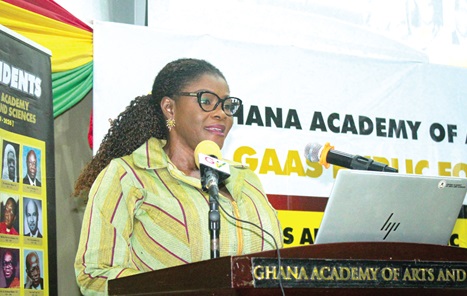
They are the Senior Research Fellow of the Institute of Statistical, Social and Economic Research (ISSER) of the University of Ghana, Dr Kofi Takyi Asante, and the Chairperson of the National Commission for Civic Education (NCCE), Kathleen Addy.
They raised the concerns last Monday at a forum on the theme, “Citizens and Democratic Consolidation in Ghana: Rights, Obligations and Duties,” where the two speakers also called for a reimagining of democracy beyond elections and constitutional procedures.
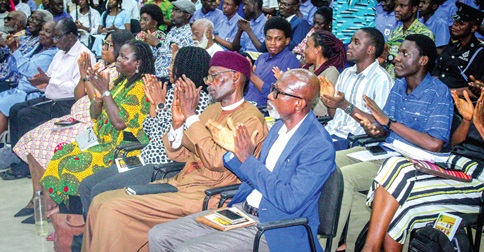
The Ghana Academy of Arts and Sciences (GAAS) organised the forum, which attracted fellows of the institute, representatives of ecumenical bodies, the security services, academia and students.
Dr Asante and Ms Addy agreed that although the country had become a model of constitutional rule and peaceful political transitions in Africa, many citizens were questioning whether democracy was delivering the economic opportunities, social justice and improved living conditions promised under the country’s democratic system.
They also contended that declining confidence in political institutions, worsening living conditions and perceptions of elite capture were creating a widening disconnect between citizens and the state, threatening the foundations of democratic legitimacy.
They argued that rebuilding public trust would require a new social contract based on accountability, inclusive development, ethical leadership, citizen participation and stronger state responsiveness to people’s needs.
Democracy’s unfulfilled promise
Speaking on the topic, “The Exclusive Democratic Dividend: Citizen-State Relations and the Crisis of Political Legitimacy in Ghana,” Dr Asante described the country’s current political situation as a paradox of strong democratic performance alongside weak socio-economic outcomes.
He said the country had maintained constitutional stability and democratic governance for more than 30 years but continued to experience persistent poverty, inequality and recurring economic crises that weakened citizens’ confidence in government.
The senior research fellow said while democratic institutions remained strong, many citizens increasingly believed the state was failing to fulfil its obligations under the social contract.
He cited data showing that support for democracy remained high among Ghanaians, with most citizens preferring democratic governance and elections to a military or one-party system.
However, the Economic and Social Science Research Fellow said surveys consistently showed that employment, education, health care and economic opportunities remained the primary concerns of voters.
“The legitimacy of Ghana’s political system rests on whether citizens believe their expectations of material well-being are being met,” he stated.
Dr Takyi Asante attributed many of the country’s governance challenges to structural economic factors rather than solely to the conduct of political leaders.
He said intense competition between the country’s two dominant political parties had reinforced clientelist politics because governments faced constant pressure to secure political support.
The result, he said, was a system characterised by what he termed an “oversupply of democracy” that exceeded the state’s capacity to meet public expectations.
Global economic order
Dr Takyi Asante further argued that Ghana’s development challenges could not be understood without examining the country’s place within the global economic system.
He added that genuine development required deeper economic restructuring and a broader decolonisation agenda that empowered citizens and reduced external dependency.
He called for what he described as “deep democratisation” that extends beyond elections to include meaningful citizen participation in economic and political decision-making.
New social contract
For her part, the Chairperson of NCCE, who addressed the topic, “Reflections on a New Social Contract with Citizens in Ghana,” said Ghana’s democracy had reached a defining moment.
Ms Addy said although the Fourth Republic had delivered constitutional stability, peaceful elections and regular transfers of power, many citizens increasingly felt that democracy was failing to improve their daily lives.
The NCCE chairperson said the country’s political history reflected repeated attempts to redefine the relationship between citizens and the state, with each constitutional transition emerging from a crisis of legitimacy.
“The challenge facing Ghana today is not simply economic recovery or political competition; it is whether citizens still believe that the democratic state exists fundamentally for their welfare,” she said.
Declining trust
She cited findings showing that many Ghanaians viewed the national economy negatively and believed living conditions had deteriorated.
Rising poverty, youth unemployment, corruption and perceptions of elite capture, she said, had weakened confidence in public institutions and democratic governance.
Ms Addy said many citizens increasingly viewed the political system as serving elite interests rather than the broader public good.
She warned that democracy could remain electorally functional while becoming socially hollow if public trust continued to decline.
AI, future jobs
Ms Addy also drew attention to what she described as a growing but insufficiently discussed threat: the impact of artificial intelligence on employment and Ghana’s future.
She said technology leaders around the world were increasingly warning that AI would replace many existing jobs, raising serious concerns for countries already struggling with high youth unemployment.
“Every day, they remind us that AI will take our jobs. How do we plan for this in a situation where unemployment is already a challenge?” she asked.