
Wenchi €31m water project 97% complete — GWL MD
The €31 million Wenchi water supply project is 97 per cent complete and could begin operations by June this year if outstanding payments are released in a timely manner, the Managing Director of the Ghana Water Limited (GWL), Adam Mutawakilu, has disclosed.
He explained that the remaining three per cent of the project had been delayed due to the non-payment of some Interim Payment Certificates (IPCs), but gave an assurance that he would engage the Ministers of Works and Housing and Finance to expedite the release of funds.
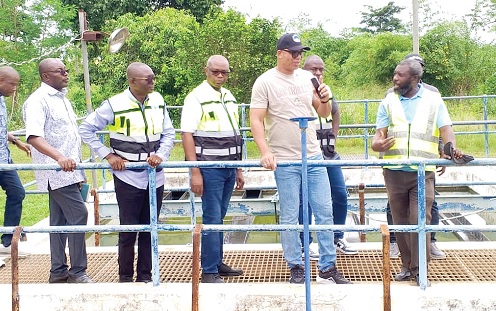
Mr Mutawakilu made the remarks when he led a high-powered management delegation of GWL on an inspection tour of the project and the Abesim Water Works in the Bono Region last Wednesday.
“We have been given up to June to complete the project, and I am confident that once the payments are made, the plant can be brought into operation,” he said.
Water crisis
Located near the Tain River, the project is expected to produce 10,700 cubic meters per day and serve about 10 water crisis communities in Wenchi Municipality and some parts of the Tain District.
The huge project started in 2020, targeted at resolving the long-standing Wenchi water crisis.
Mr Mutawakilu said the project forms part of the government’s broader agenda to ensure the availability of potable water to urban and peri-urban communities.
“President John Dramani Mahama’s reset agenda is to make potable water available to Ghanaians,” he said.
Mr Mutawakilu explained that when completed, the project would be capable of meeting the water needs of Wenchi and its adjoining communities for at least the next 15 years.
At Abesim, Mr Mutawakilu disclosed plans by GWL to transform its existing training school into a full-fledged professional waterworks training institution.
He said the proposed institution would help upgrade the skills of technical staff and ensure that GWL had a new generation of trained personnel to manage the country’s water systems efficiently.
Illegal mining
On concerns over illegal mining activities upstream and their potential effect on the Tain River, which is the main source of water for the project, he said the protection of river bodies was the responsibility of the Water Resources Commission and the Environmental Protection Agency.
He, however, expressed the hope that the river would remain suitable for water production in the years ahead.
At the Abesim Water Works, however, officials raised concern about the effect of illegal mining on the quality of raw water reaching the treatment plant.
The Brong Ahafo Regional Chief Manager of GWL, Theophilus Collins, said intermittent pollution from illegal mining activities upstream often forced the company to temporarily shut down pumps until the water quality improved.
“We are downstream and the river comes from upstream before we take part of it and treat it for Sunyani and its environs.
Unfortunately, illegal mining activities upstream are affecting us,” he said.
Mr Collins explained that workers at the plant had to test water samples every hour to ensure that turbidity, colour and other parameters remained within acceptable treatment limits.
Writer's email:
