
Health workers are set to begin a nationwide outreach from Wednesday, moving into homes, churches, markets and lorry parks to offer free screening for hypertension, diabetes and other conditions under a new government initiative aimed at strengthening preventive care.
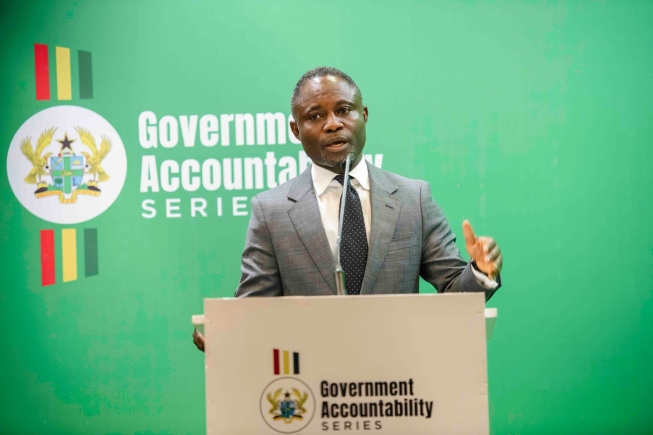
The Minister of Health, Kwabena Mintah Akandoh, announced the rollout in Accra on Monday, April 13, 2026, during the Government Accountability Series press briefing, indicating that the programme would be formally launched by John Dramani Mahama on April 15.
He explained that the Free Primary Health Care programme is designed to bring essential health services closer to communities, reducing the need for patients to travel to health facilities before accessing basic care.
“A health worker may even visit them at home,” Mr Akandoh said, adding that trained volunteers and community health workers would conduct structured screening exercises in schools, churches, workplaces and farms. He further revealed that more than 350 container-based clinics would be deployed to high-traffic locations, including markets and lorry parks across the country.
While outlining the scope of the initiative, the Minister stressed that the free service would be limited to primary care. Patients referred to higher-level facilities would still be required to present a valid National Health Insurance Scheme card.
“Free primary health care has a limit,” he said. “Beyond which you need the National Health Insurance card. So the National Health Insurance is still relevant and is very important.”
He urged citizens who are not enrolled on the scheme to do so, explaining that the new programme is intended to complement the NHIS by focusing on early detection and first-contact care, while the insurance scheme covers more advanced treatment.
Under the initiative, individuals who visit Community-based Health Planning and Services compounds, health centres and polyclinics will receive a range of services at no cost. These include screening for hypertension, diabetes, obesity and mental health conditions, as well as cancer screening, antenatal and postnatal care, immunisation, growth monitoring, family planning counselling and treatment for common illnesses such as malaria, diarrhoea and respiratory infections. Basic emergency care and referral services will also be provided.
Mr Akandoh noted that access to the service would require a valid form of identification, such as a Ghana Card, voter ID or NHIS card.
He said the policy responds to a growing public health concern, citing data indicating that many non-communicable diseases remain undiagnosed until complications arise. According to him, only 35 per cent of people living with hypertension in Ghana are aware of their condition.
“Hypertension develops silently, diabetes progresses quietly, and certain cancers show no early symptoms,” he said. “So people are living with these conditions without knowing until complications occur.”
He warned that late reporting often leads to severe outcomes such as stroke, kidney failure and advanced-stage cancers, making treatment more complex and costly.
The programme will be implemented in phases between 2026 and 2028, beginning with 150 of the country’s 261 districts, with priority given to underserved communities. Nationwide coverage is expected by 2028.
Mr Akandoh disclosed that government has procured more than 24,000 pieces of medical equipment, including incubators, glucometers, ultrasound machines and hospital beds, for distribution to health facilities, noting that only two per cent of public facilities currently have all essential equipment.
Funding for the initiative has been captured in the 2026 NHIS budget, with preventive services to be financed through population-based payments, while treatment services will continue to be reimbursed under the NHIS framework.
He added that the programme forms part of broader health sector reforms, including the uncapping of NHIS funds and the Ghana Medical Trust Fund, also known as Mahama Cares, which supports patients living with chronic non-communicable diseases.
Mr Akandoh encouraged the public to take advantage of the services.
“Let us use the services, and use them responsibly,” he said. “Go early. Get screened. Because the system is being built for you.”
