
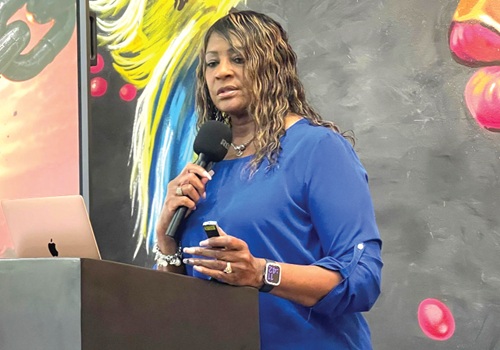
Speakers at the Brilliant Books and Business Summit have encouraged women to transform painful experiences into opportunities for growth, while building confidence as a key asset for success in business and leadership.
They argued that unresolved trauma and low self-belief are often the real barriers to professional advancement and that learning to process both is a leadership skill in itself.
The summit, held in Accra brought together international women leaders to share personal experiences and practical lessons on resilience, leadership and entrepreneurship with participants.
Pain to opportunities
Christian author, speaker and Bible teacher, Kathy Howard urged women not to allow painful experiences to define their future, stressing that while suffering was unavoidable, people’s response to adversity determined the course of their lives.
“Pain is inevitable. Everybody’s going to have it. But our response determines our future. Pain doesn’t need the final word unless you let it have the final word,” she said.
Mrs Howard said many people remained trapped in painful experiences because of fear, shame, unforgiveness and limiting beliefs, adding that healing required intentional effort.
“Healing is hard work. But you can do it.
The only way you can heal is to stay in the pain and let God stay in it.
You can turn your pain into purpose,” she said.
Sharing her personal story, she recounted surviving years of sexual abuse by her stepfather, beginning at the age of 10 and explained how faith helped her overcome the trauma instead of allowing it to shape her identity.
“I am not a victim. I’m a survivor. I live to help other women get up and survive because I found my purpose,” she said.
Mrs Howard encouraged survivors of trauma to seek healing instead of remaining defined by their past.
“You are not what happened to you.
That’s something that happened to you. Your future is greater than your past and your pain,” she said.
She added that painful experiences often became preparation for a greater purpose.
“My past was preparation for my purpose.
What tried to break me helped me discover my purpose,” she said.
Confidence
A Communications strategist, educator and public speaking coach, Stacey L. Miller described confidence as an essential form of capital in today’s competitive environment.
“Confidence is currency.
To do anything in life you need confidence. You have to feel like you are able and have the tools,” she said.
Drawing on recruitment experiences, Mrs Miller said employers often selected candidates with greater confidence even when qualifications and experience were similar.
“The tipping point is the confidence piece.
That confidence is what makes that person memorable.
In the marketplace, your confidence is the most valuable currency because it’s the thing that will get you the job,” she said.
She encouraged participants not to equate rejection with failure, saying many people lost confidence because they depended on external validation.
“Being good does not guarantee being chosen.
Not being chosen does not mean that you’re not called,” she said.
