
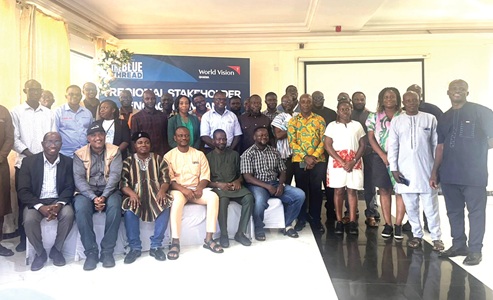
World Vision, MDAs collaborate to expand WASH services
World Vision Ghana has partnered with selected Municipal and District Assemblies (MDAs) in the Northern and Savannah regions to improve access to water, sanitation and hygiene (WASH) services in vulnerable rural communities.
The beneficiary districts include Zabzugu, Kpandai and the East Gonja and West Gonja municipalities.
The initiative, which forms part of the organisation’s 2026–2030 WASH Business Plan, seeks to achieve at least 90 per cent WASH coverage in beneficiary districts by 2030 through joint planning, resource mobilisation and implementation.
It seeks to jointly implement WASH infrastructure and services aimed at achieving universal coverage in targeted rural communities while promoting safeguarding, inclusion and accountability in all interventions.
Speaking at a stakeholder engagement and signing of a Memorandum of Understanding (MoU) last Friday, the Associate Director for WASH at World Vision Ghana, Robel Wamisho, said the initiative formed part of efforts towards achieving Sustainable Development Goal Six, which seeks universal access to safe water and sanitation by 2030.
He stressed that the Sustainable Development Goals could not be achieved without strong collaboration among governments, NGOs, development partners and communities.
He said the partnership would guide planning, resource mobilisation and implementation of WASH interventions in beneficiary districts.
Mr Wamisho appealed to district assemblies, NGOs and community-based organisations to align with the initiative and contribute resources towards expanding access to safe water and sanitation services in vulnerable communities.
Sustainability
For his part, the Dean of the Faculty of Agriculture, Food and Consumer Sciences at the University for Development Studies, Prof. Maxwell Anim Gyampo, who chaired the event, described water as fundamental to human survival, environmental sustainability and poverty alleviation.
He said improving access to potable water would contribute significantly to poverty reduction, self-care and improved educational outcomes in deprived communities.
He explained that integrating WASH interventions with livelihood support, food security and education programmes would maximise the impact of the initiative and support government efforts at improving rural livelihoods.
He indicated that women and girls were often the most affected when communities lacked access to potable water, as many spent long hours searching for water for household use, negatively affecting education and productivity.
Prof. Gyampo commended World Vision Ghana’s target of achieving universal water service coverage in 23 districts nationwide over the next five years, describing the initiative as ambitious and transformative.
He also praised the introduction of innovative approaches such as professional management systems, renewable financing models and water facility insurance mechanisms aimed at improving maintenance and long-term sustainability.
Appreciation
On behalf of the beneficiary district assemblies, the District Chief Executive for Zabzugu, George L. Tanei, expressed appreciation to World Vision Ghana for the partnership and said it would go a long way to address the persistent water and sanitation challenges in vulnerable communities in the area.
He said the assemblies were committed to supporting the successful implementation of the initiative through community mobilisation, resource allocation and enforcement of sanitation and hygiene by-laws.
END
