
The Ministry of the Interior has rolled out guidelines and standards for the importation, retrofitting, usage and decommissioning of armoured bullion vehicles (ABV) in Ghana.
The guidelines and standards cover, among others, the importation requirements and certification processes, operational and maintenance standards, procedures for inspection, testing, and compliance monitoring, personnel qualifications, specifications for retrofitting and modification, safe and proper decommissioning of the ABVs and recovery and redundancy strategy for contingency scenarios.
They (guidelines and standards) are to be enforced alongside the Standard Operating Procedures on ABVs by the Ghana Police Service and the Bank of Ghana.
Enforcement
As a first step towards enforcing them, the Ministry of the Interior has issued a 45-day notice, effective Monday, December 8, 2025 to Monday, January 21, 2026 within which period all financial institutions and entities in the cash-in-transit (CIT) business with soft skinned vehicles are to park them immediately and proceed to apply for the necessary clearance for retrofitting of the said vehicles at a certified retrofitting centre.
Entities operating in the CIT/bullion business are also to cease operations henceforth and proceed to register and acquire the needed licenses and certification from the Ministry of the Interior before operations.
Moreover, entities engaged in the retrofitting of ABV for the cash-in-transit/bullion services are to cease operations henceforth and proceed to register and acquire the needed licenses and certification from the Ministry of the Interior before operations.
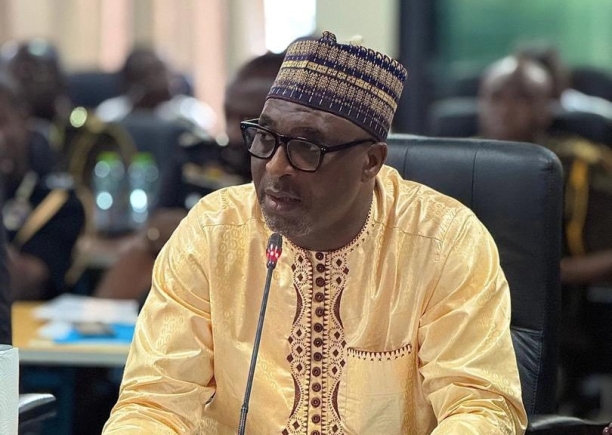
“All stakeholders should note that after the 45-day notice period, there shall be nationwide enforcement and full implementation of the Guidelines and Standards including taking legal action and applying sanctions against those who breach the directives,” the Minister of the Interior, Muntaka Mohammed Mubarak, said at a press conference in Accra on Thursday (Dec 4).
Implementation
He indicated that the successful roll-out of these guidelines would be followed by a phased implementation plan, which includes accreditation of authorised importers and retrofitters who meet the specified technical and security standards.
There would also be regular inspections and compliance audits to ensure adherence to safety and operational protocols and mandatory training and licensing for drivers, escort personnel, and others engaged in bullion and CIT operations.
The minister said there would also be a structured decommissioning process to ensure that retired vehicles are rendered inoperable and properly documented.
“As part of the implementation plan, the Inspector-General of Police has already been tasked to form an Enforcement Unit to ensure strict compliance with the Guidelines. The Enforcement Unit will report to the Implementation Committee, which is duly constituted with representation from the security and intelligence agencies, Bank of Ghana, and the Ghana Gold Board,” he said.
Mr Mubarak, therefore, urged all stakeholders to take advantage of the 45-day notice period to comply with the guidelines and regularise their operations with the ministry.
“Let us work together to ensure CIT and bullion operations are secure, efficient, and safe so that we can protect lives, prevent financial losses, and promote economic growth and development,” he said.
Non-compliance
He indicated that non-compliance with the guidelines and standards would not be tolerated and that any organisation or individual found violating the guidelines would attract administrative sanctions, including suspension of operational licenses and possible prosecution under applicable laws. Government, he said would not compromise on the safety and security of its citizens and financial institutions and urged all to comply with the guidelines to avoid the consequences of enforcement.
“As we officially roll out these Guidelines and Standards for the Importation, Retrofitting, Usage, and Decommissioning of Armoured Bullion Vehicles (ABVs), let us renew our shared commitment to safety, responsibility, and excellence.
Security
“Let us remember that the value of a nation’s security infrastructure is not measured only by its strength, but by the lives it protects. Every police officer, driver, and operations staff who participates in a CIT or bullion transport deserves to return home safely after every mission,” he said.
Mr Mubarak said the development of the guidelines and standards was not an isolated effort and that it was the result of extensive consultation and collaboration amongst key institutional stakeholders which include: the Ghana Police Service, the Bank of Ghana, Ministry of Finance, Customs Division of the Ghana Revenue Authority, the Ghana Gold Board, as well as industry experts like the Ghana Association of Banks, Private Security Organisations and Entities in the CIT/Bullions transport business.
“I recognise and commend the leadership and technical contributions of all institutions and individuals who played a role in crafting these Guidelines and Standards. We greatly value your dedication to institutional integrity and national security.
“As Minister for the Interior, I want to use this opportunity to reiterate Government’s resolve to safeguard life and property, promote professionalism in the financial logistics sector, and enhance public confidence in the secure movement of cash and valuables nationwide,” he said.
Attacks
There were at least five armed attacks between 2021 and 2023 on CIT vehicles.
Three of the attacks were fatal and led to the loss of lives of three police officers.
The attackers were also successful in three of the robberies and took off with cash that was being transported by the CIT vehicles.
The situation thus raised serious issues of insecurity in the country, especially with respect to CIT operations.
