
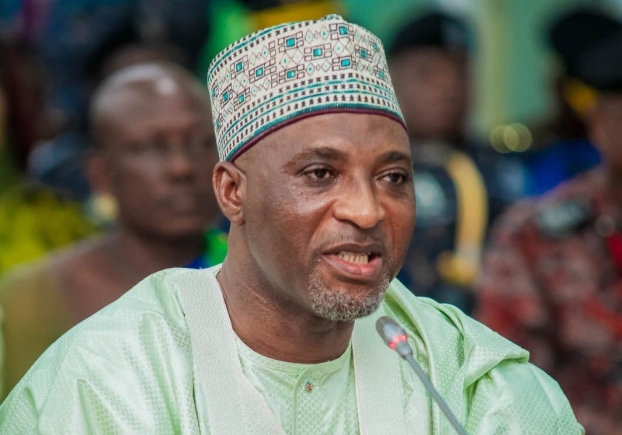
‘I will not answer for anything’ — Muntaka enforces new rules to stop double claims
The Minister for the Interior, Muntaka Mohammed-Mubarak, has directed that all financial requests from agencies under his ministry must receive his approval before being forwarded to the Ministry of Finance, in a move aimed at eliminating duplicate claims and strengthening accountability.
The directive follows concerns raised during a sitting of Parliament’s Public Accounts Committee over repeated and inconsistent financial submissions by agencies, which have contributed to discrepancies in government accounts.
New control measures
Speaking at the hearing in Accra on Tuesday, March 31, 2026, Mr Muntaka said the new measure was designed to close gaps that allow multiple requests for the same obligation to be processed.
“I had to write officially to the Minister of Finance that when we went for that validation meeting, I told the officials that if you do not let these expenditures and letters pass through me, do not call me to come and answer for them. I will not answer for anything that did not pass through me,” he stated.
He explained that centralising approvals would improve oversight and ensure proper tracking of all financial requests originating from agencies under the ministry.
“To avoid double letters or multiple requests, I will not allow any letter to leave the Ministry of the Interior to Finance without my signature. Even if it is going to a cleaner in the Ministry of Finance, it will be signed by the Minister,” he stressed.
Heads of agencies to take responsibility
The Minister further directed that heads of agencies must personally sign all financial requests, effectively barring deputies and other officers from doing so.
“For example, if you take the Immigration Service, the head has deputies, and each of them could write a letter to Finance through me. I have written to all of them that no deputy should sign. I want the head to sign so that the person is aware of it and will be responsible for it,” he said.
Mr Muntaka noted that the absence of a central control point had made it possible for duplicate requests to slip through the system.
“If I have to sign every letter to Finance and I keep track of it, if I have already asked for payment for this table and it comes again, I will see it. But if people write directly to Finance without passing through me, one person can write for the same item and another officer also writes for it, and you end up with duplication,” he added.
Committee raises systemic concerns
The issue emerged during deliberations on discrepancies identified in the review of government liabilities, where some payments already settled were still recorded as outstanding claims.
The Chair of the Committee, Abena Osei-Asare, said the focus was on strengthening systems rather than assigning blame.
“This is not to accuse anybody of anything. There are structural issues that we want to address. What I want to see is what checks and balances you have put in place so that these things do not occur again,” she said.
She also emphasised the importance of continuity in governance and proper record-keeping, particularly during transitions.
“Whether they were there or not, there is continuity in government. We are looking at the stock of liabilities, and that is when you see these huge sums of money,” she noted.
Call for stronger reconciliation systems
Members of the committee highlighted weaknesses in reconciliation processes and called for stricter and more regular verification of financial records.
“One thing is clear. It all comes down to reconciliation. Making sure we reconcile monthly and quarterly will help check some of these issues,” a member of the committee said.
Responding to the concerns, Mr Muntaka called for stronger internal controls across all agencies.
“Let us check our systems, make sure we are on top of them and put controls in place. In terms of reconciliation, let us do it regularly. If one person is put in charge to take responsibility, it will help prevent some of these occurrences,” he said.
Possible breaches under scrutiny
The hearing also raised concerns about financial transactions that may not have been fully captured within the government’s financial management system, prompting calls for further verification.
Mr Muntaka described any confirmed breach as a serious offence.
“There is no way any payment will get to the Controller if it is not through the system, unless people present documentation that has not gone through it. If this has happened, then it is something that must be investigated. For me, it is a crime,” he said.
Officials from the Ghana National Fire Service told the committee that measures had already been introduced to improve internal reconciliation, including the formation of a dedicated team to regularly review outstanding commitments and payments.
The committee is expected to incorporate its findings into a final report as it continues its examination of financial records across ministries, departments and agencies.
