
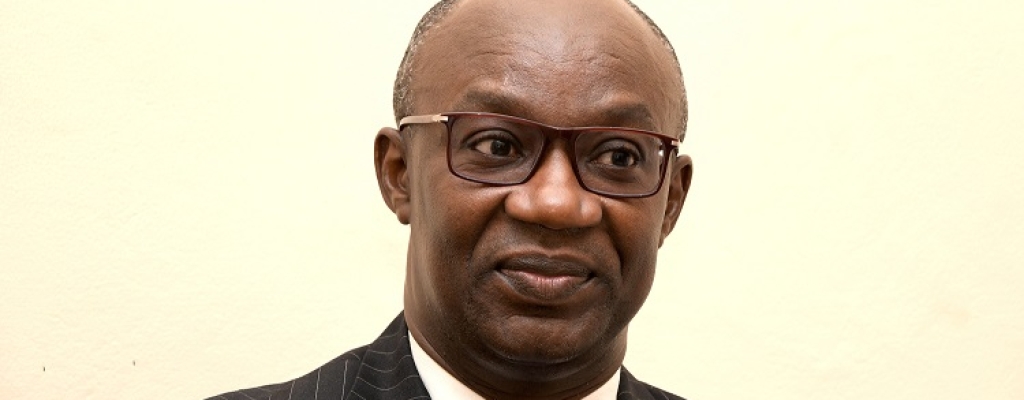
The Institute of Chartered Accountants, Ghana (ICAG) has called for stronger constitutional protection for the Auditor-General, the Internal Audit Agency and the State Interests and Governance Authority (SIGA), saying the institutions remain vulnerable to political interference under the current legal arrangements.
The Vice Dean of the ICAG Corporate Governance Faculty, Dr Valentin Kwasi Mensah, made the call at a virtual faculty lecture on Thursday, September 24, 2026, on the report of the Constitutional Review Committee (CRC), the Government’s Position Paper and accountancy practice in Ghana.
The lecture brought together the Chairman of the CRC and Executive Director of the Centre for Democratic Development-Ghana (CDD-Ghana), Professor Henry Kwasi Prempeh, and the Chief Executive Officer of ICAG and former Director-General of the Internal Audit Agency, Eric Oduro Osae, who served as the discussant.
Auditor-General
Dr Valentin Mensah said although the office of the Auditor-General was already established under the 1992 Constitution, the provisions governing the office were not detailed enough to protect its independence in practice.
He cited the case of former Auditor-General Daniel Yaw Domelevo, who was forced into retirement in 2020 following a dispute with the Audit Service Board over his age and nationality.
According to Dr Mensah, the case showed the need for clearer constitutional provisions governing the office.
He also raised concerns about the recovery of financial irregularities identified by the Auditor-General and reported to Parliament’s Public Accounts Committee (PAC).
He said many of the sums flagged in audit reports were not recovered.
Dr Mensah therefore proposed that the Constitution should require the Auditor-General to be a qualified accountant, provide for a secure tenure and establish a transparent appointment process involving the Council of State.
He also called for budgetary autonomy for the office.
Internal Audit Agency
On the Internal Audit Agency, Dr Mensah said the agency currently operated under the Internal Audit Agency Act, 2003 (Act 658), and was therefore not protected by the Constitution.
He welcomed the government’s proposal to give the agency constitutional status.
He said its independence, access to information and reporting duties should be protected under the Constitution, while its audit methods and procedures should continue to be governed by legislation.
Dr Mensah said the approach would provide constitutional protection for the agency while allowing Parliament to amend its operational law when necessary.
SIGA
Turning to SIGA, Dr Mensah said the CRC had proposed constitutional status for the authority, alongside merit-based appointments to boards, a ban on sitting ministers and MPs serving on state enterprise boards and clearer fiduciary duties for board members.
The government rejected constitutional status for SIGA and proposed that it continue to operate under the State Interests and Governance Authority Act, 2019 (Act 990).
Dr Mensah referred to SIGA’s state ownership reports, which indicate that a number of state-owned enterprises continue to fail to file financial statements or sign performance contracts as required by law.
He said the record supported stronger constitutional safeguards, even if SIGA itself remained a statutory institution.
The Chief Executive Officer of ICAG, Eric Oduro Osae, on his part backed giving the Internal Audit Agency constitutional status, describing the proposal as potentially “the best thing that would happen” to Ghana’s public financial management systems.
On SIGA, he said he supported the government’s decision to retain the authority under statute, provided corporate governance rules were strengthened.
He said boards, rather than external appointing authorities, should recruit chief executives and hold them accountable for their performance.
On the Auditor-General, he called for clearer constitutional provisions defining the relationship between the office and the Audit Service Board.
He cited the dispute involving former Auditor-General Daniel Yaw Domelevo and the Audit Service Board as an example of the need for clearer provisions.
CRC position
Prof. H. Kwasi Prempeh on his part said the CRC considered the risk posed by state-owned enterprises to the economy sufficient to warrant constitutional protection.
He was responding to questions about why some of the proposed reforms could proceed through legislation rather than constitutional amendment.
Prof. Prempeh said if the Government preferred a statutory approach, the accountancy profession should seek clarity on the contents of the proposed legislation rather than accept an unspecified promise to legislate.
He said the profession needed to know what safeguards would be contained in the proposed law and how they would protect the institutions concerned.
Prof. Prempeh also disclosed that the CRC had proposed other safeguards not covered in Dr Mensah’s presentation.
They included reforms to Parliament’s use of certificates of urgency to fast-track bills and a constitutional right to public participation in the legislative process.
He said the proposed public participation provision was modelled on provisions in the constitutions of South Africa and Kenya.
