
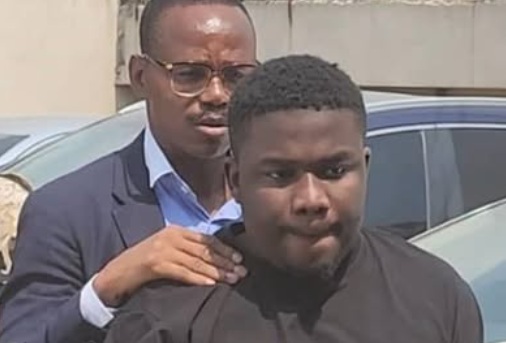
Inside the FBI sting: Lawyer details how Abu Trica was caught
A member of the legal team representing Frederick Kumi, popularly known as Abu Trica, has offered a detailed account of how United States investigators allegedly built their case against him, claiming the operation was initiated through an undercover approach by the Federal Bureau of Investigation (FBI).
In a Facebook post, lawyer and activist Oliver Barker-Vormawor outlined what he described as the sequence of events that led to Abu Trica’s arrest and subsequent extradition proceedings, insisting that the case centres on a far smaller amount than has been publicly suggested.
According to him, the case began when an FBI informant allegedly approached Abu Trica with a proposal to help facilitate the transfer of $50,000 into a bank account. He claimed the informant promised Abu Trica a fee of $13,000 if he succeeded in finding an account for the transaction.
Barker-Vormawor said Abu Trica subsequently contacted several individuals in search of a suitable account, believing he was engaging in a legitimate opportunity to earn the promised sum. He stated that an account was eventually provided, which was then passed on to undercover agents.
He added that Abu Trica was paid the agreed $13,000, which he described as the central piece of evidence relied upon by investigators. He further alleged that following the arrest, authorities sought to compel Abu Trica to disclose the identity of the account holder, which he declined to do.
The lawyer also criticised the handling of the case locally, claiming that a public statement attributed to the Economic and Organised Crime Office (EOCO) suggested that Abu Trica had been involved in an $8 million fraud, an assertion he firmly rejected.
“There is no 8 million usd anywhere. We are here because of 13,000 dollars,” he wrote, arguing that the public narrative around the case had been overstated.
Abu Trica is currently facing extradition to the United States on charges including conspiracy to commit wire fraud and conspiracy to commit money laundering. However, his legal team has challenged the basis of the extradition, arguing that conspiracy is not explicitly covered under the 1931 extradition treaty between Ghana and the United States.
Barker-Vormawor disclosed that the defence submitted extensive legal arguments in court, questioning the applicability of the treaty to the charges. He also indicated that the matter is now under appeal, limiting further comment on the proceedings.
The Gbese District Court has, however, dismissed the preliminary objection, ruling that the offences cited, including wire fraud, fall within the scope of extraditable crimes under existing legal frameworks, including relevant international conventions.
The court’s decision has cleared the way for the extradition process to proceed, subject to the outcome of the pending appeal.
