
Japan launches $1.5m initiative to boost 3 key development projects in Ghana, targets Bawku peacebuilding, health sector
Japan has launced the 2025 Fiscal Year Supplementary Budget to boost peacebuilding in Bawku, AI-driven health, and digital governance across the country.
The projects, valued at an initial $1.5 million, represent catalytic funding that could expand to between $10 million and $15 million over five years to support community-based programmes.
The projects, implemented in partnership with United Nations Development Programme (UNDP) and the Government of Ghana, focus on promoting peace and stability in Bawku through mediation efforts, leveraging artificial intelligence to improve healthcare delivery while addressing ethical risks, and enhancing public sector capacity for digital transformation and AI governance.
The projects WILL involve key partners such as government ministries, the Ghana Health Service, WHO, civil society, and academic institutions like the University of Ghana.
They are christened: Towards Achieving Humanitarian-Development-Peace (HDP) Nexus in Bawku; Accelerating Public Sector Digital Transformation through Capacity Building; and Harnessing AI to improve Health Outcomes in Ghana While Addressing Its Potentail Risks Underming Human Security.
Launch
The official launch took place in Accra last Wednesday under the auspices of the Ministry of Foreign Affairs and Regional Integration, ably supervised by Foreign Minister Samuel Okudzeto Ablakwa.
The event featured statements and solidarity messages centered on the three development projects aimed at improving the lives of Ghanaians.
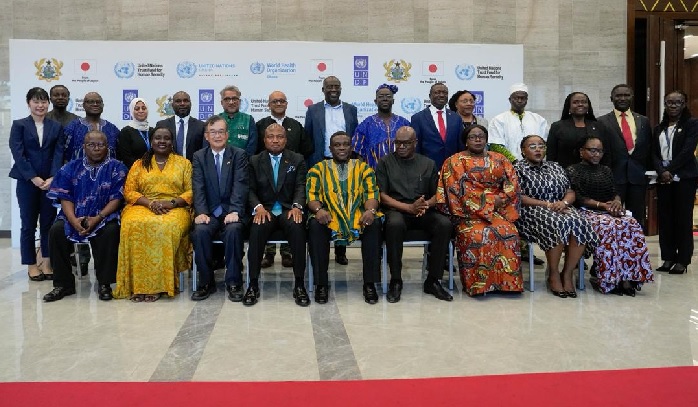
It brought together representatives from the Japanese Embassy in Accra, the UNDP, the World Health Organization, other UN agencies in Ghana as well as ministries and agencies.
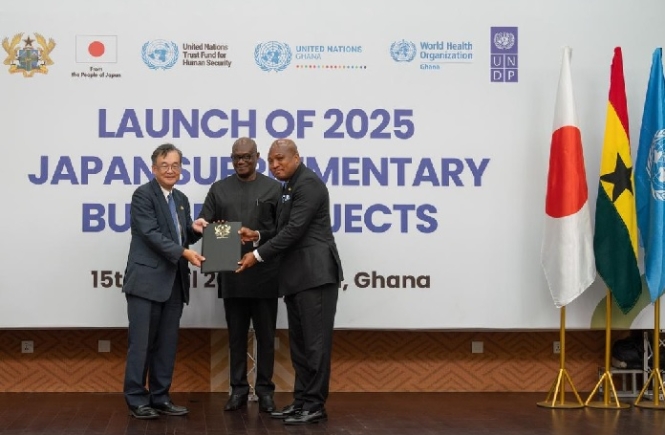
In attendance were the Japanese Ambassador to Ghana, Hiroshi Yoshimoto, UNDP Resident Representative, Mr Niloy Banerjee, UN Resident Coordinator, Mr Zia Choudhury, WHO Country Representative, Dr Fiona Braka, National Security Adviser at the Presidency, Mr Prosper Bani, Minister for Communication, Digital Technology and Innovations, Samuel George Nartey.
Also in attendance were Public Health Physician, Dr Belinda Afriyie Nimako, who represented the Minister of Health, Kwabena Mintah Akandoh, Executive Secretary of National Peace Council, Dr George Amu and Director-General of the Ghana Health Service, Prof. Samuel Kaba Akoriyea.
Partnership
Speaking at the event, Foreign Affairs Minister, Samuel Okudzeto Ablakwa reaffirmed the country’s strong partnership with Japan.
He described the event as a reflection of enduring friendship, shared values, and effective collaboration between Ghana, Japan, and international partners, particularly the UNDP.
He emphasized Japan’s longstanding role in Ghana’s development through frameworks such as TICAD, highlighting its leadership in promoting human security, universal health coverage, and responsible artificial intelligence.
On peace and security, Ablakwa stressed that the Bawku intervention adopts a humanitarian-development-peace approach aimed at restoring trust, rebuilding social cohesion and ensuring sustainable peace.
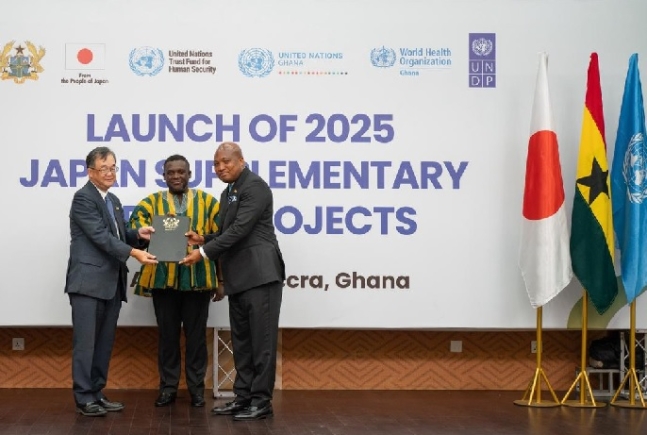
He said the initiative also complements government plans for post-conflict reconstruction and development across affected districts.
"Japan continues to demonstrate that true partnership is about vision, innovation, and shared progress. The projects we are launching today are closely aligned with Ghana's national priorities.
Especially on security and peace building, in Bawku, the interventions apply the humanitarian development and peace measures to help the regional trust restore social cohesion and lay the foundations for sustainable peace," he said.
Regarding healthcare, he explained that the AI-focused project—implemented with the Ghana Health Service, UNDP and Japanese private sector partners—will strengthen the country’s health system by making it more resilient, data-driven, and responsive.
This initiative, he said aims to position Ghana as a leading hub for artificial intelligence in Africa, aligned with national programmes such as the One Million Coders initiative.
"We are demonstrating today that multilateralism works, that partnerships works, and that we will continue to believe in partnerships and will continue to work together within the international community. Together, through these initiatives will address the challenges of today and actively secure prosperity, stability and resilience of tomorrow," he added.
Bilateral cooperation
Japanese Ambassador, Hiroshi Yoshimoto emphasized that these initiatives reflect over 70 years of strong bilateral cooperation between Japan and Ghana, rooted in shared values of inclusive, sustainable development and human security.
He mentioned that the projects align with key priorities of TICAD engagements, particularly in advancing peace, innovation, and technology-driven development across Africa.
In the health sector, he said the AI-focused project builds on earlier Japan-UNDP collaborations to expand digital technologies and improve healthcare systems, while ensuring that innovation remains ethical and people-centered.
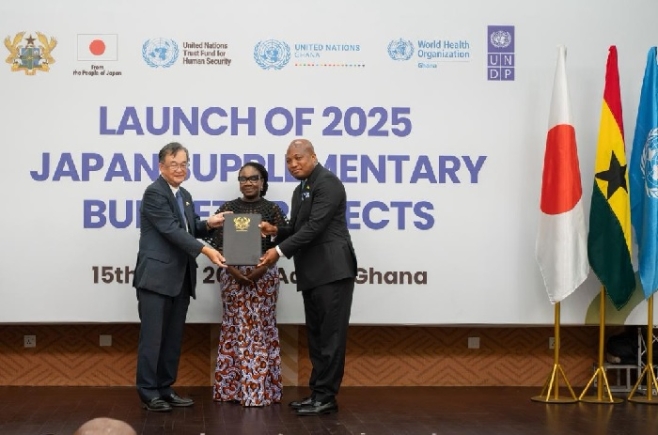
Ambassador Yoshimoto underscored that all three projects are unified by the principle of human security—ensuring freedom from fear and want—and align with the UN’s 2030 Sustainable Development Agenda.
He reaffirmed Japan’s commitment to deepening its partnership with Ghana to promote peace, innovation, and inclusive growth.
"The collaboration between Ghana, Japan, UNDP, and all stakeholders on these three projects we are launching today demonstrates how collective efforts can translate shared commitment into a meaningful and lasting impact."
"I would like to emphasize that Japan remains committed to deepening this partnership and working together to co-create solutions, strengthen institutions, and build a future that is peaceful, innovative, and inclusive," he added.
Driving innovation
For his part, UNDP Ghana Resident Representative Niloy Banerjee highlighted the importance of global solidarity and partnership, especially amid challenging global conditions, during his remarks at the project launch.
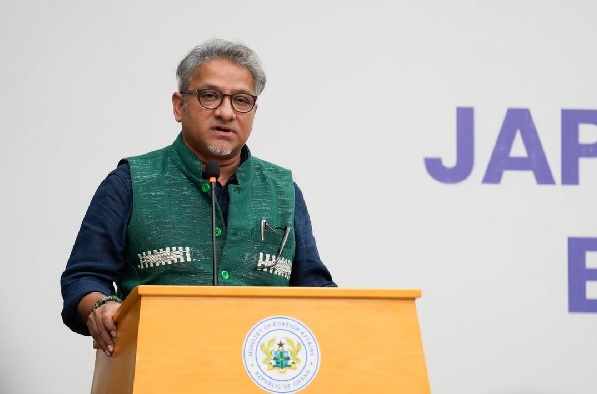
He praised Japan as a longstanding and strategic partner of UNDP, noting its consistent support over the past two decades and its contribution of nearly $9–10 million to programmes in Ghana in recent years.
Mr Banerjee emphasized that Japan’s support goes beyond funding, significantly enhancing the quality and impact of UNDP’s work through advanced technology and community-focused interventions.
He explained that the newly launched initiatives combine cutting-edge digital and AI solutions with efforts to strengthen community resilience—both essential for sustainable development and societal well-being.
