
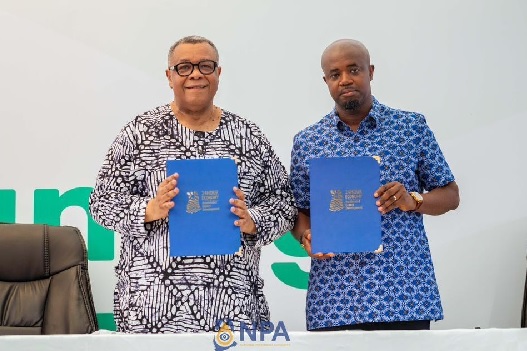
NPA, 24-Hour Economy Authority sign MoU to drive operations in downstream petroleum sector
The National Petroleum Authority (NPA) and the 24-Hour Economy Authority have signed a landmark Memorandum of Understanding (MoU) to operationalise the government’s flagship initiative — the 24-Hour Economy and Accelerated Export Development programme, within the country’s downstream petroleum sector.
Under the arrangement, the NPA will set and enforce standards for safe 24-hour operations, including lighting, security, staffing and monitoring—while the 24-Hour Economy Authority will coordinate support across government agencies, particularly security services, to ensure compliance and smooth implementation.
The agreement marks the beginning of a new phase aimed at fundamentally reshaping how the petroleum industry operates — shifting from limited working hours to a full 24-hour operational model.
It is also meant to ensure continuous operations across depots, refineries, storage facilities and retail outlets in collaboration with security agencies, who will play a critical role in protecting personnel and infrastructure.
Ultimately, the transition is expected to improve efficiency, eliminate supply chain bottlenecks, create jobs and unlock significant economic opportunities that were previously constrained by restricted operating times.
Signing ceremony
The signing ceremony, held in Accra on Tuesday, featured speeches and video presentations highlighting the NPA’s readiness to implement the project, as well as an animated explainer by the 24-Hour Economy Authority outlining the scope and objectives of the policy.
The event brought together representatives from both institutions, the Ministry of Energy and Green Transition, the Ghana Revenue Authority, the security services, oil marketing companies and staff of the NPA.
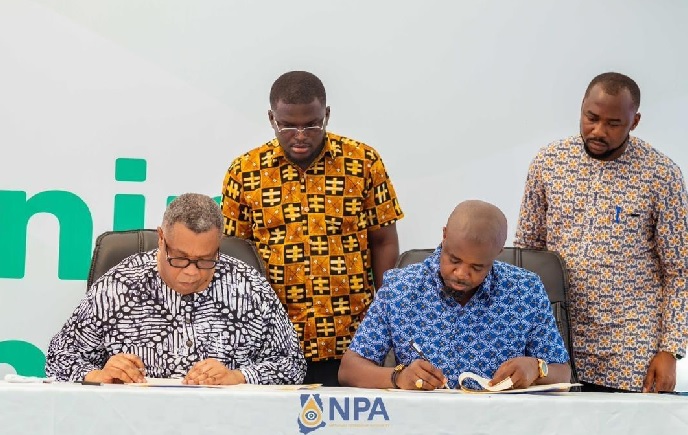
In attendance were the Deputy Minister of Energy and Green Transition, Richard Djan-Mensah, Presidential Adviser on the 24-Hour Economy and Accelerated Export Development, Augustus Goosie Tanoh, Chief Executive Officer of NPA, Godwin Edudzi Tameklo, Managing Director for BOST Energies, Mr Afetsi Awoonor, Commissioner Commissioner-General of GRA, Mr Anthony Kwasi Sarpong, Commissioner of the Customs Division of GRA, Mr Aaron Kanor and Coetta Zarina Pyne, who represented the Minister of State in Charge of Government Communication, Helix Kwakye Ofosu.
Milestone
Speaking at the event, Chief Executive Officer of the NPA, Godwin Edudzi Tameklo described the signing of the MoU between the two institutions as a historic and transformative step for the nation’s downstream petroleum sector.
"It gives me great honour and deep sense of purpose that I participate in this significant milestone — the signing of Memorandum of Understanding between the National Petroleum Authority and the 24-hour Economy Authority," he said.
He explained that the downstream petroleum sector is central to Ghana’s economy, powering transportation, industry and commerce.
However, he said inefficiencies caused by time-bound operations have led to lost productivity and reduced revenue potential.
He highlighted key expected benefits, including improved availability and accessibility of petroleum products nationwide, enhanced reliability in supply and distribution, increased government revenue, and the creation of thousands of direct and indirect jobs.
"The vision that we are implementing today represents a bold, forward-looking response by President John Dramani Mahama. The goal is to stimulate productivity, enhance service delivery, and create sustainable employment opportunities," he said.
He called on all stakeholders, including regulatory bodies, private sector players, oil marketing companies, bulk distributors and transporters, to fully commit to the initiative by investing in infrastructure, technology and operational readiness.
"Today is a defining moment for Ghana's petroleum downstream sector. We are laying the foundation for the future where our industry operates with greater efficiency, resilience and inclusivity. 24 hours a day, seven days a week. On behalf of the National Petroleum Authority, I affirm our unwavering commitment to the successful implementation of this programme," he stated.
Expanding agro-processing
Presidential Adviser on the 24-Hour Economy and Accelerated Export Development, Augustus Goosie Tanoh, explained that the 24-hour economy programme is focused on expanding agro-processing, manufacturing, and logistics systems to create a more resilient and integrated value chain—from farms to factories to markets.
However, he identified reliable access to fuel and energy services beyond regular working hours as a major constraint to these efforts.
He mentioned that as agro-processing zones, manufacturing, and logistics corridors expand, the need for reliable, 24-hour fuel access will increase accordingly.
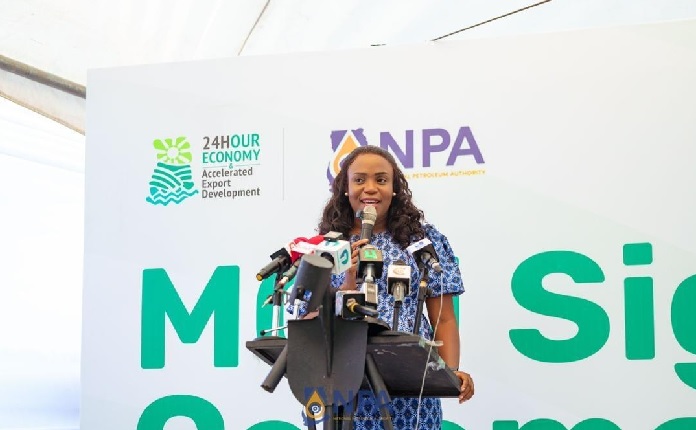
Mr Tanoh emphasized that the initiative is not simply about extending business hours but about building the industrial and enterprise capacity that will drive demand for continuous services.
"We thank the operators and industry representatives here today through their chambers and we all thank the President Mahama for the vision and the mandate he has given all of us to execute Ghana's transformation agenda for inclusive growth and job creation," he said.
"Our work starts now. 24-hour will also be knocking on the door of the Energy Minister and NPA to discuss also the initiatives as part of the green transition, biofuels development to supplement our fossil fuel requirements so that tomorrow, if the whole Middle East explodes, Ghana still will be self-sufficient in the energy that it requires to fuel its economic transformation and its growth," he added.
Ministry's support
Deputy Minister of Energy and Green Transition, Richard Gyan-Mensah reaffirmed the Ministry’s strong support for the NPA’s 24-hour operational initiative, describing it as a key step toward achieving Ghana’s broader “Green Power Economy” vision.
He stressed that the MoU signing goes beyond a symbolic gesture, representing a concrete step toward delivering tangible results under the 24-hour economy programme.
He revealed that the Ministry has directed all agencies under its supervision to submit detailed plans outlining how they intend to implement the 24-hour economy policy, commending the NPA for taking the lead.
He expressed confidence that other agencies would follow this example and align with the national agenda.
Mr Gyan-Mensah also emphasized the Ministry’s commitment to providing leadership and coordination to ensure the successful rollout of the initiative.
He cited ongoing efforts such as the installation of solar-powered streetlights in economic zones and district capitals as practical measures to support nighttime productivity and signal Ghana’s readiness for round-the-clock economic activity.
"So, today, what we are witnessing is not just signing a memorandum, but we are all witnessing what tomorrow will see being delivered. And we believe that with the right commitments, just as the President has signalled, and with our efforts, we will achieve the full benefits of the 24-hour economy," he said.
