
The Ministry of Finance has cancelled all spending approvals issued in 2025 and directed Ministries, Departments and Agencies to seek fresh authorisation before undertaking any procurement or expenditure in 2026.
The move signals tighter control over public spending at the start of the new financial year.
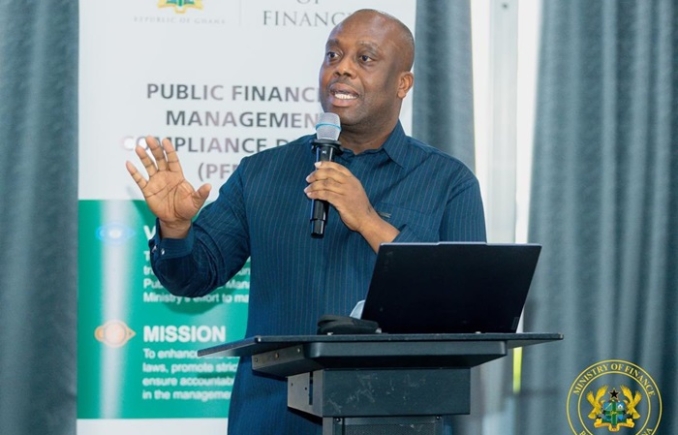
The directive was issued by the Deputy Minister for Finance, Mr Thomas Nyarko Ampem, who said no institution would be allowed to commit the state to new spending outside approved budgetary ceilings.
Mr Ampem made the announcement while addressing Chief Directors, heads of covered entities and chief executives of public institutions at a meeting on modalities for Commitment Authorisation held on January 29, 2026.
He said all authorisations granted in 2025 had expired and could not be used to support procurement activities in 2026.
Mr Ampem announced a two week turnaround target for the Ministry of Finance to process and approve Commitment Authorisation requests, provided MDAs submit complete and accurate documentation.
To limit delays, he directed that all requests should pass through the relevant Sector Ministers. At the same time, MDAs were advised to submit copies directly to the Ministry of Finance, which would begin processing the applications while awaiting formal referral.
Mr Ampem also asked MDAs with ongoing projects from 2025, where contracts have been awarded but payments remain outstanding, to declare those obligations in full.
He explained that such commitments would be treated as a first charge on their 2026 budgets before approval is given for any new expenditure.
The Deputy Minister said the Commitment Authorisation system was introduced to stop public institutions from committing the state to projects without approved budgetary allocations, a practice he said had taken place in the past without the knowledge of the Ministry of Finance.
According to him, such unapproved commitments added to Ghana’s rising public debt and weakened fiscal control.
Mr Ampem said strict enforcement of the system forms part of efforts to restore budget discipline and support debt sustainability under Ghana’s IMF supported programme.
“If this country had respected the budget and committed the state only when funds were available, we would not have found ourselves where we are today,” he said.
