
Ghanaian scientists make global impact in telehealth innovation
Ghanaian scientists, led by US-based computer scientist, Felix Davis, are making global impact in telehealth through artificial intelligence-driven platforms that provide real-time medical support and clinical services worldwide.
The multidisciplinary team — comprising computer software engineers, artificial intelligence researchers, medical doctors and digital health experts — has developed three advanced AI-powered healthcare solutions aimed at improving access to quality medical care, particularly for underserved populations.
Operating under Mary Health and Mary Technologies Inc., the team’s innovations include Ask Mary, Doc Mary, and the Patient Access Terminal (PAT), a suite of patient-centred digital health platforms designed to enhance healthcare delivery and efficiency.
Ask Mary is an AI-powered virtual health assistant that provides instant, reliable health information, symptom assessment and guidance to appropriate care pathways, enabling users to make informed health decisions from their homes.
Doc Mary is also a comprehensive telehealth platform that connects patients and healthcare providers for virtual consultations, prescriptions and ongoing care management, extending medical services to underserved populations.
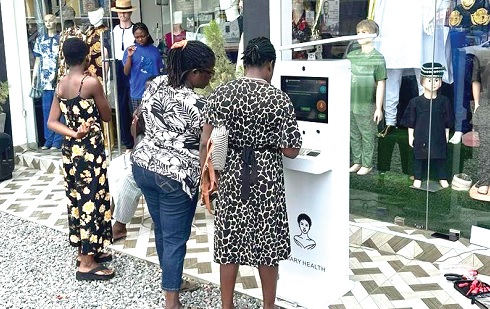
Similarly, the Patient Access Terminal (P.A.T.) is a digital kiosk designed for healthcare facilities to support patient check-in, appointment scheduling, data updates and access to health information, reducing waiting times and administrative bottlenecks.
Other members of the team are Anumbia Anachaba Julius, a Research and Development Engineer; Dr Gifty Sugri Azunre and Dr Emmanuel Teyie, both medical doctors; and Dr Hanifatu Napari Mumuni, an Artificial Intelligence and Digital Health expert and Head of the Statistics Department at the Tamale Technical University.
Rationale
In an interview, the Chief Executive Officer of Mary Health, Felix Davis, said the initiative seeks to enhance healthcare delivery in deprived areas.
“Our mission is to empower both patients and healthcare providers with intuitive and intelligent technology that simplifies healthcare delivery, improves outcomes and fosters a more connected health ecosystem,” he said.
“We believe these solutions can play a key role in making quality health care more accessible and efficient for Ghanaians.”
Mary Health was founded in June 2024, inspired by a personal tragedy.
The company is named after Mary Dagadu, the woman who raised Mr Davis and who died from late-stage breast cancer.
According to him, with access to continuous home-based medical monitoring, Dagadu’s condition could have been detected early, significantly improving her chances of survival.
“At the time, I was in medical school—the first in my family to have that opportunity—and I was in constant communication with Mary, who supported me greatly. Unfortunately, I was unaware of her diagnosis,” he said.
He noted that for nearly 44 per cent of Ghanaians living in rural areas, access to basic healthcare services often involved travelling long distances to the cities.
Underserved communities
To improve access to healthcare delivery, Mr Davis said he assembled a team of Ghanaian professionals to develop digital health solutions suited to deprived communities.
He expressed optimism that with local and international partnerships, Mary Health would scale up its operations to reduce and ultimately eliminate the challenges rural communities face in accessing timely health care.
