
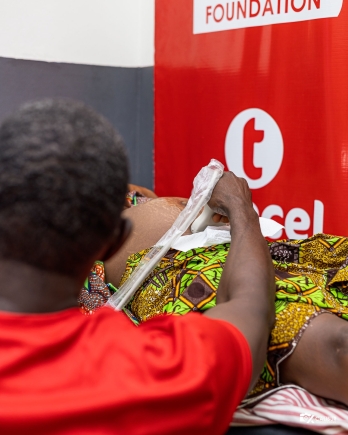
Telecel Foundation brings free maternal healthcare support to over 300 pregnant women in Ada
More than 300 pregnant women in Kasseh in the Ada West District received free ultrasound scans and antenatal support services through an outreach programme organised by the Telecel Ghana Foundation, as concerns continue to grow over limited access to maternal healthcare in rural communities.
The intervention, held at the Kasseh Health Centre under the Foundation’s Rural Ultrasound initiative, attracted expectant mothers from Kasseh and surrounding communities despite heavy rainfall throughout the day. Many of the women travelled long distances to benefit from the exercise, highlighting the persistent challenges rural women face in accessing diagnostic maternal healthcare services.
The programme provided free ultrasound scanning, medical reports, nutritional counselling and antenatal education aimed at improving pregnancy monitoring and early detection of complications. Health officials said some women whose scans revealed signs of medical complications, including anaemia, were referred for further treatment and monitoring.
Nurse Manager at the Kasseh Health Centre, Coleman Adator, described the outreach as critical to improving maternal health outcomes in the district, particularly for women who are unable to afford private diagnostic services.
“A lot of them cannot do the scans at the private centres because of the financial expense and also the unavailability of the scanning equipment at the public health centre,” Mr Adator said. “Having this ultrasound scan today will encourage them to come for antenatal services and help the midwives to monitor the progress of the pregnancy to improve maternal health in the district.”
The large turnout also exposed the growing demand for accessible maternal healthcare in underserved communities, where many women continue to struggle with the high cost of routine pregnancy scans and inadequate medical infrastructure.
During the exercise, health professionals educated beneficiaries on proper nutrition during pregnancy, the importance of iron and folate supplementation, and warning signs requiring urgent medical attention. Each participant also received a scan report for future antenatal consultations and a support package from the foundation.
One of the beneficiaries, 24-year-old Amanda Sewu, said the initiative had eased the financial burden associated with routine pregnancy scans.
“I had to spend a lot of money on my two ultrasound scans and couldn’t continue anymore. Thanks to Telecel Ghana Foundation, I have been able to do my scan for free, and we hope they visit Ada again,” she said.
Another beneficiary, Sandra Agyemang Yeboah, praised the quality of care and professionalism exhibited by the health workers during the exercise.
“I'm very excited to have been part of this screening. We were warmly received and well taken care of. The health professionals also educated us on proper nutrition and how to take care of ourselves during pregnancy,” she stated.
Head of Foundation, Sustainability and External Communications at Telecel Ghana, Rita Rockson, said the outreach forms part of efforts to reduce preventable maternal deaths by ensuring that pregnancy-related complications are detected early.
“Today’s high patronage is a reminder of why maternal health support is a critical need for women in rural communities. Some of the pregnant women got referrals to medical facilities that will eventually save their lives and their babies,” Ms Rockson said. “Rural Ultrasound is tackling the risks to maternal health by reaching more communities and helping to close that gap.”
The Rural Ultrasound initiative is being implemented in partnership with the Divine Mother And Child Foundation as part of Telecel Foundation’s Connected Health programme, which seeks to improve access to maternal healthcare services in rural and peri-urban communities.
The initiative aligns with Sustainable Development Goal 3.1, which focuses on reducing maternal mortality and improving access to skilled antenatal care. Organisers say the programme will continue expanding into more underserved communities as part of broader efforts to improve healthcare access nationwide.
